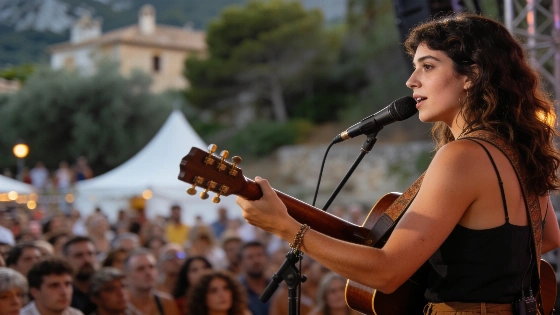
Valeria Castro returned to the stage at the Cap Roig festival in Girona, resuming her tour after a recent interruption caused by health concerns. The singer-songwriter from La Palma was nearing the end of the tour for her second album, El cuerpo después de todo, released in March 2025. The record addresses loss and anxiety, as well as social pressure and toxic relationships, and explores the physical effects of emotional pain. Those subjects inform the exposed quality of her performances. At Cap Roig, Castro addressed the realities behind the glamour of a musical career, acknowledging the toll of constant touring and saying she had paused her schedule when her body signalled the need for rest.
During her set, Castro connected with the audience, moving freely across the stage and creating the intimacy that has become a hallmark of her shows. The repertoire remained largely unchanged from previous concerts, but her delivery reflected a deeper appreciation for each performance after the recent setback. Songs such as “Guerrera,” dedicated to her late grandmother, and pieces honouring her mother carried added emotional weight. Arrangements featuring clarinet and violin, alongside acoustic guitars and Latin American influences, shaped a sound that moved between folk and melodic pop. In “Poquito,” the absence of drums gave the music a sense of lightness and suspension.
Castro also performed solo pieces rooted in Canarian folklore, including “Devota,” filling the venue with just her guitar and voice. Meritxell Neddermann’s keyboards and vocoder added a subtle, atmospheric layer. Throughout the evening, Castro emphasized the importance of balancing body, heart and mind, and expressed her gratitude to the audience in Catalan. During “Sólo decirte,” she left the stage and walked among the crowd, further strengthening her connection with fans.
The Cap Roig concert came ahead of the planned finale of the tour in Barcelona, where Castro is scheduled to perform at Palau Sant Jordi on 28 October 2026 as part of Guitar BCN. The venue listing names the event “Valeria Castro - Guitar Bcn 2026”; Palau Sant Jordi is distinct from the nearby Sant Jordi Club. In an October interview with El Periódico, Castro said concerts can bring back the experiences behind the songs. She explained that she is in therapy and has learned to separate her roles onstage: “you have to learn to stop being the songwriter and become the interpreter.” She also described it as meaningful to give pain a healing purpose and hear from listeners who found support in identifying with her music.
The audience at Cap Roig responded with a standing ovation and dancing. The concert followed a series of high-profile cultural moments in the region, including the royal family’s summer reception at Marivent Palace, which drew attention to Mallorca’s artistic scene. For more on recent cultural gatherings in the area, see this overview of Mallorca's major summer events.
At 27, Castro continues to draw on personal experiences and family memories in her music. Her acoustic songwriting and folkloric foundations are basic to her artistic identity, while the album’s themes have made the emotional demands of performing especially tangible. As she prepares to close the tour in Barcelona, where it began, she has described the possibility of turning those experiences into a source of recognition and support for listeners as a privilege.