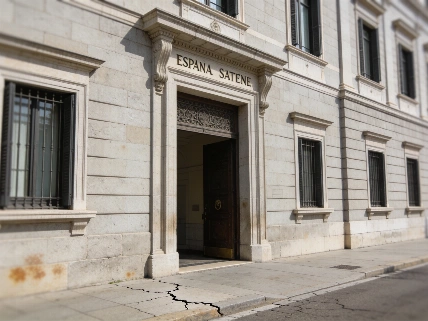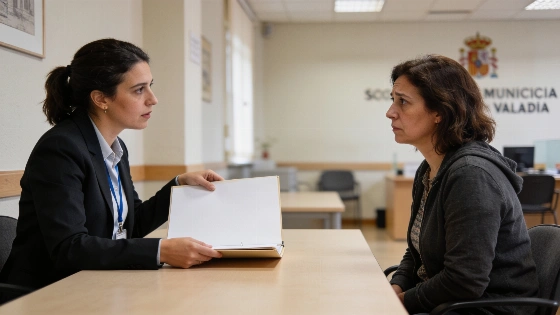
Valladolid’s city council has replaced 'violence of gender' with 'domestic violence' in its social housing aid criteria. The move, led by PP and Vox, has sparked criticism from feminist groups over reduced protection for women.
The city council of Valladolid, governed by a coalition of PP and Vox, has introduced a significant change to the requirements for accessing public rental housing. The new protocol replaces the term 'violence of gender' with 'domestic violence' as a criterion for eligibility, a shift that has drawn sharp criticism from feminist organizations and opposition parties. The change, which affects the allocation of social housing managed by Sociedad de Vivienda y Suelo (VIVA), is seen by critics as a step back in the specific protection offered to women facing gender-based violence.
According to local reports, the modification was implemented in May but has only recently become the focus of public debate after the PSOE of Castilla y León raised the issue. The controversy centers on the broader implications of the terminology change: while 'violence of gender' refers specifically to violence against women because of their gender, 'domestic violence' is a broader term that includes all forms of violence within the household, regardless of the victim's gender. Feminist groups argue that this shift dilutes the recognition of the unique risks faced by women and could undermine targeted support measures.
In addition to the terminological change, the council has increased the minimum period of residence required to apply for municipal housing aid from one year to three years, citing the need to prioritize applicants with stronger local ties. Mayor Jesús Julio Carnero (PP) defended the move as a measure to reinforce 'rootedness' in the community, a justification that has been linked by critics to Vox’s political stance on migration and access to social benefits.
Ana Casado, the PSOE’s housing spokesperson, has voiced concern that this policy could be extended to the entire region if adopted by the Junta de Castilla y León. She also noted that the coalition government in Valladolid previously eliminated the dedicated Equality Department, integrating its functions into the broader Social Services area. This restructuring, she argues, further weakens institutional support for gender equality initiatives.
The Coordinadora de Mujeres de Valladolid has publicly condemned the council’s decision, warning that replacing 'violence of gender' with 'domestic violence' erases the specific experiences of women who are disproportionately affected by such violence. Paula Granado, a representative of the group, attributed the change to the influence of the far right on local policy and stressed that altering terminology does not address the underlying problem, but rather increases the vulnerability of women in need of protection.
Granado also criticized the city’s priorities, pointing to the significant investment in bullfighting events ahead of Valladolid’s patron saint festivities, suggesting that the council is more focused on promoting traditional spectacles than on safeguarding women’s rights. This tension between cultural spending and social protection has become a flashpoint in the ongoing debate over the city’s policy direction.
The debate in Valladolid reflects a broader national conversation about the framing of gender-based violence and the responsibilities of local governments in providing targeted support. As noted in a recent analysis of Spain’s political landscape, the polarization between established parties and the rise of new political forces continues to shape policy decisions at both local and regional levels. For example, the challenges faced by centrist movements in Spain, as discussed in this recent report, highlight the difficulties of navigating contentious social issues in a divided political climate.
Spain’s legal framework has long recognized 'violence of gender' as a distinct category, with specific protections and resources for women. The move by Valladolid’s council to shift terminology may have practical consequences for how victims are identified and supported. Nationally, debates continue over the adequacy of existing measures and the need to maintain clear distinctions in policy language to ensure effective protection for those most at risk.