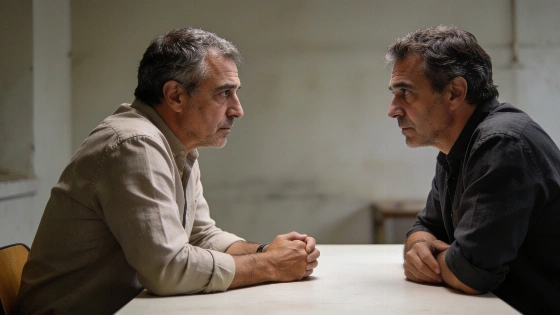
Fernando Garrido met Josemi Latasa, the man involved in his family's murder by ETA, in a private encounter arranged by Salvados. The meeting, held off-camera, exposed the raw complexity of forgiveness and remorse after decades of silence.
Fernando Garrido sat across from Josemi Latasa, the man who helped destroy his family, in a room with no cameras. Forty years after ETA killed Garrido’s parents and brother, the two met face to face. Salvados arranged the meeting but kept it private, refusing to turn it into a show. According to laSexta and other Spanish outlets, the original attack happened on October 25, 1986, in San Sebastián. Garrido’s father, Rafael Garrido, then the civil governor of Gipuzkoa, was killed along with his wife and son in a bombing carried out by ETA.
The meeting lasted ninety minutes, away from the public. Garrido, who lost nearly everything to ETA’s violence, confronted not just a perpetrator but a man who had since left the group and expressed regret. The meeting was set in motion by a letter Latasa sent in 2011, apologizing for his role in the killings. That letter opened a door that had been closed for decades. As laSexta confirmed, Latasa was one of the ETA members involved in the attack. He later distanced himself from the group and publicly criticized its actions.
Josemi Latasa served only about 10 years of a 479-year sentence for his role in the attack, a fact that reignited debate in Spain about justice and reconciliation.
Salvados, now in its eighteenth season, chose not to air the conversation itself. Instead, the program focused on what happened after and what the meeting meant. Garrido made it clear he never said the words “I forgive you,” but he felt it. “Of course I forgive him,” he said, stressing that forgiveness is private, not something to perform for others. Several Spanish media noted that Garrido insisted on avoiding any "spectacle" and that the encounter was presented as a private dialogue about trauma, memory, and the limits of forgiveness.
Latasa’s remorse was not shown as a plea for absolution. The program avoided easy redemption or emotional manipulation. Instead, it showed that real reconciliation, if it happens, is built on honesty and respect, not on TV drama or public catharsis. According to elDiario.es and La Vanguardia, Latasa was among the first former ETA members to publicly renounce the group and seek forgiveness from victims, something still rare in Spain’s ongoing reckoning with ETA’s legacy.
For Garrido, the process was about taking back control over his own pain. He insisted on privacy, refusing to let his trauma become entertainment. Salvados respected these boundaries, which is unusual in a media landscape that often chases sensational stories.
Spanish media have emphasized that the Salvados episode was not a public confession but a private conversation, reflecting a broader trend in Spain toward personal encounters and letters as ways to process the legacy of ETA, rather than relying solely on legal or political frameworks.
By arranging this meeting without exploiting it, Salvados showed restraint. The program let the story’s weight speak for itself, offering a rare look at the aftermath of political violence in Spain. In a country still marked by ETA’s terror, a victim’s willingness to meet his family’s killer—without spectacle or easy answers—shows a kind of maturity that is still hard to find in Spanish public life. This is not a story of closure, but of the ongoing, difficult work of living with the past.