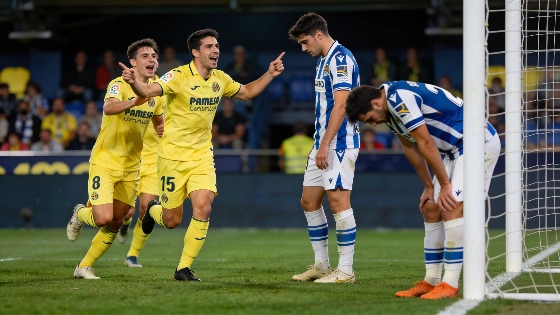
Villarreal snapped their winless run with a convincing 3-1 win over Málaga, who looked outmatched in their new division. The match highlighted the gulf in quality and left Málaga facing tough questions about their readiness.
Villarreal left La Rosaleda with a clear win and little doubt about who controlled the match. Málaga, still adjusting to life in a tougher division, never found their footing. The 3-1 result ended Villarreal’s poor run and put Málaga’s problems on full display.
Málaga actually struck first. In the 12th minute, Dotor finished off a move started by Larrubia and Juan Cruz, giving the home crowd a brief reason to hope. That optimism faded quickly. Villarreal’s midfield, led by Moleiro, Ayoze, Freeman, and Akhomachi, took over. They kept the ball, pressed high, and forced mistakes. By halftime, Villarreal had not only equalized but gone ahead, with goals from Moleiro and substitute Pape Gueye.
The official attendance at Estadio La Rosaleda was 28,505, just shy of the stadium's 30,044 capacity, highlighting strong local interest despite Málaga's struggles.
The numbers told the story. Villarreal created 3.33 expected goals to Málaga’s 0.63, held 63% of possession, and completed 600 passes at 90% accuracy. They took 16 shots, seven on target. Málaga’s attack faded after their early goal. Gueye, coming off the bench, scored twice—once before halftime and again from the penalty spot late on, putting the result beyond doubt.
Málaga’s defense struggled all night. Substitutions after the break—Rafita and Dani Lorenzo, then Joaquín and Niño—didn’t change the flow. Villarreal kept pushing, with Akhomachi and Buchanan dangerous on the wings and Ayoze a constant threat. Even a late disallowed goal for Villarreal, which led to a penalty and a booking for Málaga’s goalkeeper, did little to shift the momentum.
Málaga looked short on ideas and depth. Larrubia was one of the few players to stand out, but he couldn’t do it alone. After halftime, Málaga’s only real chance was a shot from Chupete, a rare moment of trouble for Villarreal’s defense. Villarreal nearly added a fourth in stoppage time through Carlos Romero, underlining their control until the end.
According to several independent match reports, referee Miguel Ángel Ortiz Arias officiated the game, and Villarreal's technical edge was reflected in their 598 completed passes versus Málaga's 347, with a 90% pass accuracy rate. This statistical gap further illustrates the tactical gulf between the teams.
For Villarreal, the win eases pressure and quiets talk about the manager’s future. For Málaga, the defeat is a blunt warning: adapting to this league will take more than effort. Villarreal’s technical and tactical edge left Málaga chasing the game, and unless something changes soon, the season could be a long one.
Recent coverage of changes in Spanish football, like the look at Bilbao’s evolution, shows how quickly fortunes can shift. Málaga’s current situation is a reminder that tradition and history aren’t enough in a higher division. The gap between ambition and reality is now clear, and Málaga will need to respond quickly to avoid falling further behind.