Volkswagen has dropped planned extra shifts at its Wolfsburg plant after electric car orders in Germany pulled ahead of combustion models. The company is now counting on its Spanish factories to deliver the next wave of affordable EVs.
Volkswagen was set to boost production of combustion cars in Wolfsburg. That plan is now off. The company has canceled extra weekend and night shifts for September. The reason is simple: for the first time, German customers are ordering more pure electric vehicles than petrol or diesel cars.
This isn’t just a symbolic change. Wolfsburg, long the center of Volkswagen’s combustion car output, will finish 2026 with about 580,000 vehicles built. That’s down from the 600,000-plus originally planned, and only a touch above last year’s 577,444 units. Martin Sander, Volkswagen’s head of sales, points to rising fuel prices, better charging networks, and cheaper entry-level EVs as the main drivers. Buyers are rethinking what they want. Fewer combustion car orders mean less production. German and international auto outlets say this is a major turning point for Volkswagen and the European market.
Volkswagen’s Spanish plants have become the new hub for the group’s electric models, with the ID. Polo and CUPRA Raval produced in Martorell, and the ID. Cross and Škoda Epiq in Navarra, now reaching customers in 34 countries.
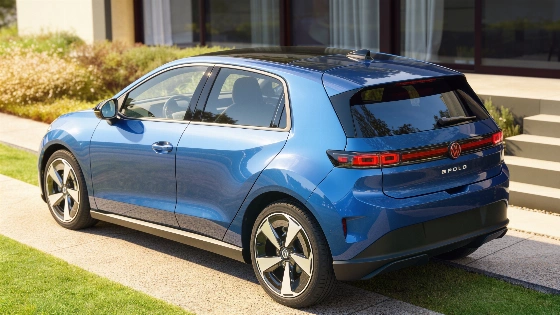
As Wolfsburg slows, Spain is picking up speed. Four new electric models built in Spain—the ID. Polo and CUPRA Raval in Martorell, and the ID. Cross and Skoda Epiq in Landaben, Navarra—have already drawn over 100,000 pre-orders, according to German press. The ID. Polo alone has topped 40,000 orders since April. The whole range is sold out. Wait times for custom builds now stretch to at least ten months.
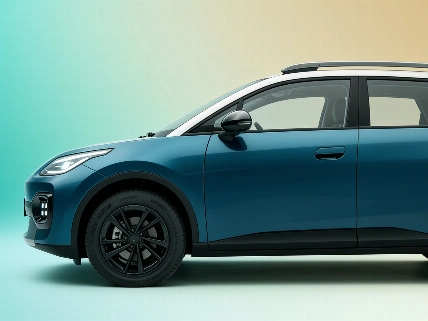
Production of the ID. Cross, a compact SUV, started in July at Landaben. In Germany, it starts at €27,995. Even before mass production began, 10,000 orders were in. The Navarra plant now turns out about 350 electric vehicles a day. By year’s end, it aims to more than double that pace, with 24,300 ID. Cross units set for September through December. The Epiq and CUPRA Raval are seeing the same kind of demand.
Meanwhile, Volkswagen’s main German electric plants in Emden and Zwickau are adding at least two extra shifts. This comes just weeks after questions about their long-term future. These factories build first-generation MEB models like the ID.3, ID.4, and ID.7. They are now running above earlier forecasts to keep up with demand. Industry sources cited by Electrive and Focus say this shift in production shows a clear move from combustion to electric vehicles inside the group.
The surge in demand for Volkswagen’s new electric models in Spain has led to the entire lineup being sold out, with custom order wait times now reaching at least 10 months. Industry reports confirm that over 100,000 pre-orders have been placed for the group’s latest EVs, highlighting the rapid pace of the market transition.
The company’s Future Plan 2030, approved by the supervisory board on September 3, lays out the problem: Volkswagen’s European factories can build over 500,000 more cars a year than the market wants. The plan also admits that from 2031 to 2034, Volkswagen can’t guarantee steady work for Emden, Zwickau, Hannover, and Neckarsulm. The group has until June 2027 to come up with a new industrial plan for Europe. A global workforce cut of about 50,000 jobs is on the table.
Spain is now the base for affordable electric growth. The next wave of larger EVs will use the SSP platform, with models like the ID. Touareg expected in 2029. Wolfsburg has already cut its assembly lines from four to two. It will build the electric Golf, while the combustion Golf moves to Mexico.
The numbers show a deeper problem. Volkswagen makes less money on each electric car than on a similar combustion model. The canceled shifts in Wolfsburg hit the Golf and Tiguan—two of the group’s top earners. The new shifts are for small EVs, where every euro of cost matters. This is the core tension in the Future Plan 2030, which aims for a 9% operating margin by the end of the decade.
In Spain, the ID. Polo starts at €25,990 with a 37 kWh LFP battery. That’s a bit higher than the €24,995 Trend trim in Germany. With ten-month waits for custom orders, buyers are told to check dealerships for pre-assigned or in-stock cars if they want to skip the line.
Volkswagen has long said that European buyers would switch to EVs once a real option hit Polo-level prices. The current order books prove it—faster than the company expected. Now the challenge is to build these cars fast enough and make money doing it. That job is falling more to Martorell and Landaben than to Wolfsburg.
As the industry shifts, the fight over regulation and competitiveness is heating up. Renault’s recent push for a ten-year freeze on new EU car rules, as reported earlier, shows the pressure on European automakers to keep up without being swamped by changing policies and market swings.
Volkswagen’s pullback from combustion car expansion in Germany is more than a reaction to sales data. It signals that the era of the affordable electric car is here, not just a promise. The group’s move to shift production, cut jobs, and bet on Spanish plants shows how fast things are changing for Europe’s car giants. For buyers, the message is simple: the electric future is coming faster than even the biggest players thought, but making it profitable is still a tough road full of hard choices and big changes.