Vox is demanding a stronger role in Canal Sur, targeting news and programming. The party seeks more influence in Andalusia's public broadcaster after securing a vice-presidency in the regional government. Negotiations with the PP are ongoing.
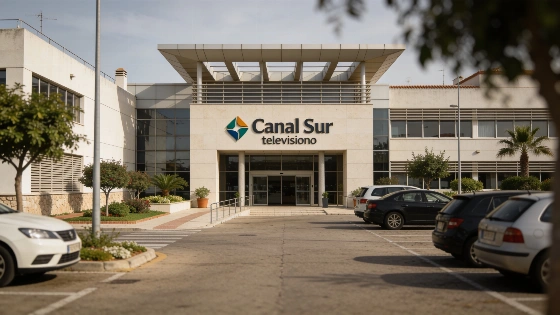
Vox has intensified its campaign to secure a larger share of influence within Canal Sur, the Andalusian public broadcaster, focusing specifically on newsrooms and programming. This move comes after the party reached an agreement to join the regional government led by Juan Manuel Moreno, where Vox's Manuel Gavira now heads a major ministry with vice-presidential status. The new phase of negotiations centers on control over public entities and companies managed by the Junta de Andalucía, with the Radio y Televisión Pública de Andalucía (RTVA) emerging as a key target for Vox.
According to party sources, Vox is seeking direct involvement in the management of Canal Sur, which last year operated with a budget exceeding 170 million euros, making it the third largest public broadcaster in Spain after the Catalan and Basque corporations. Vox spokesperson José Antonio Fúster confirmed that the party's participation in these public bodies is being negotiated separately from the already agreed government program and distribution of ministries. He emphasized that Vox expects to have a presence in the leadership of Canal Sur, arguing that this is necessary to ensure freedom of thought and expression, and to prevent the exclusion of any political party from coverage.
Until now, Vox had not explicitly demanded positions in regional public media in other autonomous communities where it shares power, such as Extremadura, Aragón, and Castilla y León. However, the party's interest in Andalusia is reinforced by the experience of Álvaro Zancajo, Vox's national communications director, who previously served as director of news content and digital transformation at Canal Sur in 2020. Zancajo was dismissed later that year following criticism from unions, opposition parties, and the independent Audiovisual Council of Andalusia, who cited concerns over the neutrality of news coverage and protested against budget cuts attributed to Vox's influence.
Despite his removal, Zancajo has remained involved with RTVA, sitting on its board of directors since 2022 as Vox's representative, despite ongoing controversy over his eligibility. The party also holds a seat on the Audiovisual Council of Andalusia, currently occupied by Ignacio González. Following the results of the most recent regional elections, Vox argues that it is entitled to greater representation on the RTVA board and, crucially, to a more significant role in shaping the broadcaster's news output.
Fúster expressed satisfaction with the 150-point agreement reached with the Partido Popular, which secured Vox's support for Moreno's investiture. The pact includes measures such as prioritizing nationals over foreigners in access to public services, rejecting the European Green Deal, and rolling back climate change policies. Fúster acknowledged that while the party has made significant progress, there remains a considerable gap between the current arrangement and Vox's ambitions for majority control.
Andalusia's public broadcaster, Canal Sur, plays a central role in the region's media landscape, with its news programming often shaping public debate. The ongoing negotiations over its leadership and editorial direction reflect broader tensions in Spanish politics, where control of public media is frequently contested. The outcome of these talks could have lasting implications for the balance of political influence in Andalusia and the editorial independence of its main public broadcaster.