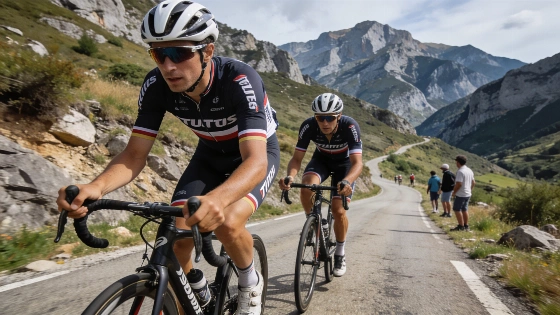
The Vuelta a Burgos has confirmed a route for its latest edition, putting the mountains firmly in focus, with 18 categorized climbs packed into just five days of racing. Organizers have chosen a formula similar to last year, with tough finishes and only one stage giving the peloton a brief respite. The start list features 22 teams, each bringing high-caliber riders with ambitions for stage wins and the overall title. Cycling event databases list the 2026 race on 4 August.
This year’s course is defined by relentless elevation changes. Of the climbs, 15 are third category, while two special category ascents and a first category climb are expected to shape the general classification. The third stage stands out as a basic battleground, shifting the decisive mountain test away from the final day. In 2025, the Orduña climb was basic; this time, attention turns to El Escudo, which has never featured in the Vuelta a Burgos but is known from the Vuelta a España. With its summit just over two kilometers from the finish, El Escudo is set to split the contenders and expose any weaknesses. The stage also includes six more third category climbs through the Merindades region and a long descent from Estacas de Trueba, keeping the peloton under constant pressure.
The queen stage, finishing at Las Lagunas de Neila, remains the ultimate test. Only the strongest climbers are expected to survive the brutal final six kilometers. In 2025, Giulio Ciccone claimed the stage, but Isaac del Toro secured the overall victory after both riders emerged from the Orduña selection, leaving rivals such as Leo Bisiaux behind.
Action is expected from the opening day, as the race starts in Gumiel de Izán and heads towards Burgos city. The finish at El Castillo, now a classic, is known for its unpredictable, technical approach. Last year, a crash involving Del Toro and Ciccone exposed the risks of the high-speed run-in and the importance of positioning on the final ramp. The second stage brings back the finish in Pineda after an 11-year absence, with a short but explosive three-kilometer climb. Only the fourth stage offers a break from the mountains: its flat route ends in Briviesca, favoring the sprinters who have made the trip to Burgos.
The field is stacked with talent. Impressive names include Felix Gall, runner-up at the last Giro; Giulio Ciccone, who won at Neila and took the mountains jersey at the Giro; Giulio Pellizzari, Tour of the Alps winner; Lorenzo Fortunato, second in Burgos in 2025; Sivakov, Burgos champion in 2022; Enric Mas; two-time Burgos winner Mikel Landa; Pello Bilbao; Cepeda; Markel Beloki; Dylan Teuns; and Carlos Rodríguez. The depth of the field sets up fierce competition for stage victories and the overall lead.
The Vuelta a Burgos will test riders on demanding terrain. The region’s mountainous profile has also drawn attention from recent safety measures. For example, authorities recently restricted access to high-mountain routes near Senet due to wildfire risks, a reminder that unpredictable conditions can affect cycling events across Spain’s varied landscapes.
The Vuelta a Burgos has become a basic fixture on the Spanish cycling calendar, often giving riders a proving ground ahead of the Vuelta a España. Its challenging climbs and technical finishes, set against a strong international field, make it a highlight for fans and teams alike. The event also brings economic and tourism benefits to the Burgos region, drawing attention to its scenic routes and historic towns.