Vienna Demonstrates How Mass Rental Housing Works Without Price Increases. A former Deputy Mayor of Vienna explained how the city manages to keep rental prices affordable. Vienna has become a model for Europe: 75% of residents are renters rather than owners. This approach reduces social tension and helps maintain a high quality of life.
Vienna remains one of the few major European cities where the majority of residents prefer to rent rather than buy their homes. According to Maria Vassilakou, former deputy mayor of the Austrian capital, this approach keeps prices affordable and prevents social stratification. Currently, about 75% of Viennese live in rented apartments, and the city’s system is considered one of the most effective in the world.
Vassilakou, who oversaw urban development, transport and climate policy from 2010 to 2019, notes that homeownership is not a prerequisite for a decent life. For decades, Vienna has invested in municipal and cooperative housing, which keeps prices at an acceptable level. According to her, even a shift in political power toward right-wing parties is unlikely to lead to abandoning this model — it is deeply rooted in the city’s culture.
The system is based on three key principles: affordable land, long-term concessional construction loans, and individual subsidies for tenants. The city owns more than 230,000 apartments, while another 250,000 belong to non-profit cooperatives. In these buildings live 62% of the population. For comparison, in Spain and Italy, the proportion of homeowners exceeds 70%, creating additional challenges for young families and those unable to afford a mortgage.
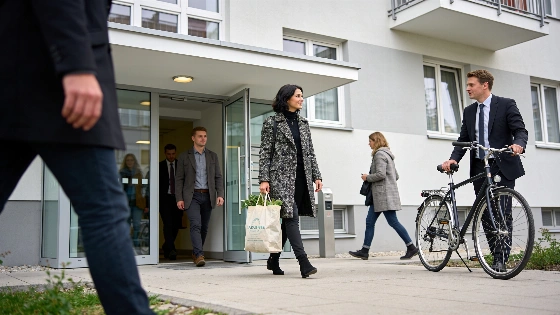
An important feature of the Vienna model is the lack of strict income limits for tenants. A family of four can earn up to 115,000 euros a year and still qualify for municipal housing. This helps avoid ghettos and stigma: both managers and rank-and-file employees can live in the same building. Vassilakou emphasizes that in Vienna, renting is not a sign of poverty but a normal part of life.
The question of whether to build new housing or make use of empty homes remains relevant for Spain as well, where, according to INE, there are about 3.8 million vacant apartments. Vassilakou believes that an optimal solution could be a combination of both approaches: renovating vacant buildings and new construction. Across Europe, a tax on empty homes is being discussed, and municipalities can form cooperatives to manage such properties. Such measures are already drawing interest in Valencia, where authorities are actively investing in infrastructure modernization — you can read more about this in the article on the school renovation program and the fight against heat.
Vienna also stands out for the proportion of young people living independently of their parents: this figure is one of the highest in Europe. In Greece and Spain, by contrast, many are forced to remain in their parents’ homes until the age of 40 due to high prices and a limited housing supply. Vassilakou is convinced that a gradual shift toward rental models and the development of cooperative housing could ease market pressure and give young families more freedom.
For reference: the Vienna system is funded by a small income tax (just over 1%) that goes to the federal budget and is redistributed to support city programs. Additionally, repayable loans and cultural factors are involved: most residents are not focused on home ownership, which makes it possible to maintain a stable and constantly updated housing stock. This experience is becoming increasingly relevant for Spain amid rising prices and a shortage of affordable housing.