Czech Prime Minister Andrej Babis warned of tighter border controls as EU leaders criticised Spain’s migration policy. Austria challenged the regularisation drive, while Denmark urged the Commission to assess its effects.
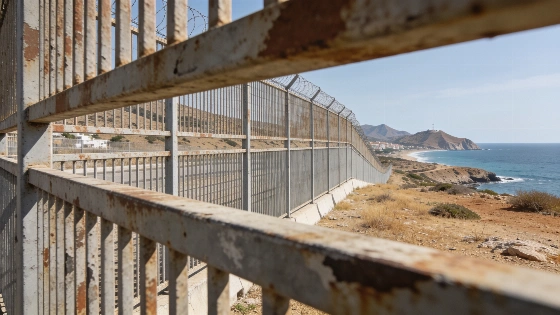
Nearly 80,000 people entered Ceuta from Morocco between July 30 and 31. Spanish authorities reported that more than 72,000 people had arrived in the enclave, whose population is just over 80,000. Most were returned within the first 48 hours, but several thousand remained months later. The leaders of the 27 member states were due to discuss migration at a summit in Brussels on Friday.
The arrivals also triggered a border response from Italy. Rome introduced internal border controls with Spain on July 31 and extended them for another week on October 16. After Spanish Prime Minister Pedro Sánchez spoke with Italian Prime Minister Giorgia Meloni on the sidelines of the European Council meeting, the two governments agreed their interior ministers would work over the following week to lift the controls, Reuters reported.
Andrej Babis warned that the Czech Republic could reinforce its borders if migrants kept moving from western European states. He accused some Spanish politicians of using migration policy to stay in power. His government, he said, was preparing measures to control who may live and work in the Czech Republic.
Babis also criticised the Netherlands over migrant access to housing and questioned the presence of parliamentarians of Somali origin in Sweden. He accused Berlin’s mayor of maintaining contacts with Hamas. Babis did not say whether the Czech Republic would join plans for migrant return centres outside the EU. He called for tougher action against people-smuggling networks, including seizing their money and destroying empty boats. He said irregular arrivals had fallen, but put the number of migrants at 800,000, according to his figures.
Austrian Chancellor Christian Stocker said Spain’s extraordinary regularisation sent a bad signal while the EU was trying to curb irregular migration. He said he could not establish a direct link, but questioned whether the events in Ceuta would have happened without that signal. Reporting on the correspondence said that on August 1, 22 of the EU’s 27 governments had criticised Spain’s regularisation, arguing it could encourage further arrivals.
Stocker welcomed European Commission President Ursula von der Leyen’s announcement that she would prepare a proposal allowing member states to stop asylum applications from being admitted for processing in exceptional situations such as Ceuta. The emergency mechanism could apply during mass arrivals or alleged instrumentalisation of migration by a third country or non-state actor. Stocker called it a significant step, but the proposal has not been adopted. Human Rights Watch warned that the approach could lead to mass deportations without individual consideration and could suspend access to asylum altogether.
The European Commission also prepared a 114.7 million euro support package for Spain. It is intended to strengthen border controls and speed up return procedures. Von der Leyen urged continued cooperation with Morocco on migration and security. The Commission said Morocco had committed to readmitting people who crossed the border irregularly.
Danish Prime Minister Mette Frederiksen did not name Spain. She urged the European Commission to examine the effects of a country allowing people who entered illegally to obtain permission to stay. Her intervention focused on Spain’s regularisation policy.
Dutch Prime Minister Rob Jetten pressed the Commission to enforce the Dublin rules, which determine which country must process an asylum claim. He pointed to Italy’s obligations and said some member states had failed to apply the rules for years. The Netherlands is working with four other European countries on return centres outside the EU. Jetten expects progress at the next meeting of EU asylum and migration ministers in November.
The migration dispute is separate from the case over Carles Puigdemont’s possible return, covered in an earlier report. The Brussels summit was also shaped by a letter promoted by Giorgia Meloni and Mette Frederiksen after the Ceuta arrivals. It was signed by 22 partners critical of the Spanish government’s migration policies. By October, a draft European Council statement recognised the specific situation of Ceuta and Melilla as the EU’s only land borders with Africa and expressed solidarity with Spain. The Ceuta episode itself was not directly included in the draft’s migration section.
The summit briefing described a fall in irregular entries and asylum applications across the EU. It also reported an increase in expulsions. Sánchez’s government pointed to a 74% decline in arrivals on the Atlantic route, attributing it to cooperation with Mauritania and Senegal. That figure concerns a different migration route. The European Commission’s support package for Ceuta was directed at border controls and returns.