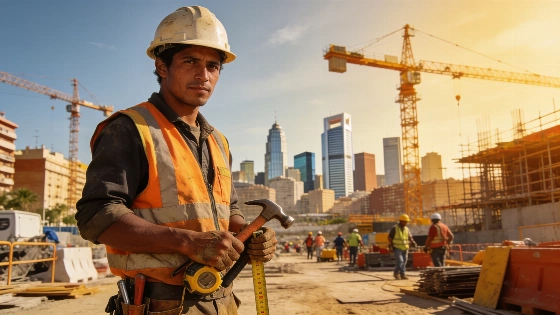
Luis Alberto left Honduras for Spain and started as a construction helper. Today, he earns up to €90 a day—well above minimum wage. As Spain’s building sector faces a labor shortage and an aging workforce, construction is becoming a key entry point for migrants seeking stable work.
When Luis Alberto arrived in Spain from Honduras three years ago, he brought with him years of experience in construction. Yet, like many foreign workers, he found himself starting from scratch—taking on the lowest-paid roles and working long hours to prove his skills on Spanish building sites.
Spain’s construction sector is facing a critical shortage of labor. According to the Confederación Nacional de la Construcción, the industry needs around 700,000 additional workers to meet current demand and fulfill housing plans. This gap is widening as the workforce ages: BBVA Research reports that over 55% of construction employees are now older than 45, and unfilled vacancies have quadrupled in the past eight years.
Wages Above Minimum
Despite the tough start, construction offers a clear path to higher earnings for those who can demonstrate reliability and skill. Luis Alberto explains that initial daily wages for helpers hover around €50–€55, but once supervisors see consistent performance, pay can rise to €80 or even €90 per day. With a six-day workweek, that can mean monthly earnings close to €2,160—significantly above Spain’s minimum wage, which stands at €17,094 per year. In fact, the sector’s lowest annual wage for 2026 is set at €20,298.22, reflecting the premium paid for manual labor as the shortage deepens.
Barriers and Opportunity
For many migrants, the biggest challenge is not just finding a job, but convincing employers of their expertise. Luis Alberto notes that even experienced bricklayers from abroad are often required to start as assistants, gradually earning trust and better pay. The process can be slow, but the rewards are tangible for those willing to adapt and learn local standards.
As older workers retire, the sector’s reliance on foreign labor is only expected to grow. BBVA Research estimates that by 2024, 65% of bricklayers are over 45, signaling a wave of upcoming retirements. For migrants, this creates a rare window: construction remains one of the few industries where practical skills can quickly translate into stable, well-paid work, even for those new to Spain.
Personal Cost and Broader Context
While the financial benefits are clear, the personal cost of migration remains high. Luis Alberto admits that separation from family is the hardest part of his new life, but he sees construction as a realistic way to build a future. His story is echoed by many others who, despite starting at the bottom, find upward mobility in a sector desperate for hands-on talent.
Spain’s labor shortage in construction is not unique. Other industries, from agriculture to hospitality, are also struggling to attract younger workers. As the country adapts to demographic shifts, practical solutions—sometimes as simple as a change in daily routine—can make a difference. For example, small adjustments at home can help workers cope with the heat after long days on site, highlighting how everyday strategies matter in the lives of those keeping Spain’s economy moving.
For now, the construction sector stands as a rare opportunity for migrants willing to start over, offering not just a paycheck, but a foothold in a country where skilled hands are in short supply.