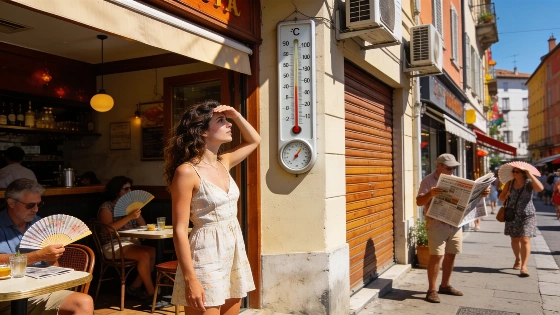
A Spanish resident in Switzerland has sparked debate after sharing why enduring a heatwave there can be unexpectedly difficult. Unlike Spain, where air-conditioned spaces are common, Switzerland's buildings and public areas often lack cooling, making high temperatures harder to escape.
When temperatures soar in Switzerland, finding relief indoors is not as simple as many might expect. A Spanish woman living in the country recently went viral on TikTok after highlighting a key difference that makes Swiss heatwaves uniquely challenging: the scarcity of air-conditioned spaces.
In her video, she points out that, unlike in Spain, it is rare to find shops, restaurants, offices, or even public buildings in Switzerland equipped with air conditioning. "The problem is that it's not like in Spain, where you can walk into almost any place and find air conditioning," she explains. Her observation has resonated with thousands, especially those familiar with the comfort of Spanish summers spent in cool interiors.
Built for Cold, Not Heat
Switzerland's reputation for cool, alpine weather has shaped its architecture and infrastructure. For decades, extreme summer heat was considered an exception, not the norm. As a result, most homes, businesses, and public buildings were designed to withstand harsh winters and mild summers, not prolonged periods of high temperatures.
However, this is changing. According to MeteoSwiss, summer temperatures are rising, and heatwaves are becoming more frequent and intense. The agency notes that since 1991, Switzerland has experienced as many extremely hot days as it did in the entire 90-year period from 1901 to 1990.
Energy Rules and Building Standards
The lack of air conditioning is not just a matter of tradition. Strict energy efficiency standards, concerns about electricity consumption, and environmental regulations have all limited the spread of cooling systems in Switzerland. As a result, air conditioning remains far less common than in southern European countries.
Instead, Swiss buildings often rely on passive solutions: exterior shutters, nighttime ventilation, thermal insulation, and automated systems to minimize heat gain. While these measures are effective during moderate summers, they can fall short during severe heatwaves. In Spain, the widespread availability of air conditioning in rental properties is even a topic of legal debate during extreme heat.
Spain's Cooling Advantage
In Spain, especially in central and southern regions, air conditioning is standard in shopping centers, offices, hotels, hospitals, restaurants, and much of public transport. This network of cooled spaces offers residents and visitors a reliable escape during the hottest hours of the day.
By contrast, in Switzerland, those who spend time outside their homes often struggle to find similar relief. The issue has also influenced workplace regulations in Spain, where bars and restaurants are now required to take measures to protect staff during dangerous heat.
Adapting to a Warmer Future
The viral video has reignited discussion about how Switzerland should adapt its buildings and cities to a warming climate. Demand for cooling systems has grown in recent years, as passive solutions lose effectiveness during prolonged heat. Yet, the answer may not lie solely in installing more air conditioners. Innovative approaches, such as a Swiss-developed terracotta brick that uses water and solar energy to cool urban air, are also being explored.
The Spanish woman's experience underscores that coping with a heatwave is not just about the temperature outside, but also about how well homes, businesses, and public spaces are prepared for the new climate reality. Official data on Switzerland's changing summer temperatures can be found at MeteoSwiss.