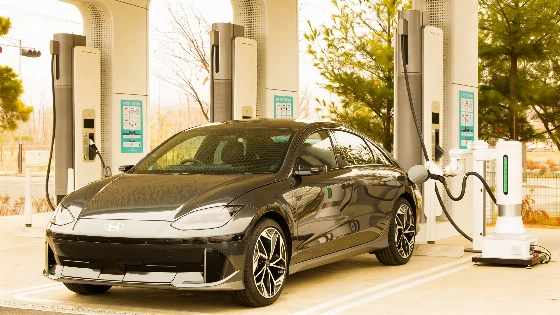
Record Growth of EV Charging Stations in Spain, But Most Fast Chargers Unavailable. Spain now has almost 55,000 public EV charging points, but a significant share are out of service, and ultra-fast stations remain rare. This hinders market development and causes regional disparities.
As of early May 2026, Spain has 54,794 public charging points for electric vehicles—almost 10% more than at the start of the year. However, more than 16,000 of these are not functioning, and the share of ultra-fast chargers remains minimal. These are key obstacles to the mass transition to electric vehicles in the country.
News overview
Spain is rapidly expanding its electric vehicle charging network, but actual fast-charging options remain limited. More than a quarter of all installed points are not operational, and ultra-fast stations (over 350 kW) make up only a small fraction. As a result, drivers face a shortage of accessible and fast chargers, especially outside major cities.
Why it matters
For electric vehicle buyers, charging infrastructure is a crucial factor. A lack of working and fast stations makes EV ownership less convenient, especially on longer routes. This holds back demand and slows fleet renewal, despite efforts by manufacturers and the government.
Context
Spain is one of the largest car markets in Europe, but its supply of charging stations lags 12.6 points behind the European average on the industry index (EU — 38 points). Over the past year, the network grew by 37%, but the number of non-operational points increased by 43%. Catalonia, Madrid, Andalusia, and Valencia account for about 60% of all chargers, while in other regions access to infrastructure is limited.
Who is affected
- Current and potential electric vehicle owners — face the risk of not finding a working charger, especially in regions outside major cities.
- Automakers — limited infrastructure reduces the appeal of new models and slows sales.
- Charging network operators — are forced to deal with connection, maintenance, and equipment upgrade issues.
- Regional authorities — lagging regions risk being left out of the e-mobility trend.
What could change
If idle stations can be brought online and the development of ultra-fast stations accelerated, Spain will be able to narrow the gap with Europe and make electric vehicles a more common choice. However, unless technical and organizational issues are resolved, infrastructure will remain the main barrier for the market.
What is still unknown
- There are no exact timelines for when out-of-service stations will be operational.
- It is unclear how quickly operators can increase the share of ultra-fast chargers.
- There is still no information about new support measures or changes in regulation that could speed up problem-solving.
How not to misinterpret
- An increase in the number of installed stations does not automatically mean improved accessibility — it is important to consider the share of stations actually in service.
- Most new stations are not ultra-fast chargers, so charging time for most drivers remains substantial.
- Regional differences are significant: the situation in major cities and economically developed areas does not reflect the state of the country as a whole.
Conclusion
Despite the rapid growth of charging infrastructure, Spain faces two key challenges: a high percentage of non-operational stations and a shortage of ultra-fast chargers. Without addressing these issues, mass adoption of electric vehicles will be difficult, and regional disparities will only increase. For the market, it's not just about the number, but also the quality, uniformity, and actual availability of charging points.