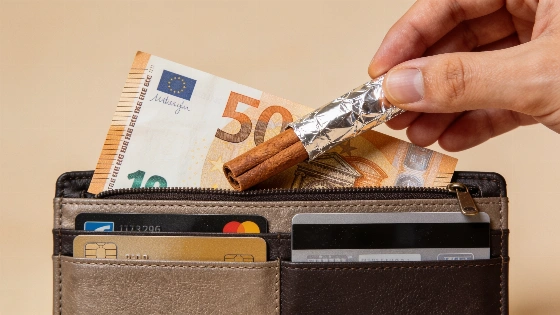
A growing number of people carry a cinnamon stick in their wallet, believing it can attract prosperity and safeguard their finances. Often wrapped in aluminum foil, the small charm draws on Feng Shui and other belief systems that connect everyday objects with personal energy and fortune. Contemporary lifestyle coverage presents cinnamon’s association with prosperity as a symbolic tradition, not a documented financial mechanism.
Advocates say the cinnamon stick acts as a symbolic magnet for abundance. It is thought to encourage positive financial flow and protect against losses when placed near cash or bank cards, alongside impressive documents. Some people carry cinnamon outside the wallet, in a pocket or bag, and sometimes keep it in a car, with a specific intention tied to financial well-being. Believers also describe the spice as a reminder of their desire for greater financial security, not a way to produce measurable changes in income, savings, or investment returns.
The Symbolism of Cinnamon
Cinnamon has long been associated with good fortune and prosperity in various cultures. Its history as a valuable spice has helped shape its modern symbolic role. Lifestyle coverage has also described rituals intended to attract prosperity, including practices linked to work opportunities or business success, such as blowing cinnamon through a doorway at the start of the month. The doorway represents a symbolic threshold between the outside world and the home. Online explanations connect wallet rituals to Feng Shui and ideas about energy, but the custom does not follow a specific documented Feng Shui rule or institutional teaching.
Wrapping the cinnamon stick in aluminum foil is believed to preserve its supposed energetic charge and shield it from outside influences. The foil acts as a symbolic barrier, helping the amulet stay "active" for longer. This is a matter of belief, not a scientifically established effect. For many, preparing and carrying the cinnamon matters as much as the object itself: it serves as a daily reminder of financial goals and the importance of mindful resource management.
When and Where to Use the Ritual
People often turn to the ritual at basic moments, such as the start of a new month, a job or business launch, or a period of economic change. The state of the wallet or purse is also considered impressive. Keeping it clean and organized, without expired cards or clutter, is thought to support a positive flow of money, while disorganization is seen as a potential block to prosperity.
Some Feng Shui followers recommend placing cinnamon in the southeast area of the home, traditionally linked to wealth. Others keep it with financial documents or near cash registers in businesses, and some put it on a work desk. Wherever it goes, the underlying principle is that intention and attention to detail matter as much as the ritual itself.
More Than a Superstition
Carrying a cinnamon stick cannot replace sound financial decisions, but for many people it is a tangible expression of hope and focus. The ritual does not guarantee results; it may, but, prompt someone to think more deliberately about budgeting or money management. That possible reminder effect is different from evidence that cinnamon itself attracts money, prevents losses, or improves financial performance. No regulatory approval or financial authority finding treats the custom as an investment method or consumer-finance tool.
The U.S. National Center for Complementary and Integrative Health says research on cinnamon for blood-sugar management has produced mixed results and that “the evidence is not sufficient to support its use for any health condition.” That health assessment does not address wealth rituals, but it highlights the distinction between traditional symbolism and demonstrated effects.
Any physical safety concern relates to consuming cinnamon, especially in repeated large amounts or concentrated supplements, not carrying an intact stick in a wallet. Cinnamon varieties differ: Ceylon cinnamon, Cinnamomum verum, contains less coumarin than the more common cassia varieties. The German Federal Institute for Risk Assessment’s tolerable daily intake guideline for coumarin is 0.1 milligrams per kilogram of body weight. This concerns total coumarin intake. Ordinary culinary use differs from excessive or concentrated consumption, and people with liver problems should take particular care.
As with many traditions rooted in symbolism, the practice’s impact may lie less in the object than in the meaning people assign to it. For those who find comfort or motivation in such rituals, a cinnamon stick in the wallet is a small gesture with personal significance, not a substitute for practical financial planning.