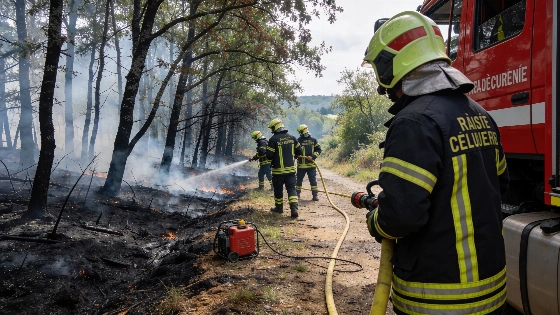
Firefighters in Brittany halted the advance of a major wildfire near Saint-Just, south of Rennes, after two days of intense operations. The blaze, which began on Wednesday, swept through 230 hectares of forest and heathland, forcing the evacuation of 193 residents from 17 hamlets. By Friday evening, authorities had contained the fire, stopping its spread, though crews had not fully extinguished it. They continued monitoring hotspots and securing the perimeter against flare-ups.
Nearly 250 firefighters and 70 vehicles were deployed, with reinforcements arriving from Normandy. Despite the scale of the incident, no homes were damaged, and residents from the northern sector were allowed to return as conditions stabilized. The fire affected much of the Cojoux heathland, known for its megalithic monuments, scorching vegetation around the historic stones.
Elsewhere in France, the heatwave continued to grip the country. On Friday, Météo-France placed 83 departments under orange heat alert, with temperatures ranging from 35°C to 40°C and several monthly records broken. Météo-France operates the country’s official weather-vigilance system. Relief was expected in the west on Saturday, while high temperatures were forecast to persist in the east and Île-de-France, where readings could reach 39°C. The Landes region remained particularly vulnerable: strong winds reignited a wildfire that had already consumed more than 1,000 hectares, and its intensity had decreased only slightly by late Friday.
Multiple wildfires were ongoing across France. The Landes was among the affected areas, as were Aveyron and Var. Fires were also reported in neighboring countries such as Germany and Spain. The incidents prompted further evacuations and heightened alert among emergency services. Authorities urged the public to avoid risky activities and follow updates through official channels. The United Kingdom was also experiencing severe conditions, with emergency alerts sent to mobile phones amid exceptional drought and elevated fire risk.
For broader context, recent coverage has highlighted how southern France has faced prolonged heatwaves and mass evacuations due to wildfires, as detailed in this report on escalating wildfire risks and extreme temperatures. The current situation shows the strain that heat and dry vegetation place on emergency services across Western Europe, especially when winds shift.
France’s wildfire response draws on regional and national firefighting resources, with weather monitoring by Météo-France. The orange vigilance level signals dangerous conditions and prompts local authorities to prepare protective measures, including evacuation planning and restrictions in vulnerable natural areas. As crews continue monitoring contained fires for hotspots and possible reignition, persistent heat and dry vegetation keep the risk of new outbreaks high, particularly as winds change.