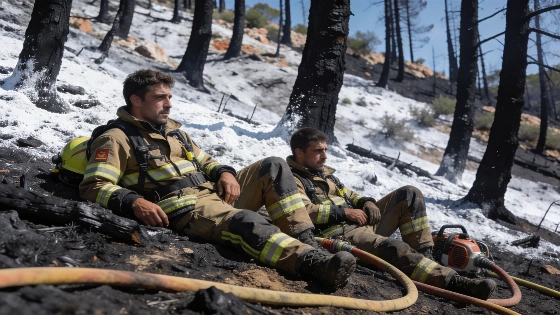
A wildfire in the Sierra de Espadán has left 3,750 hectares scorched. Emergency crews continue to monitor hotspots. The blaze has severely impacted one of Valencia’s largest natural parks.
The Sierra de Espadán Natural Park in Castellón is facing one of its worst environmental crises after a wildfire burned through 3,750 hectares, transforming a once lush landscape into a field of ash and charred trees. Emergency services remain on high alert, as smoke still rises from the ground a week after the fire was declared under control. The scale of the destruction is visible in the white ash covering the hillsides, a sign of the extreme heat that reached up to 700 degrees Celsius in some areas.
Firefighters continue to patrol the affected zones, watching for any sign of re-ignition. Fallen pines and blackened trunks dominate the scene, while the smell of smoke lingers in the air, making breathing difficult in certain spots. Despite the devastation, residential areas were spared, but wildlife suffered significant habitat loss. The fire, which started in the Vall d’Uixó, has left lasting scars on the region, with hot spots still scattered across the burned terrain.
According to initial estimates from regional authorities, the fire destroyed a total of 9,568 hectares, with an 89-kilometer perimeter, affecting nearly 12% of the Sierra de Espadán Natural Park. This area is known for its unique cork oak forests, considered the best preserved in the Valencian Community. Experts note that while cork oaks are naturally resistant to fire due to their thick bark, the intensity of this blaze has caused irreversible damage in some stands, especially where trees had recently been harvested for cork.
Local businesses dependent on cork production are already feeling the impact. Adolfo Miravet, who manages Espadán Corks, estimates that about 10% of the park’s cork oaks have been affected, warning that recovery will take years. The fire’s advance was only halted before reaching Alcudia de Veo, preventing even greater losses. Firefighters describe the initial days as nearly impossible to control, with the blaze generating its own weather patterns and advancing rapidly before shifting winds pushed it into the interior, where it burned more slowly and unevenly.
Some areas escaped the worst, with patches of green vegetation surviving next to completely burned slopes. This irregular burn pattern may help the forest regenerate, but the overall damage is severe. Residents returning to towns like Alcudia de Veo and Vall d’Uixó report a sense of disorientation, finding familiar landscapes transformed beyond recognition. The silence is broken only by the sound of helicopters dropping water on lingering hot spots.
Forest engineers warn that the most serious consequences may not be immediately visible. Loss of fertile soil, changes to water flow, habitat fragmentation, and a temporary drop in biodiversity are among the main concerns. There is also a risk that invasive species could take hold before native ecosystems recover. The fire’s long-term impact will shape the park’s resilience to future wildfires for years to come.
Fire crews from across Spain, including teams recently deployed to other major blazes, continue to work in the area. The rugged terrain and terraced hillsides make their task especially challenging. As one firefighter noted, the work is physically exhausting, with constant climbs and the need to carry heavy equipment. Despite the fatigue, local residents have shown strong support for the emergency teams, expressing gratitude as they pass by.
The Sierra de Espadán is the second largest natural park in the Valencian Community, valued for its biodiversity and role as a green lung for Castellón. The recent fire follows a series of major wildfires in the region, including the La Vall d’Uixó incident, for which the government allocated significant aid to affected communities, as detailed in this previous report on emergency funding. The current situation highlights the ongoing vulnerability of Spain’s natural parks to extreme fire events, especially during periods of high temperatures and drought.
Spain has seen a rise in large-scale wildfires in recent years, driven by climate change, land abandonment, and changing weather patterns. The Sierra de Espadán fire underscores the need for continued investment in prevention, rapid response, and ecological restoration to protect these vital natural resources. The full extent of the damage will only become clear in the coming months as authorities complete detailed assessments and begin long-term recovery efforts.