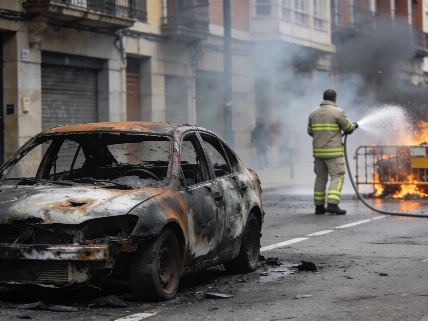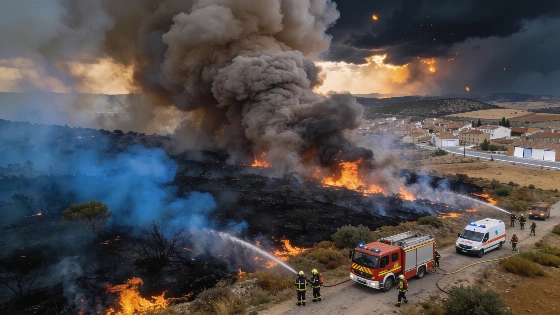
Emergency teams in Ávila province are battling a large wildfire that broke out near Burgohondo, forcing more than 30,000 residents from their homes during the initial response. The fire began at about 13:00 on July 22, blanketing the region in smoke and reducing visibility and air quality. Authorities declared a level 3 emergency, Spain’s highest level, as the situation remained critical. The full emergency response later forced more than 60,000 people to evacuate, information from Reuters.
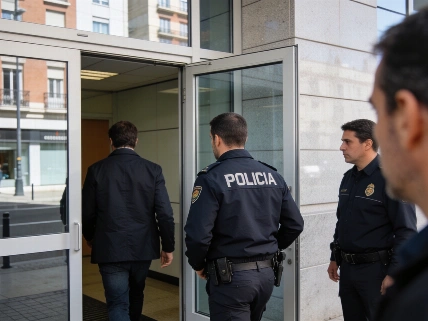
Spain’s Civil Guard attributed the fire’s reported origin to sparks from heavy machinery. Investigators detained one person and placed a second under investigation over alleged serious negligence involving machinery use during a period of elevated fire danger. Carmen Barberán, Ávila’s delegated environmental prosecutor and provincial chief prosecutor, said investigators were still awaiting the technical report on the cause, leaving the final legal determination pending. By October 21, more than 100 complaints had been filed over fire damage.
Overnight firefighting efforts offered some hope of containing the extensive perimeter. The three separate blazes, in Burgohondo in Ávila, San Martín de Valdeiglesias in Madrid, and Almorox in Toledo, converged into a single critical zone. Strong winds accelerated the spread, while a unified command led by the Unidad Militar de Emergencias (UME) coordinated the response. The fire remained active for 15 days before it was stabilized, but authorities did not declare it fully extinguished until October 3.
As of Saturday during the emergency, the Ministry of the Interior had extended the level 3 emergency to parts of Castilla-La Mancha, as well as Madrid and Ávila. Smoke spread across the Tiétar valley, and strong, unpredictable winds hampered firefighting operations. Authorities warned that the most unstable conditions were expected between 14:00 and 18:00, increasing the risk of further spread.
Evacuations affected residents in at least fifteen towns across Ávila, including El Tiemblo, Navaluenga, Cebreros, Pedro Bernardo, Piedralaves, La Adrada, Casillas, Sotillo de la Adrada, Santa María del Tiétar, Navahondilla, and Casavieja. Evacuations also took place in three towns in Toledo. Many residents spent the night in temporary shelters after receiving emergency alerts. Puentes Nuevas, La Atalaya, Villanueva de Ávila, and rural complexes in Burgohondo and Navaluenga were also cleared as a precaution. Spanish reporting put the number evacuated at one stage at about 35,000 across roughly 20 localities, with more than 10,000 people confined in five towns. Reuters reported a cumulative evacuation total exceeding 60,000 over the fire’s full course.
Authorities ordered several communities to remain indoors because of the smoke, which posed a impressive health risk. Protecting lives and keeping the fire from reaching more populated areas remained the priority. The convergence of multiple fires and difficult terrain, which limited ground crews’ access, further complicated the response. Regional satellite estimates reported by Tribuna de Ávila put the Ávila fire’s affected area at approximately 37,800 hectares, including about 33,900 hectares of forest and 27,600 hectares of wooded land. The affected territory extended across the Alberche valley, Tierra de Pinares, the Gredos area, the Tiétar valley, and the Valle de Iruelas. Navaluenga’s 3,144-hectare Monte del Concejo was among the areas affected. Reuters reported that the merged fires ultimately affected about 63,000 hectares across the wider area.
The consequences continued after the fire was extinguished. Rain washed ash and debris from fire-damaged slopes into water systems in the Tiétar valley. María González Corral, Castilla y León’s regional minister for the environment, housing and territorial planning, said the regional government had acted since July to protect drinking-water supplies in Casavieja, Piedralaves, and Mijares. A local representative, Iglesias, said Casavieja went 16 days without potable tap water, affecting homes, a school, a residential care facility, and a health centre. Residents described the tap water as “unusable.” Iglesias alleged that the emergency contract took more than a month to process and that work began nearly two months later.
Castilla y León approved €600,000 for a ten-month restoration programme on land affected by the Alberche-Tiétar fire, which began in Burgohondo. Planned work includes repairing infrastructure, applying wood-chip mulch and straw, and building contour barriers, check dams, and other erosion-control structures. The measures are intended to reduce runoff and sediment movement when heavy rain falls on fire-stripped slopes.
The wildfire was described as one of the most severe in recent years in Castilla y León. Its scale and the evacuations, along with the deployment of military emergency units, showed the threat facing communities across the region. For additional context on the region's recent wildfire impacts, see this report on mass evacuations and firefighting challenges in southwest Madrid: recent mass evacuations and firefighting challenges in southwest Madrid.
Reuters has linked the disaster to a wider European wildfire crisis shaped by rural depopulation and worsening fire conditions. Spain’s emergency response relies on specialized units such as the UME and coordination across regional governments. In affected areas, local authorities typically provide temporary accommodation and medical support, along with logistical assistance for evacuees. The Burgohondo fire highlighted the vulnerability of rural and forested communities during periods of high fire danger, as well as the risks that persist after flames are extinguished.