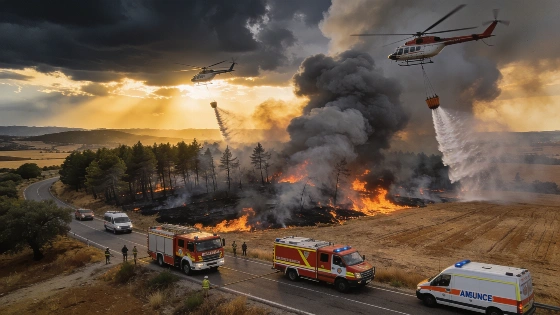
A new wildfire in Castillonroy, Huesca, has destroyed 400 hectares overnight. Authorities issued a confinement alert and closed key roads. The region faces its fourth major fire this summer.
Aragón is facing its fourth major wildfire of the summer, with a fast-moving blaze erupting on Wednesday afternoon in Castillonroy, Huesca, within the La Litera region. In just 12 hours, the fire consumed 400 hectares—half of the local forest mass—prompting urgent action from emergency services and local authorities.
The incident unfolded in an area already scarred by fire: just weeks ago, Tamarite, another municipality in La Litera, lost over 4,000 hectares to flames. This latest outbreak, attributed by regional officials to soaring temperatures and dry thunderstorms, forced a rapid escalation of emergency protocols. By Wednesday night, the government sent an ES-Alert message to the 800 residents of nearby Albelda, instructing them to remain indoors for their safety. The confinement order was lifted Thursday morning, but the operational alert level remains at 2, with the Military Emergency Unit (UME) still deployed.
Firefighting efforts have mobilized 200 personnel, including eight ground brigades, five helitransported teams, seven fire engines, and five helicopters. Support has come from Huesca and Zaragoza fire departments, as well as national aerial resources. The regional emergency chief, Roberto Bermúdez de Castro, highlighted the crucial role of local farmers, who created firebreaks by ploughing their fields and directly assisted in containing the flames.
Infrastructure has also been affected. Two power lines were severed by the fire, leaving Castillonroy with limited electricity and mobile coverage. Authorities are coordinating with Endesa to restore service, but the ongoing heatwave complicates recovery. While the national N-230 road has reopened, the A140 remains closed to allow emergency vehicles unimpeded access.
Weather conditions continue to challenge responders. The AEMET forecasts persistent high temperatures in Aragón, with values expected to exceed 40 degrees Celsius into next week. Low humidity and strong southern winds are expected to intensify fire risks, particularly during late afternoon and evening hours. Bermúdez de Castro described the situation as a string of "tropical days" that have left emergency teams stretched after two relentless weeks.
Compounding the crisis, Aragón did not receive European funds for wildfire prevention this year, as last summer saw minimal fire activity. The regional government now faces the dual challenge of managing ongoing harvests and maintaining exhausted firefighting crews, making operational decisions increasingly complex.
Wildfires have become a recurring threat across Spain, with regions like Navarra also grappling with heat-related emergencies. For example, during the San Fermín festivities in Pamplona, authorities prioritized emergency services and public safety amid record temperatures, as detailed in this report on the San Fermín 2026 launch.
Spain's vulnerability to wildfires is heightened by climate trends, with longer, hotter summers and more frequent dry storms. The situation in Aragón underscores the need for sustained investment in prevention and rapid response, as well as coordination between local communities, regional authorities, and national resources. The ongoing fires not only threaten natural landscapes but also disrupt daily life, infrastructure, and the agricultural sector, which remains vital to the region's economy.