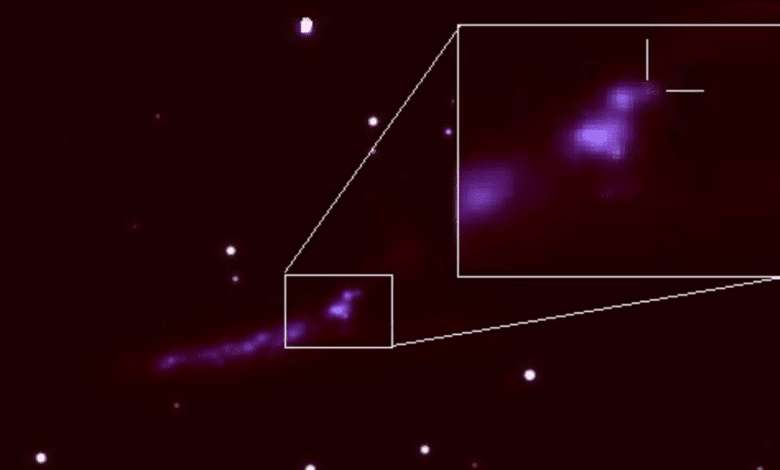
A real sensation has erupted in the astronomical world: researchers have observed an exceptionally powerful supernova explosion, which they believe may have led to the formation of a unique double black hole. The event occurred in the distant galaxy 2MFGC 13525, located about 320 million light-years from Earth. Observations were made using two telescopes simultaneously — the Japanese Seimei and the renowned Subaru, situated atop Mauna Kea in Hawaii. This tandem enabled scientists to gather data already being hailed as a breakthrough in the study of massive star evolution.
The focus of the study — the supernova SN 2022esa — turned out to be far more than just another flare in the sky. Scientists noticed its brightness changed with remarkable regularity: for about a month, it displayed a distinct periodicity, which is extremely rare for such events. This led experts to suspect the presence of a second massive object in the system, possibly a black hole or a star destined to end its own life in a catastrophic explosion soon.
A Glimpse into the Universe’s Past
Supernovae like SN 2022esa mark the final chapter in the lives of so-called Wolf-Rayet stars, known for their enormous mass, temperature, and brightness. Their death releases a colossal amount of energy and matter, and sometimes leads to the birth of black holes. However, such regular periodic changes in brightness as observed in SN 2022esa are unprecedented. This may suggest that the star was closely paired with another massive object, and their interaction influenced the nature of the explosion.
Astronomers emphasize that such systems are rare, and studying them can shed light on the processes occurring in the universe’s most mysterious regions. If the hypothesis of a forming double black hole is confirmed, it will be a crucial step toward understanding how such exotic objects emerge in the cosmos.
Technology leading the way in new discoveries
Equally impressive was the observation method itself. Using two telescopes with different capabilities allowed researchers not only to respond rapidly to changes, but also to capture the finest details of the event. Seimei stood out for its agility and speed, while Subaru offered high sensitivity—together, they provided a unique scientific outcome.
The research team is confident that such joint observations will uncover many more mysteries. They are already planning to step up their efforts, aiming to monitor future outbursts and anomalies that could signal the birth of black holes or other exotic objects.
Significance for science
The discovery of SN 2022esa not only expands our understanding of the life and death of massive stars but also raises new questions about the mechanisms behind the formation of binary black holes. Such systems are considered sources of the most powerful gravitational waves, which are detected by observatories around the world. Understanding their origins will help scientists interpret deep space signals more accurately and build more precise models of galaxy evolution.
The scientific community is already discussing how the new data could reshape existing theories. Some experts believe that such discoveries may revolutionize our understanding of how often binary black holes form in the Universe and how they impact their surroundings.
The future of research
Astronomers face years of painstaking work ahead. It is possible that other similar systems will soon be discovered, bringing humanity closer to solving one of the Universe’s greatest mysteries. Each new supernova explosion offers a chance to glimpse into the Universe’s past and understand how its most enigmatic and powerful objects are formed.
RUSSPAIN reminds readers that the Subaru telescope is one of the largest optical instruments in the world, operated by Japan’s National Astronomical Observatory. It has been in service since 1999 and has contributed to numerous major discoveries. The Japanese Seimei telescope, located in Okayama Prefecture, is renowned for its rapid response to sudden astronomical events. By working together, these telescopes enable scientists to obtain unique data on some of the rarest and most mysterious phenomena in the Universe.