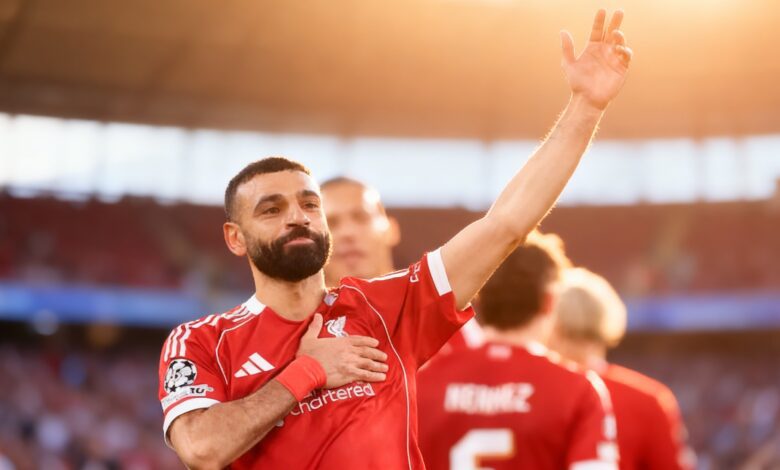
The match between Manchester City and Liverpool in the FA Cup quarterfinals could reshape the balance of power in English football and set a new direction for both teams. For Spanish fans following European tournaments, encounters like this serve as a signal of changes among top clubs and offer clues about future transfers and tactical shifts in La Liga. This clash is especially significant amid news of Mohamed Salah’s imminent departure, a player who over nine years has become a Liverpool icon and one of Europe’s most prolific scorers.
Salah, who announced he will leave after this season, returns to the pitch for the first time since his high-profile statement. During his time at Liverpool, he won nearly every possible trophy, including two league titles, a Champions League, and an FA Cup. His personal achievements are impressive: 255 goals in 435 matches, four Golden Boots, and three PFA Player of the Year awards. However, this season has been less remarkable—just 10 goals in 34 appearances—highlighting a dip in form, but not diminishing his impact on the team.
Records and expectations
Manchester City head into the match on a unique run: the team has not lost an FA Cup game outside the semifinals and finals since 2018, securing 31 consecutive wins. A victory today would send City to their eighth straight semifinal, already a tournament record. Despite neither team hitting their peak this season, City remain in the hunt for a domestic treble, while Liverpool still compete for two major trophies, including the Champions League.
For both teams, this match is more than just a battle for a spot in the next round—it’s a chance to regain confidence and recharge ahead of the decisive stage of the season. A victory in such a clash can shift the squad’s mentality and impact their future performances in national and European competitions.
Squad updates
Liverpool’s lineup saw significant changes this week. Alexander Isak, the club’s record signing, returned to training after 101 days out with a serious leg injury but was not included in the match squad. Head coach Arne Slot noted that the striker needs time to regain match fitness, so his return to the pitch will be delayed. Isak managed to play 16 games and score three goals before his injury in December.
Manchester City also made some adjustments. Pep Guardiola made just one change compared to the League Cup final win over Arsenal: Marc Guéhi started in place of Nathan Aké. Ruben Dias and John Stones were absent in defense, while Mateo Kovacic returned to the bench after a lengthy recovery from an ankle injury.
Tactical nuances
Arne Slot made three changes to Liverpool’s starting lineup compared to the defeat to Brighton: Salah returns to play, along with Joe Gomez and Curtis Jones. Cody Gakpo, Alexis Mac Allister, and Jeremie Frimpong were not in the starting eleven. The decision to leave Isak out was due to a cautious approach to his recovery from a serious injury.
A refereeing team led by Michael Oliver will oversee the match. Assisting him are Paul Howard (VAR), Stuart Burt and Timothy Wood (assistants), Paul Tierney (fourth official), and Sian Massey-Ellis (VAR assistant). The match kicks off at 12:45 at the Etihad Stadium on April 4, 2026.
Context and Parallels
In recent years, the FA Cup quarterfinals have often delivered unexpected results and upsets. For example, in 2024, Brighton knocked Manchester United out of the tournament, and in 2025, Aston Villa reached the semifinals for the first time in a decade. These matches not only shape the fate of the trophy but also influence clubs’ transfer plans and coaching decisions during the off-season. Analysis by russpain.com notes that success in the FA Cup often acts as a springboard for emerging stars and shifts the balance of power in European football.