The 2026 Australian Grand Prix became a real test for the new Formula 1 regulations. After just the first race, it was clear: the changes not only failed to meet expectations but also sparked a wave of discontent among fans and participants alike. Several key moments immediately showed that the organizers made serious miscalculations that could impact the entire season.
Instead of the promised intrigue and on-track battles, viewers witnessed the outright dominance of a single team, dangerous incidents, and a diminishing role of individual skill. Many fans, used to intense duels and unpredictable outcomes, were left disappointed. The new rules were intended to make the races more exciting, but in reality, they had the opposite effect.
Mercedes advantage
From the very start of the season, Mercedes proved unrivaled. A double victory by George Russell and Kimi Antonelli in qualifying and the race left their rivals no chance. The gap from Ferrari was evident throughout the weekend, and other teams’ attempts to challenge them appeared futile. In the paddock, there is already talk that Mercedes exploited loopholes in the technical regulations, allowing them to develop an engine with a clear advantage.
Despite complaints from other teams, the FIA chose not to intervene, and the results were not long in coming. While most drivers criticized the new regulations, the race winner openly expressed enthusiasm for the car and engine. Even Antonelli’s poor start did not prevent him from finishing second, further highlighting the difference in technical capabilities.
Dangerous moments on the track
Modifications to car design and new race requirements have introduced unexpected risks. In certain instances, the speed of some cars greatly exceeded that of their rivals, creating collision hazards. In recent years, safety has been a top priority in Formula 1, but the current situation once again raises concerns.
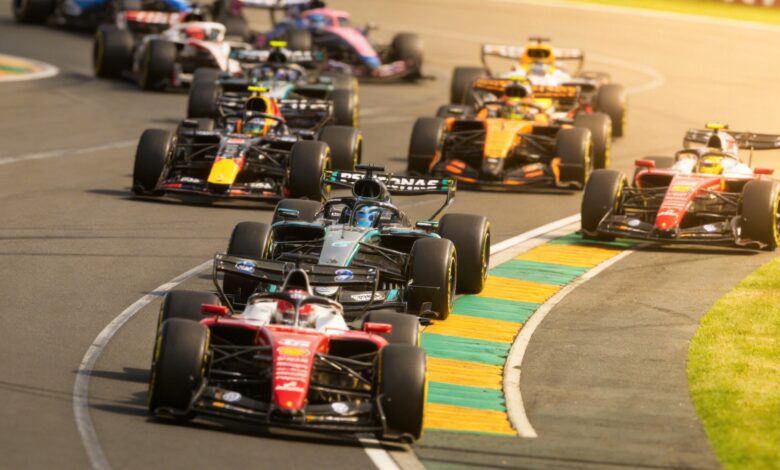
Serious accidents were avoided in Australia only thanks to Franco Colapinto’s lightning-fast reaction. The Argentine driver narrowly missed colliding with Liam Lawson at the start, managing to steer clear by sharply changing his trajectory. This incident served as a reminder of how dangerous the new Formula 1 can be when there are such significant speed differences between cars.
The diminishing role of the driver
Even during tests in Barcelona and Bahrain, many drivers noted that the new cars no longer require the same level of skill. Max Verstappen and Fernando Alonso openly stated that the cars have become easier to drive and the driver’s role has noticeably diminished. In their view, now even an inexperienced person could handle the car in certain sections of the track.
After the race, the organizers tried to put a positive spin on the situation by publishing statistics showing an increase in the number of overtakes. However, fans quickly noticed that most of these maneuvers were not about real racing, but rather resulted from differences in power and battery conditions. Genuine duels became fewer, and the spectacle of the race suffered.
Carlos Sainz, who had previously refrained from criticism, stated after the finish in Melbourne that the new regulations need to be reconsidered. Many participants likened what was happening to a chaotic Mario Kart-style race rather than elite motorsport. The next round will be held in China, and few believe that the situation will improve by then.
Mercedes is one of the most decorated teams in Formula 1 history. The team has repeatedly symbolized technological progress and innovation, but in recent years its dominance has sparked debate. In 2026, Mercedes returned to the spotlight due to controversial regulations and technical innovations. Many experts consider the Mercedes approach to car development the catalyst for the current crisis in the championship.