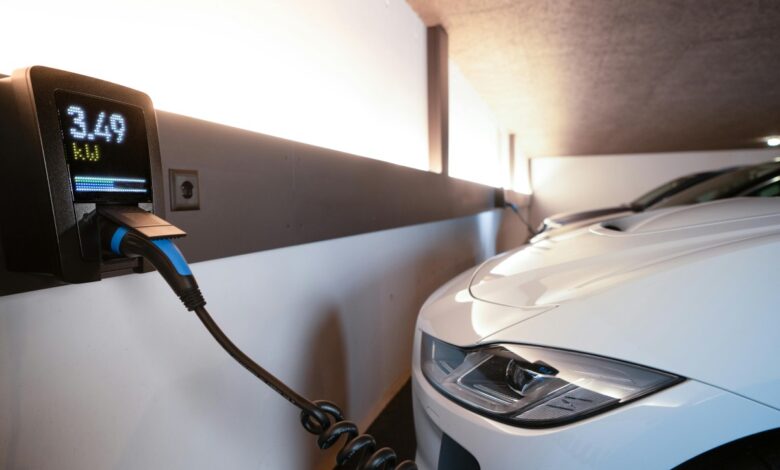
Spain has seen a fierce battle over the right to install an electric outlet in private garages. The country’s Supreme Court (Tribunal Supremo) has resolved years of disputes between electric vehicle owners and their neighbors in apartment buildings. From now on, installing a charging station in a personal parking space will no longer require approval from the building’s residents’ assembly. This decision is already being hailed as revolutionary for the real estate market and electric vehicle infrastructure.
The civil chamber of the court examined a case in which a homeowners’ association challenged the installation of a private charging point in an underground parking garage. The dispute began after a complaint that an electric vehicle owner had routed a cable through communal areas without securing consent from the other property owners. However, the judges ruled there was no violation unless actual damage or excessive interference with communal property could be proven.
The Right to a Socket
A key point in the decision was the interpretation of article 17.5 of the Law on Horizontal Property (Ley de Propiedad Horizontal). The Supreme Court stressed that the law does not require the assembly’s approval for such work. It is enough simply to notify the property manager or building administration beforehand about the planned installation. All installation and operating costs are the responsibility of the vehicle owner.
The judges specifically noted that laying cable through common areas of the building—ceilings, walls, or technical shafts—cannot serve as grounds for a ban unless it causes significant inconvenience or danger to other residents. Exceptions are possible only if the installation poses a safety risk, disrupts aesthetics, or interferes with the normal use of common areas.
Conflicts and Compromises
The dispute that led to the court case began when one of the owners notified the building administration of plans to install an electric vehicle charging station. He attached a technical report and a work plan to his letter. Nevertheless, the residents’ meeting insisted on a separate permit and even voted to dismantle the charging station that had already been installed.
The Supreme Court sided with the car owner, stating that the requirement for assembly approval contradicts both the letter and the spirit of the law. According to the judges, such practice effectively blocks the development of electric vehicle infrastructure and infringes on property owners’ rights. From now on, any attempt to prohibit the installation of charging stations must be backed by specific technical or legal reasons, not just opposition from neighbors.
The Limits of What Is Acceptable
The court clarified that interference with the common areas of a building only becomes unlawful when it exceeds what is necessary. For example, if installation requires complex construction work, damages the exterior, or poses a risk to engineering systems, residents have the right to request a project review or even a refusal. However, simply running a cable along a wall or ceiling is not considered sufficient grounds for prohibition.
Particular attention is paid to how notifications are documented. While the law does not require a strict format, judges recommend sending messages in writing—by email, registered mail, or an official request to the building manager. This will help avoid disputes over the notification’s date and content in the future.
Legal Clarity
The Supreme Court’s ruling has sent an important message to thousands of Spaniards who have faced bureaucratic obstacles when installing charging stations. Homeowners now have a clear legal position: if there is no real harm or threat, no one may hinder the development of personal electric vehicle infrastructure.
The court also stressed that any restrictions must be justified and supported by technical assessments. Mere dissatisfaction or neighbors’ concerns are not grounds for refusal. In case of disputes, residents are obliged to provide evidence that the installation truly infringes on their rights or interests.
Practical Recommendations
Experts advise electric vehicle owners to prepare the technical documentation in advance and notify the building administration about planned work. It’s important to specify the exact installation location, confirm that all expenses will be covered by the initiator, and attach a wiring diagram. This helps avoid unnecessary conflicts and speeds up the approval process.
In case of disputes, it is recommended to seek advice from independent experts and, if necessary, defend your rights in court. New court rulings have significantly simplified the procedure and reduced risks for homeowners looking to modernize and make their buildings more environmentally friendly.
If you didn’t know, the Supreme Court of Spain (Tribunal Supremo) is the country’s highest judicial authority, and its decisions are binding on all lower courts. Its rulings shape legal practice and often serve as a starting point for legislative changes. In recent years, the court has played an active role in setting new standards for the real estate market and infrastructure, particularly regarding the shift to green technologies and the development of electric vehicle transport.