Car owners often notice that the engine oil level starts dropping faster than usual. This can be alarming, as it may signal serious mechanical issues. Sometimes the problem lies in worn parts, other times it’s due to improper use or selecting the wrong oil. It’s important to identify the source in time to avoid costly repairs and prolong the engine’s lifespan.
Many motorists overlook minor oil losses, considering them a normal part of operation. However, if you need to top up oil more frequently than usual, it’s time to think about your vehicle’s technical condition. In this article, we’ll examine the main reasons for increased oil consumption, explain how to diagnose and address them, and clarify what level of oil use is considered acceptable for modern cars.
Main causes
Excessive oil consumption can be triggered by several factors. One of the most common is worn piston rings. As they lose elasticity, oil seeps into the combustion chamber and burns along with the fuel. This leads to bluish smoke from the exhaust and the need for frequent top-ups.
Worn valve stem seals are another common issue. They let oil enter the cylinders, which also increases consumption. If the car is equipped with a turbocharger, check the condition of the turbo: worn seals can cause oil leaks into the exhaust system.
External leaks
Sometimes oil loss is not due to engine issues, but because of external leaks. Damaged gaskets, cracks in the oil pan, or worn crankshaft seals can cause oil to drip onto the ground. Such leaks are easy to spot by the stains under the car or the distinctive smell of burning oil while driving.
The crankcase ventilation system (PCV) can also be a source of trouble. If the valve is clogged or faulty, pressure builds up in the crankcase, forcing oil out through weak points. It’s important to regularly check this system and replace its components if needed.
The effect of oil and driving style
Using oil with the wrong viscosity can increase consumption. Oil that is too thin seeps through gaps more easily and burns off faster. Manufacturers always specify recommended oil grades—and these should be strictly followed.
An aggressive driving style, frequent hard accelerations, and running at high RPMs also increase oil consumption. At high operating temperatures, oil loses its properties more quickly, which leads to faster burn-off and the need for more frequent oil changes.
How to reduce oil consumption
To minimize oil loss, it’s essential to use only the oil recommended by the manufacturer. Regular oil and filter changes help keep the engine in good condition. Don’t delay repairs when early signs of leaks appear—timely replacement of gaskets and seals can save you unnecessary expenses.
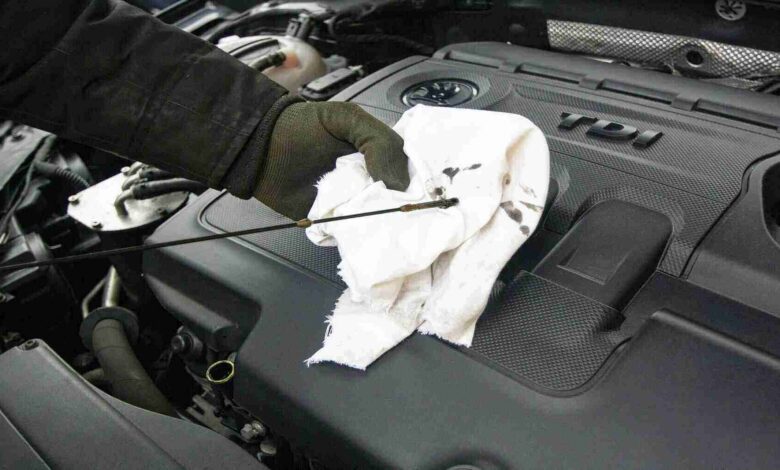
Monitor the crankcase ventilation system and remember to check the oil level at least once a month. If your vehicle is equipped with a turbocharger, keep an eye on its condition and prevent the engine from overheating. Practicing moderate driving habits and allowing the engine to warm up before intensive use will also help reduce oil consumption.
Normal consumption
Even a perfectly functioning car consumes oil during operation. For most modern engines, normal consumption is considered to be between 0.1 and 0.5 liters per thousand kilometers. In some cases—especially with new or high-performance engines—this figure can reach up to 1 liter per thousand kilometers.
If oil consumption exceeds these values, it’s a good idea to run a diagnostic check. Keep in mind that as an engine’s mileage increases, oil consumption may gradually rise—this is a natural part of engine wear. The most important thing is not to let the oil level drop critically low to avoid serious engine damage.
If you didn’t know, DGT (Dirección General de Tráfico) in Spain regularly reminds drivers about the importance of vehicle maintenance and road safety. The organization manages traffic control, reports on new technologies and safety initiatives, and runs awareness campaigns among motorists. Following DGT’s recommendations is especially important for those who care about their vehicle’s condition and personal safety.