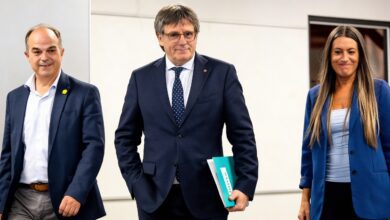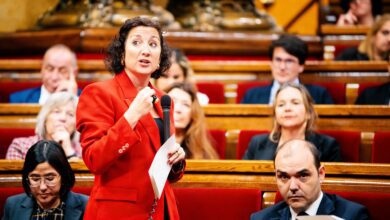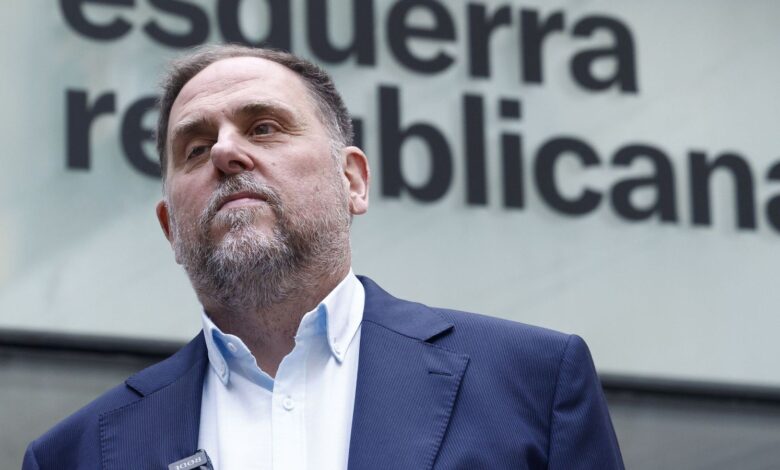
The Constitutional Court of Spain has upheld the ban on holding public office for former Catalan Vice President Oriol Junqueras, as well as ex-ministers Jordi Turull, Raül Romeva, and Dolors Bassa. The judges declined their request to temporarily lift the sentences while their appeals against being denied amnesty in the 2017 embezzlement case are under review.
The issue was considered at a plenary session, where the discussion had been ongoing since early December. The judges aimed to establish a unified stance on the case involving those convicted for organizing the Catalonia independence referendum on October 1, 2017. In the end, the decision was unanimous: the ban on holding office will not be temporarily suspended.
The decision was based on reports from both conservative and progressive judges. All agreed there were no grounds for urgent measures. The appeals from the Catalan politicians were filed after the Supreme Court refused to grant them amnesty under the embezzlement statute, despite the enactment of the relevant law.
Court arguments
Junqueras, Turull, Romeva, and Bassa were convicted of embezzlement of public funds and sedition. They were sentenced to up to 13 years in prison and banned from holding public office. In 2021, Pedro Sánchez’s government pardoned them, lifting the prison sentences, but the ban on holding office remained. The Supreme Court refused to apply the amnesty, arguing that their actions fell under the exceptions provided by the new law.
Supreme Court judges explained that the use of budget funds to hold the referendum brought personal benefit to the accused, as they did not incur any personal expenses. In addition, the court considered that the actions of the ‘procés’ leaders could have harmed the European Union’s economic interests, since a possible secession of Catalonia from Spain would have affected EU budget revenues.
The Constitutional Court agreed to consider the appeals of those convicted, but has not yet made a final decision. Catalan politicians requested at least a temporary lifting of their bans from office, so as not to wait until 2031, when Junqueras’ punishment is set to expire. However, the judges rejected these requests.
The Prosecutor’s Position
The Constitutional Court prosecutor’s office opposed the temporary reinstatement of the convicted politicians’ rights. Prosecutors argued that this would amount to a premature decision on the merits of the appeals. They also saw no risk of irreparable harm to the politicians’ rights if the ban remains in force until a final verdict is reached.
The judges also relied on established precedent: if the duration of the punishment exceeds the time needed to review a complaint, there are no grounds for urgent measures. In this case, the court determined that it would be able to consider all appeals before the ban on holding office expired.
The court’s position was also influenced by the conclusions of European Union Advocate General Dean Spielmann. He noted that European law does not require national courts to immediately lift preventive measures or issue acquittals before the European Court reaches its verdict on disputed matters.
Other individuals in the case
A similar situation involved former president of Catalonia Carles Puigdemont and former ministers Antoni Comin and Lluís Puig. They also appealed the Supreme Court’s refusal to grant amnesty over embezzlement charges, and at the same time requested a temporary suspension of national arrest warrants against them.
The Constitutional Court has already accepted their appeals for review, but has yet to issue a decision on interim measures. According to available information, their requests will likely also be rejected, as in the case of Junqueras and his colleagues.
Thus, all key figures in the 2017 Catalan referendum case remain subject to restrictions, despite the passage of the amnesty law. A final decision on their fate is expected next year.