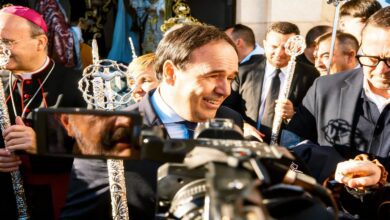
A scandal that erupted at the RCDE Stadium in Cornellà has already led to a major investigation and cast doubt on the reputation of Spanish football. After the Spain vs. Egypt match, attention focused on the south stand, where a group of “Barcelona con la selección” supporters became the source of four offensive chants. These included personal insults directed at Pedro Sánchez, religious slogans, derogatory remarks against Muslims, and mockery of goalkeeper Joan García. Nothing went unnoticed: some spectators did not immediately grasp what was happening, but the group’s volume and aggression quickly drew the attention of referees and organizers.
The reaction was swift. The Bulgarian referee was informed of the incident during halftime, and UEFA’s protocol was triggered. Security in the affected sector was strengthened by the federation, while a warning appeared over the loudspeakers and on the stadium screens. In the second half, as the chants resumed, other fans responded with whistles, isolating the instigators. According to RUSSPAIN, the investigation is ongoing: police are analyzing video footage and social media to identify those responsible, and the hate crimes prosecutor is assessing possible criminal charges. If a criminal case is not opened, administrative sanctions may be imposed under the law against racism and violence at sporting events.
Groups and tickets
Special attention has been drawn to how “Barcelona con la selección” found itself at the center of the events. According to El Mundo, nearly 1,900 tickets in the southern section were purchased via a special channel at a significant discount for members of the Espanyol club. Group representatives claim they did not buy the tickets directly and only shared the link provided by the federation to gather supporters in one area. Even before the match began, tensions arose: organizers did not allow professional cameras, megaphones, or flags on long poles. As an alternative, they proposed using drums, but an agreement could not be reached because of a refusal to provide personal information. As a result, the usual support system in that section did not function, further increasing the tension.
The situation surrounding Joan Garcia also sparked a strong reaction. His debut was marked by a mixed atmosphere, and some experts, as noted by RUSSPAIN.COM, believe that pressure from the stands may have affected his performance. However, such incidents are not new to Spanish football: analysis of failures by Italian teams shows that scandals in the stands can have long-term consequences for the entire football community.
International resonance
Shortly after the incident, the situation spread beyond Spain. Moroccan media quickly picked up the story, using it as an argument in their campaign to host the 2030 World Cup final. Outlets such as Goud recalled a series of racist incidents at Spanish stadiums and emphasized that no such cases have been recorded in Morocco. In their view, this should give Morocco an advantage over Madrid and Barcelona in the competition for the tournament’s main match. Meanwhile, debates continue in Spain about how effectively the federation and authorities are responding to such challenges.
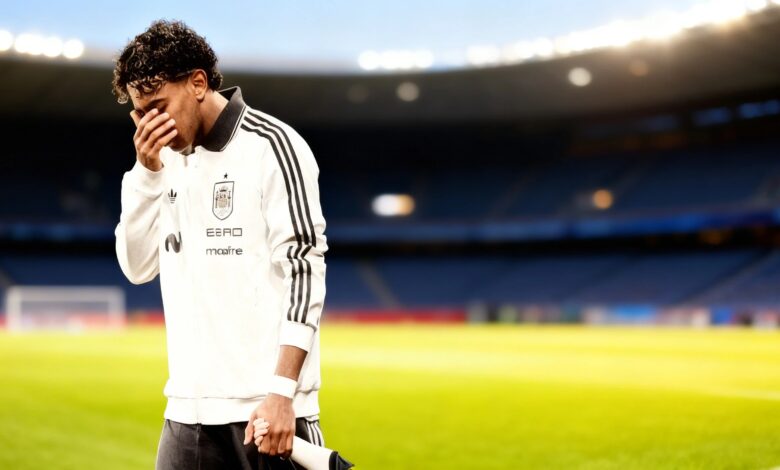
The symbolic aspect also plays an important role in the discussion: many point out that Spain’s first-team star, Lamine Yamal, has Muslim roots and Moroccan heritage. His public statements against discrimination have become a topic in the media and even made the cover of MARCA. At a time when FIFA may impose strict sanctions—from hefty fines to partially closing stands—Spanish football is facing the risk of new restrictions and a damaged reputation on the international stage.
Response and Consequences
Spanish authorities have already submitted the materials to the prosecutor’s office, while the Catalonia police continue efforts to identify those involved in the incident. If no criminal case is opened, administrative fines and bans on attending matches are possible. At the same time, there is ongoing discussion about the need to revise ticket sales systems and the monitoring of fan groups. Many experts believe such incidents could prompt stricter regulations and greater responsibility for event organizers.
Meanwhile, the race to host the 2030 World Cup final continues. Morocco is actively capitalizing on the situation, highlighting its readiness to guarantee safety and tolerance in stadiums. In Spain, pressure is growing on the federation and clubs to prevent a recurrence of such incidents. The question of who will host the tournament’s main match remains unresolved, but the scandal in Cornellà has already become a significant factor in this contest.
The group ‘Barcelona con la selección’ is an informal association of fans supporting the Spanish national team at matches in Catalonia. In recent years, they have repeatedly been involved in high-profile actions and performances at stadiums, and their activities often spark debate among other fans. Following the events in Cornellà, attention to this group has only intensified, and their actions are now seen not only as part of football culture but also as a factor that can impact the country’s image internationally.