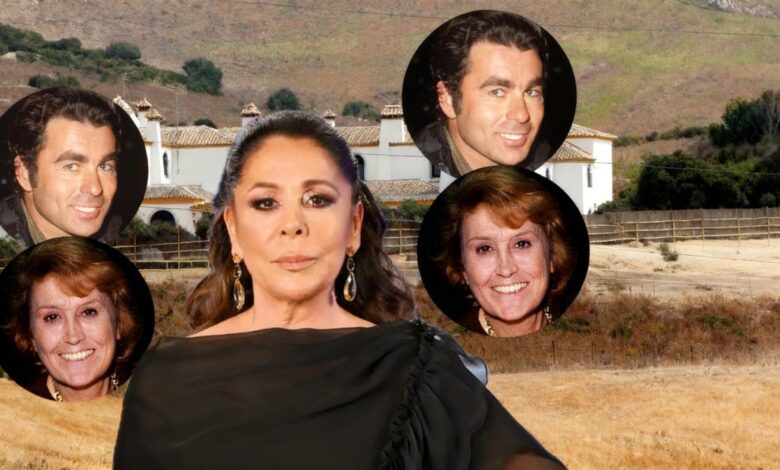
The sale of the Cantora estate in Cádiz was more than just another real estate transaction—it marked the end of an era in Spanish culture and in the life of Isabel Pantoja. According to Fiesta, the change of ownership represents not just a financial decision, but a definitive break with a past that for decades shaped the destiny of the singer and her family. The new owner, a French entrepreneur of Lebanese descent, acquired the property for 1.2 million euros—a sum below the former owner’s expectations, but a necessary compromise faced with mounting debts and the inability to maintain the estate.
In recent years, Cantora ceased to be a symbol of stability and comfort for the Pantoja family. High maintenance costs, legal challenges over property rights, and the inability to turn a profit turned the estate into a constant source of problems. According to russpain.com, the decision to sell was the logical outcome of a prolonged crisis, further aggravated by internal conflicts and external pressure.
A new project
The buyer, who has long followed the situation surrounding Cantora, plans to completely repurpose the estate. He aims to develop a modern horse breeding farm, which will transform the historic role of Cantora, once linked to Francisco Rivera “Paquirri”‘s vision for a bull-breeding ranch. Now, Cantora will become part of a new agricultural project focused on the future rather than preserving old traditions.
The deal was finalized against a backdrop of debts exceeding 2.2 million euros, highlighting the precarious financial situation of the previous owner. For Isabel Pantoja, the sale became a forced measure, despite her deep emotional attachment to a place where pivotal moments of her life took place. As noted by elcierredigital.com, the singer initially hoped for a higher price, but circumstances left her no alternative.
A symbol of change
Cantora has always been more than just real estate. After Paquirri’s death in 1984, the estate became not only a home for Isabel Pantoja but also a place of remembrance, with every corner evoking the past. Over time, however, the emotional burden and legal complications made living there unbearable. Family disputes, unresolved land deals, and constant financial difficulties only heightened the tension.
Encarna Sánchez played a pivotal role in the fate of Cantora. Her influence on the singer was so strong that she insisted Isabel move to Madrid, believing the estate was holding her back both professionally and personally. In the early 1990s, Sánchez even purchased another property — La Garza — for Pantoja, offering her a chance to start anew and distance herself from painful memories.
Personal dramas
The period of close friendship and collaboration between Isabel Pantoja and Encarna Sánchez was marked by attempts to change her established way of life. Together they spent much time in Madrid and Marbella, seeking to distance themselves from Cantora. However, after their relationship ended in 1995, the estate once again became a focal point for the singer, but now without its former significance and support.
In recent years, Cantora has lost its status as a family home for good. It became a burdensome asset—impossible to maintain and difficult to sell profitably. The new owner apparently does not intend to keep old traditions, but instead plans to launch their own business project, definitively closing the chapter associated with the names Paquirri and Encarna Sánchez.
The story of Cantora is not just the chronicle of one family, but a reflection of changes in Spanish society, where even the most iconic landmarks can lose their significance under pressure of circumstances. The sale of the estate became a symbol marking the end of an era and the start of a new chapter for land that for decades was at the center of national attention.
Francisco Rivera “Paquirri” was one of Spain’s most famous bullfighters, who died tragically in 1984. His name is closely linked to Cantora, which he bought for his family. After his death, the estate became a symbol of memory and the backdrop for the main dramas in Isabel Pantoja’s life. A similar story happened with another famous Andalusian estate, when a change of ownership completely shifted its purpose and erased previous associations. Such cases show how quickly the fate of even the most iconic places can change without support and resources behind them.