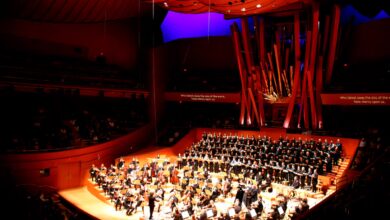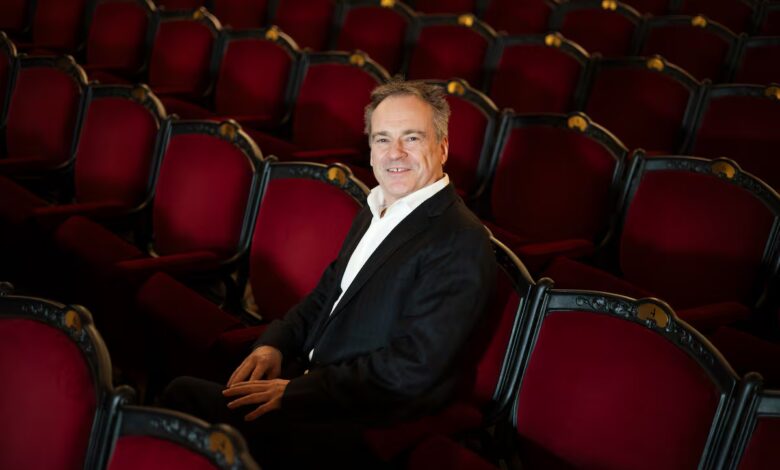
A new chapter begins for one of Spain’s most renowned theaters as Barcelona’s Gran Teatro del Liceu announces the appointment of British maestro Jonathan Nott as the musical director of its symphony orchestra. This decision marks the end of a fourteen-year era under the leadership of Josep Pons. For Spain’s music scene, this isn’t just a new name on the marquee—it’s a signal of potential changes in repertoire, style, and the theater’s international standing.
Nott will officially take up his duties at the start of the next season. His five-year contract gives the theater and its audience time to adjust and build new expectations. Former director Pons is stepping down to lead an orchestra in Germany, while his successor has already stated his intent not to break with tradition, but to make audiences fall in love with music in just half an hour. This approach could bring fresh energy to the Liceu, a theater long known for its appetite for experimentation and respect for the classics.
First steps
Nott’s debut as chief conductor will take place as early as April. He will take the podium during the ballet ‘Nijinsky’ (Nijinsky by Neumeier), performed by the Hamburg Ballet. In the following season, the maestro will also lead a performance of Wagner’s acclaimed tetralogy, promising one of the year’s major events for opera lovers.
Nott emphasizes that he has no intention of imposing his will on the team. He describes himself as just one link in a larger chain, where every member is essential. This leadership style could transform the orchestra’s atmosphere and influence the creative process. The new director is particularly focused on the theatre’s international image, aiming to make Liceu resonate not only in Spain, but also abroad.
Personal and professional
Before moving to Barcelona, Nott led the Tokyo Symphony Orchestra. His home has been in Lucerne, Switzerland, for almost three decades, but he now plans to spend six or seven weeks in the Catalan capital twice a year. The maestro does not rule out buying a place in Barcelona soon to become part of the local community. According to Nott, his teenage daughter welcomed the idea of moving with enthusiasm.
Nott’s musical career began with choral singing, and his first passion was the stage—he even performed the role of Lady Macbeth. Later, the maestro devoted himself entirely to conducting. The offer to lead the Liceu orchestra came as an unexpected but very welcome turn. He recalls attending a performance of ‘Rusalka’ a year ago, and in January, the premiere of ‘Tristan und Isolde’, both of which impressed him with the theatre’s German tradition. At the same time, Nott openly admits his love for French and Italian music, and he dreams of producing Puccini operas he has yet to conduct.
Choices and expectations
The process of appointing a new music director was as transparent as possible. Not only did the theater’s management support Nott’s candidacy, but the musicians themselves backed him as well. A special committee was formed to consider thirty candidates. One of the main requirements was that the candidate be familiar with the ensemble and its unique qualities.
Nott himself believes that conductors fall into two categories: those who build and those who simply lead. He considers himself part of the first group, which may signal long-term changes within the orchestra. The departure of Pons, whom colleagues call an outstanding professional, is seen as both a challenge and a great responsibility for the new maestro. The British conductor admits that replacing such a leader is no easy task.
New horizons
The leadership change at Gran Teatro del Liceu could mark the beginning of a new era for Barcelona’s musical life. Nott has already stated his wish to perform with the orchestra not only in Spain but also on international stages. His approach is based on dialogue and respect for tradition, yet he is not afraid to experiment with the repertoire.
The theater is confident: the ensemble is about to embark on an exciting journey. The new management promises not only to preserve the best traditions but also to bring in fresh ideas. For the audience, this is a chance to witness the transformation of one of Catalonia’s main cultural symbols.