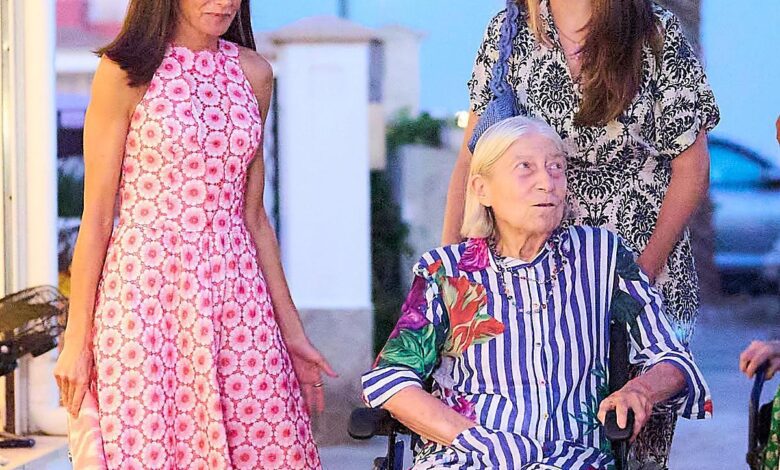
Tatiana Radziwill’s life is a tale of true European aristocracy, where personal destinies are inseparably linked with the history of entire nations. From childhood, she was surrounded by royal traditions and diplomatic intrigue. Her friendship with Spain’s future queen Sofia began during the Greek royal family’s exile in South Africa, when both girls were far from home because of war. It was there, amidst foreign landscapes, that a bond was forged—a bond that would endure for decades.
In their youth, Tatiana and Sofia spent their summers in Tatoi and on Mallorca, where their families briefly regained a sense of home. Yet their relationship was more than just friendship: they belonged to the same royal circles and were cousins by blood. Tatiana was the daughter of Princess Eugenie of Greece and the Polish-Lithuanian Prince Dominik Radziwill, making her a representative of several European royal houses.
Royal roots
Tatiana’s mother, Princess Eugenie, was the granddaughter of King George I of Greece and Grand Duchess Olga Romanova. Her father, Prince George of Greece, was married to Marie Bonaparte—a descendant of Napoleon and a renowned psychoanalyst who maintained a close relationship with Sigmund Freud. Eugenie was remarkable not only for her noble heritage but also for her wide-ranging interests: she traveled extensively, wrote books, and studied psychology. In 1938, she married Dominik Radziwill, with whom she had two children—Tatiana and Jerzy. After their divorce, Eugenie married again, this time to Prince Raimondo della Torre e Tasso, and became the mother of another son, Carlo Alessandro, who inherited the title Duke of Castel Duino.
The Radziwill family is one of the oldest and most influential dynasties in Eastern Europe. Their history dates back to the 14th century, when they became a prominent force in the Grand Duchy of Lithuania and the Polish–Lithuanian Commonwealth. By the 16th century, the Radziwills had received a princely title and since then maintained marital ties with the most distinguished houses across the continent. Their descendants bore the title of Most Serene Princes and played a key role in the politics of Poland and Lithuania.
Dynastic ties
Tatiana’s father, Dominik Radziwiłł, was not only a descendant of Polish-Lithuanian nobility but also an officer in the Polish army. His lineage included members of the Austrian and Polish aristocracy, as well as ties to the Spanish Crown. Tatiana’s paternal grandfather, Hieronim Mikołaj Radziwiłł, owned vast estates and took part in the resistance movement during World War II. For his activities, he was arrested and sent to a Soviet camp, marking a tragic chapter in the family’s history.
Tatiana’s paternal grandmother, Renata of Austria, was the daughter of Archduchess Maria Theresa and a cousin of Spanish King Alfonso XIII. In her marriage to Hieronim, she had six children, including Dominik, Tatiana’s father. Thus, Tatiana inherited the blood of Polish and Lithuanian princes, Austrian archdukes, and members of the Spanish monarchy.
European heritage
Tatiana Radziwiłł’s family connections spanned nearly all the royal houses of Europe. Through her mother, she was related to the Greek, Danish, Romanian, British, Serbian, French, and Russian dynasties. Her grandmother, Maria Bonaparte, in addition to her academic work, played a significant role in the lives of many members of the European nobility, including helping Prince Philip of Edinburgh during his exile.
Tatiana’s grandfather, Prince George of Greece, was not only a high-ranking official but also an active participant in the world of sports: he chaired the aquatic sports committee at the Olympic Games in Athens and served as High Commissioner in Crete. His relationship with Danish Prince Valdemar was a frequent topic of discussion among the aristocracy.
The Radziwiłł family has always been known for its ability to adapt to changing times while remaining true to its traditions. Their story is not just a series of titles and marriages, but also an example of how individual destinies can shape the course of European history.
If you didn’t know, Tatiana Radziwiłł was one of the most respected members of European aristocracy in the 20th century. Her lineage links Greek, Polish, Lithuanian, Austrian, and Spanish monarchs. She was a close friend and relative of Queen Sofía, and maintained ties with many royal families. The Radziwiłł dynasty is renowned for its influence on European politics and culture for centuries. Tatiana Radziwiłł’s name still commands respect in aristocratic circles.