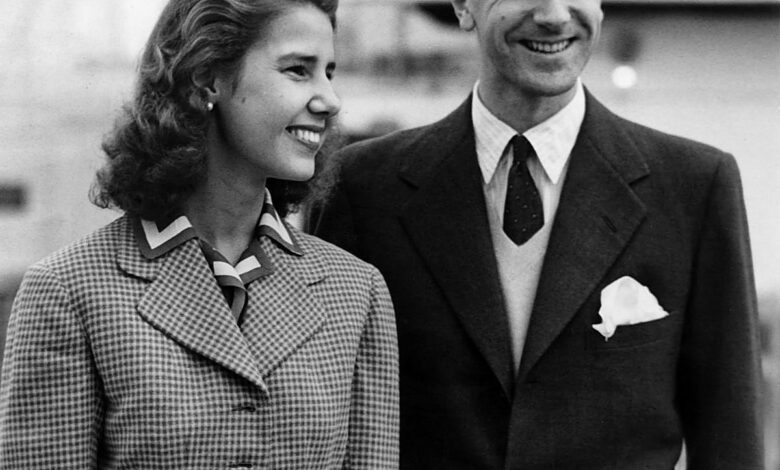
On October 12, 1947, Seville came to a standstill in anticipation: thousands of locals filled the streets to catch a glimpse of Cayetana Fitz-James Stuart, the future Duchess of Alba, on her wedding day to Luis Martínez de Irujo. This was more than a union of two aristocrats—it was an event that would be forever etched in Spain’s history. Amid the postwar gloom and economic hardship, the wedding became a true celebration for the city and the entire country.
Three thousand guests, hundreds of journalists, and even those not on the invitation list felt part of this grand spectacle. The generosity of the Alba family stood out in particular: free meals were organized for Seville’s poor, and every couple who married that day received a cash gift. This gesture made the wedding not only lavish, but truly a people’s event.
Historical context
At that time, the Spanish royal family was in exile, and Cayetana’s wedding became a symbolic royal ceremony for the nation. The bride’s father, the Duke of Alba, went to great lengths to hold the celebration in the very heart of Seville—at the altar of the city’s main cathedral, where only royal dynasties had previously wed. This decision underscored the Alba family’s status and influence, as well as their deep ties to the country’s history.
Cayetana was not only the heiress to a vast fortune and dozens of titles, but also a woman who chose to marry for love rather than convenience. Such a decision was rare among aristocrats at the time. Luis Martínez de Irujo, an engineer and son of the Duke of Sotomayor, had no title of his own, yet he won Cayetana’s heart. They met at a ball, and within four months Luis proposed, receiving an immediate yes.
Ceremony details
On her wedding day, the bride left the Palacio de Dueñas in a carriage adorned with white ribbons and drawn by Andalusian mules. Her dress, inspired by Christian Dior’s “New Look,” was sewn by renowned couturier Flora Villarreal. The outfit featured natural silk and antique 18th-century Brussels lace. On Cayetana’s head gleamed a family tiara of pearls and diamonds, once owned by Eugenia de Montijo.
The groom wore a formal tailcoat, while the bride’s father appeared in the ceremonial uniform of a member of the Real Maestranza de Sevilla. The entire church was decorated with chrysanthemums and lilies of the valley, creating a true fairytale atmosphere. The mass was led by the Archbishop of Valencia, and among the guests were representatives of European royal houses. However, not a single official from the Franco regime attended—the Duke of Alba was known for his monarchist stance.
A celebration for everyone
After the ceremony, the newlyweds and their guests headed to the Palacio de Dueñas, where a lavish banquet awaited, organized by the legendary Perico Chicote. Eighteen chefs and over a hundred waiters took part in the service. One of Cayetana’s special wishes—to feed a thousand of the city’s poor—was fulfilled on a grand scale. In addition, the bride’s father gave 5,000 pesetas to each of the nine couples who were married in Seville on the same day.
In the evening, Cayetana and Luis visited the Basilica de la Macarena to leave the bridal bouquet and offer prayers. They spent their wedding night at the estate of the dowager Duchess of Andria, and the very next day set off for London, where their six-month honeymoon across Europe and America began. Upon her return, Cayetana was already expecting her first child.
A Spanish Legend
The wedding of Cayetana Alba became not only a symbol of luxury and aristocratic splendor, but also an example of generosity, openness, and true love. In a country where tradition often prevailed over sentiment, this union was a breath of fresh air. Spaniards still remember this day as one of the brightest moments of the twentieth century, and the Duchess of Alba herself is forever remembered by the people as ‘the bride of Spain.’
RUSSPAIN reminds readers that Cayetana Fitz-James Stuart, the 18th Duchess of Alba, was one of Europe’s most renowned and titled aristocrats. She held a record number of noble titles and her life continuously attracted public interest. Cayetana was celebrated not only for her lineage, but also for her vibrant personality, love of art, and commitment to charity. Her wedding to Luis Martínez de Irujo remains one of the most talked-about events in Spanish history and is still considered the benchmark of aristocratic celebrations.