2026 has just begun, and the Spanish car market is already setting new rules for those looking to save money without sacrificing comfort. The ECO environmental badge remains the sweet spot: it opens up access to privileges, doesn’t require huge investments, and offers a wide range of models to choose from. Unlike the prestigious CERO, which is usually found on expensive electric vehicles and plug-in hybrids, ECO is a real opportunity for most drivers to enjoy benefits without extra costs.
In this review, we present the ten most affordable cars with an ECO badge available in Spain in 2026. We don’t just list the models—each one is analyzed for its unique features, helping you make an informed decision. Prices are quoted for versions that qualify for the ECO sticker, not for the basic trims.
Top budget picks
Leading the list is Dacia Sandero—a true symbol of practicality and savings. In 2025, it once again became the country’s best-selling car, although the updated model has pushed up the price of the ECO-badged version slightly. Under the hood is a 120 hp ECO-G engine, which now consumes a bit more fuel (5.4 L/100 km) and emits 123 g/km of CO2. The good news is, you can now opt for an automatic transmission as well as a manual.
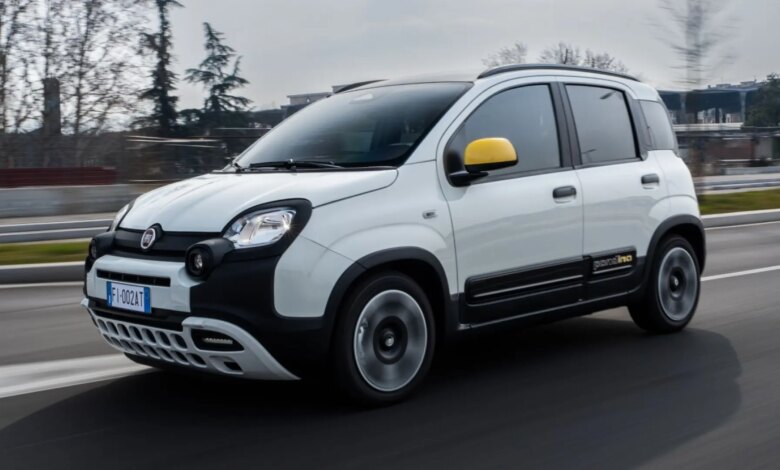
Fiat Pandina is the evolution of the legendary Panda, which has now given way to its bigger sibling, the Grande Panda. The Pandina comes with a modest but reliable 1.0-liter 65 hp engine with a mild hybrid system. Consumption is just 4.9 L/100 km, and its price is among the lowest of all ECO models.
Hybrids and Gas Versions
The new generation Renault Clio has retained an affordable LPG (GLP) option in Spain, even though it has disappeared elsewhere in Europe. It delivers 100 hp with a manual transmission, but the key advantages are its efficiency and low running costs. The Mitsubishi Colt essentially mirrors the previous-generation Clio, offering the same gas-powered version with similar specs.
The MG3 Hybrid+ stands out among its rivals: its 194 hp hybrid system delivers performance unmatched by most budget models. It accelerates to 100 km/h in around 8 seconds, with a top speed of 170 km/h, while fuel consumption is just 4.4 L/100 km. This is a rare mix of power and efficiency.
Practicality and Comfort
The Dacia Duster is the go-to option for those seeking an affordable SUV with ECO certification. It uses the ECO-G engine with 120 hp, but the extra weight results in fuel consumption rising to 6 L/100 km and CO2 emissions to 136 g/km. Still, running it on gas remains cost-effective.
The Suzuki Swift is another strong contender among compact city cars. Its mild hybrid with 83 hp and a 12-volt system achieves just 4.4 L/100 km in fuel consumption and emits less than 100 g/km of CO2. A notable perk: there’s an all-wheel-drive version—rare for this class.
Modern Technologies
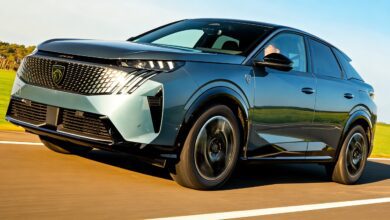
The Citroën C3 with its 110 hp mild hybrid and 48-volt system comes with an automatic gearbox for extra comfort in urban traffic. The Fiat Grande Panda is a technical twin to the C3, offering the same fuel consumption (5.1 L/100 km) and emissions (116 g/km CO2).
The Fiat 500, which recently reverted to a hybrid after an unsuccessful attempt at full electrification, now features the same 65-horsepower engine as the Pandina. Fuel consumption is 5.2 L/100 km, while the design remains distinctive and stylish.
A choice for everyone
In 2026, the Spanish market offers a wide range of affordable cars bearing the ECO label. Each vehicle on the list has its strengths: some stand out for their efficiency, others for performance, practicality, or comfort. But what unites them is a sensible price and the ability to benefit from the ECO label without paying extra.
Buying a car with an ECO sticker is not only a way to save on taxes and parking, but also a chance to move freely around cities that restrict entry for conventional vehicles. With environmental regulations getting stricter, this option is becoming more relevant than ever.
RUSSPAIN reminds readers that the ECO label in Spain is given to vehicles with hybrid, gas, or mild-hybrid powertrains that meet specific emission standards. This system was introduced by the Dirección General de Tráfico (DGT) to encourage the shift toward greener vehicles. Drivers with the ECO sticker enjoy several advantages: access to city centers, parking discounts, and tax benefits. In recent years, demand for these cars has steadily grown, with manufacturers expanding their range of affordable models.