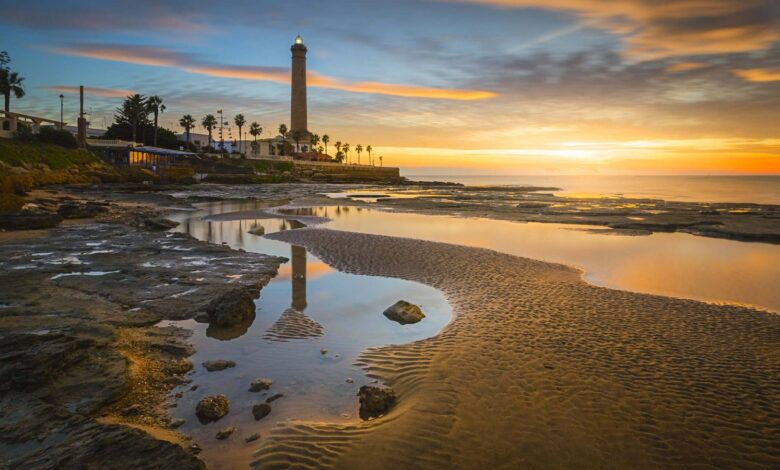
On the far west of Andalusia, where the Atlantic meets sandy dunes, lies a city unlike any other. Chipiona is more than just a resort—it’s a place where every corner breathes history, and every evening is filled with the scent of the sea and the sound of guitars. Life here flows to its own rhythm, set by the tides, traditions, and the memory of great people.
Unlike bustling tourist hubs, Chipiona retains its unique character even at the height of the season. Its narrow streets, whitewashed facades, ancient churches, and the imposing lighthouse create an atmosphere you want to lose yourself in. The city seems to invite you to slow down, savor life, and forget about the rush.
Maritime Heritage
Chipiona grew up on the coast, where fishing traditions have endured for centuries. Even today, ancient stone fish traps built by the Romans are still in use. When the tides reveal these structures, it feels as if time has turned backwards. Locals take pride in this heritage and are happy to share the secrets of their craft with curious visitors.
But fishing is just one part of the city’s identity. The Chipiona Lighthouse—the tallest in Spain—casts its light for dozens of kilometers. Climbing its 322 steps is not for the faint of heart, but the panoramic view is truly breathtaking: endless ocean on one side, lush national park and vineyards stretching into the horizon on the other.
Beaches and Nature
The beaches of Chipiona are a story of their own. With over 14 kilometers of white sand, you can find a secluded spot even in the height of summer. The beaches of Regla, Camarón, Cruz del Mar, and Las Canteras are famous for their cleanliness and gentle entry into the water. Families, surfers, and those seeking peace away from the city bustle all love to relax here.
A pine forest stretches on the outskirts of town, home to rare chameleons, and is crossed by a former railway line that’s now turned into a scenic bike trail. The dunes shielding the town from the wind create a unique microclimate—mild and sunny even in winter.
A Cultural Atmosphere
Chipiona is about more than just the sea. The town is known for its festivals, fairs, and musical evenings. It is the birthplace of Rocío Jurado, the singer who became an icon of the Spanish stage. Today, her name graces streets, monuments, and even an entire route that visitors can follow to learn more about her life and legacy.
In the center of town stands a museum dedicated to the region’s famous wine—muscatel. This sweet drink, made from local grapes, has long been a hallmark of the area. Wine cellars are open for tours, and tastings turn into true gastronomic adventures.
Gastronomy and Traditions
The cuisine of Chipiona is a symbiosis of sea and land. Local restaurant menus always feature fresh fish, seafood, vegetables from nearby farms, and of course, the famous muscatel. The flower industry also holds a special place: since the 1970s, the city has become one of Spain’s centers for cut flower cultivation, and this business continues to thrive.
Festivals here are celebrated on a grand scale. In summer, concerts are held along the promenade, and historic villas host exhibitions and master classes. Evenings fill the town with music, and the streets come alive with performers singing flamenco or Andalusian ballads.
The face of the city
Chipiona is a city that doesn’t pretend to be something else. It is proud of its roots, respects its past, and remains open to change. It’s easy to feel at home here, even on your first visit. Locals are welcoming, and the atmosphere invites leisurely strolls and long conversations over a glass of wine.
No matter the season, Chipiona always finds a way to surprise. In spring, orange trees are in blossom; in summer, the beaches come alive with activity; in autumn, it’s grape harvest time; and in winter, the town is filled with a special quiet, interrupted only by the sound of the surf. It’s a place you’ll want to return to again and again, always discovering something new.
Incidentally, Rocío Jurado is one of Spain’s most renowned singers, celebrated for her unique voice and charisma. Her work had a tremendous impact on the evolution of Spanish music and culture. In Chipiona, monuments, museums, and annual festivals are dedicated to her. Locals take pride in the fact that their city is home to such an iconic figure. Tourists from across the country come here to follow in her footsteps and immerse themselves in the atmosphere where a star was born.