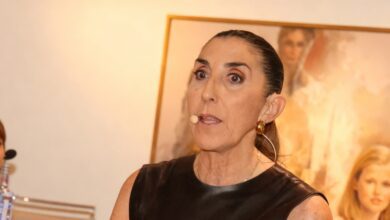
Maria Pombo’s candid admission about the limits of forgiveness in marriage has sparked widespread discussion in Spanish society. In an era when celebrities’ personal lives are laid bare before the public, every word from an influencer can shift perceptions of family values and trigger waves of debate. Known for her openness, Pombo unexpectedly changed her stance on the sensitive subject of infidelity, and it has not gone unnoticed.
In a recent podcast with Vicky Martín Berrocal, Maria not only shared insights into her family life but also addressed a question many grapple with: is it possible to forgive betrayal when years of shared history and children are at stake? Her reflections turned out to be much deeper than a simple ‘yes’ or ‘no.’ According to Pombo, what matters most to her is not just the act of infidelity, but the loss of trust and the feeling that a person has changed fundamentally. She emphasized that she would find it impossible to forgive not so much the action itself, but the betrayal of one’s own principles and the destruction of a loved one’s image.
This approach is in sharp contrast to her previous statements. A few years ago, María claimed that for the sake of love she would be willing to turn a blind eye to infidelity, although she doubted she could live with that burden. Now, however, she says that it’s not physical betrayal she finds unforgivable, but rather the inner transformation of a partner that makes them a stranger. This admission caused a storm of emotions among fans, as many viewed the Pombo and Castellano couple as a model of stability and mutual respect.
Interestingly, such celebrity confessions are increasingly becoming topics of public discussion. The Spanish show business scene has often seen high-profile scandals rooted in personal conflicts. For example, a recent clash between two well-known artists, detailed in the article about the behind-the-scenes rivalry between Estrella Morente and Rosalía, also raised questions of trust and loyalty in both creative and personal relationships. Such stories resonate with a wide audience because they touch on universal themes—devotion, honesty, and the ability to forgive.
In the interview, María emphasized that it was Pablo Castellano who became her support and source of confidence. She admitted that thanks to her husband, she was able to feel protected and fulfilled, something neither her family nor education had given her. According to her, their union is built on shared values, with loyalty at its core. However, despite their outward harmony, Pombo does not hide the fact that, for her, it is not only the absence of infidelity that matters, but also the preservation of her partner’s inner honesty with himself and the family.
Fans and critics are divided in their opinions: some believe this stance shows maturity and a deep understanding of relationships, while others see it as idealism that may not withstand the tests of real life. Nevertheless, María’s candor has once again made her one of the most talked-about figures in the Spanish media. Her words have prompted many to reflect on their own boundaries of forgiveness and what truly undermines trust within a family.
María Pombo is one of the brightest representatives of the new generation of Spanish influencers. In recent years, she has not only built a successful career on social media but has also become a symbol of the modern family, where traditional values blend with openness and a willingness to discuss complex topics. Her personal life, filled with both happy moments and difficult decisions, continues to attract the attention of millions of followers. Thanks to her sincerity and her ability to speak honestly about important issues, María remains one of the most influential figures in Spanish society.