Spain’s music world is holding its breath after a mysterious white square appeared on La Oreja de Van Gogh’s social media. The post sparked a wave of speculation—just the tip of the iceberg. A year after vocalist Leire Martínez’s departure, fans began to hope for a reunion with Amaia Montero, the band’s golden voice. But reality turned out to be far more dramatic and unpredictable.
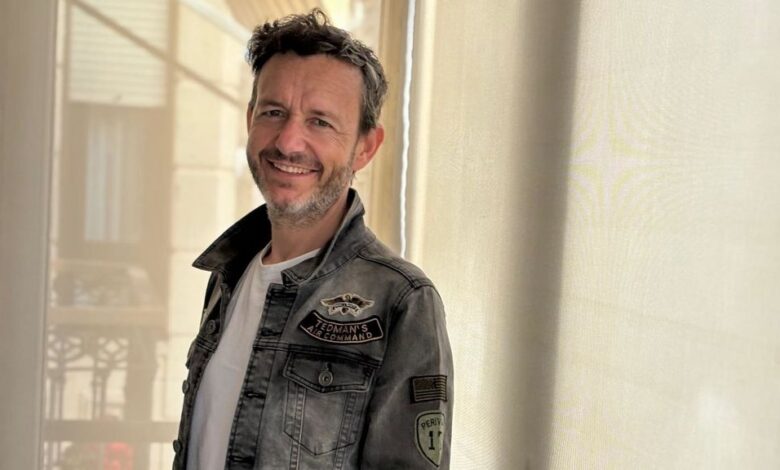
The confirmation came swiftly: Amaia will indeed return for a spring tour that promises to be a major event. Yet this joyful news was overshadowed by another, utterly stunning announcement. Pablo Benegas, the band’s long-standing guitarist, co-founder, and a pillar of the group, will not take part in the project. He is leaving the band he helped create and where he has spent his entire creative life.
This news came as a true shock. Benegas is more than just a guitarist. He was one of the songwriters, the band’s creative core, and, as many believed, the keeper of La Oreja de Van Gogh’s spirit. His close friendship with Amaia Montero always seemed unbreakable, which makes his departure at the moment of her return all the more paradoxical and mysterious. What could have led him to make this decision now?
Perhaps the answer lies beyond the stage, in his personal life, which he has always valued above all else. In a recent conversation with the press, Pablo shared that he considers it entirely possible to balance a career in a famous band with being the father of a large family. He and his wife had always dreamed of children, and their dream came true with four offspring. The musician admitted that, at first, fatherhood felt like a cloud of euphoria, but he soon realized the immense responsibility for which society does not prepare you. According to him, true emotional connection is formed later, through shared experiences and daily interaction.
He was truly surprised when he found out that his third experience of fatherhood would bring twins. The artist recalled that initial shock soon gave way to a period he described as “brutal and very intense.” Nevertheless, the family managed to adapt to the new rhythm. Music had always been an essential part of their home: Pablo would wake the children with melodies, and instruments were scattered throughout the house. He has repeatedly emphasized that he owes all this to his wife—a strong and independent woman who allowed him to continue pursuing his passion, unafraid to stay alone with the children during long tours. Her support gave him confidence and peace of mind while away from home.
A year ago, Benegas introduced his autobiography, “Memoria,” to the public, dedicating it to his children. In it, he spoke candidly about his childhood, overshadowed by the political activities of his father, José María Benegas, known as Chiqui, a member of the Basque Socialist Party. Pablo described what it was like to grow up seeing his father’s name targeted by ETA terrorists. He inherited the hatred directed at his family and felt it in the “devastating” looks that filled him with a primal fear. For many years, this burden weighed heavily on him, but over time, he was able to reconsider the past, and now he feels immense pride in his father and his legacy.
What lies ahead for “La Oreja de Van Gogh”? The return of Amaia Montero will undoubtedly breathe new life into the band and restore its original sound. But will her voice be enough to make up for the absence of Pablo Benegas’s guitar riffs and creative energy? Fans now stand on the threshold of a completely new era for their favorite group, full of both glowing hopes and serious concerns.