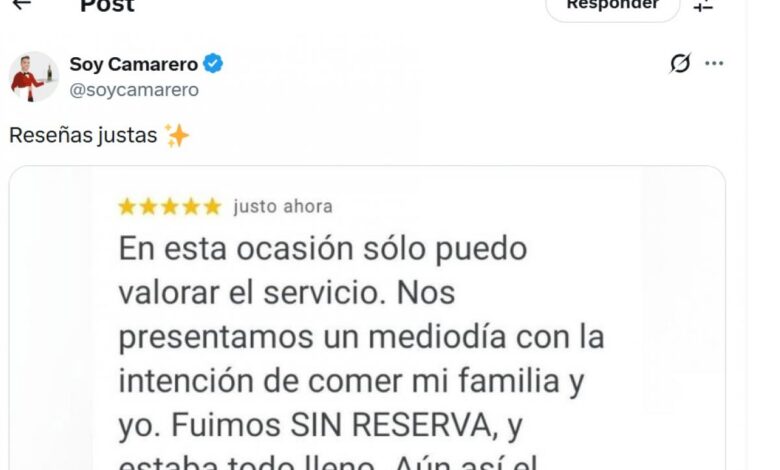
In Spain, where dining out holds a special place in the culture, even a routine restaurant visit can turn into an unexpected story. A customer who came to a popular restaurant with his family encountered a common situation: every table was taken, and there were no seats available. Despite his disappointment, the man chose not to complain or post angry comments online. Instead, his response was completely different.
He decided to share his experience by leaving a review that quickly sparked discussion on social media. In his review, the customer mentioned that he arrived without a reservation and, to his surprise, the staff treated him with the utmost courtesy. The restaurant employees not only explained the situation but also tried to find a solution, although it wasn’t possible that day. Instead of criticism, the guest thanked the team for their attitude and promised to return, this time with a reservation.
The Importance of Reservations
This incident reminded many people just how important it is to book a table in advance, especially on days when restaurants are in high demand. In the past, this meant making a phone call, but now most establishments offer online reservations. This not only saves guests time but also makes it easier for staff to manage the dining room and plan for busy periods.
In recent years, the habit of reserving tables has become a part of Spain’s restaurant culture. Many establishments even refuse to admit guests without advance reservations on certain days. This approach helps avoid disappointment and makes the experience more comfortable for everyone involved.
Cancellation etiquette matters too
However, another rule is just as important: if your plans change, you should always inform the restaurant if you can’t make it. Canceling your reservation is a sign of respect towards staff and other customers who might take your spot. In Spain, this is considered good manners and a reflection of proper social etiquette.
In this case, the customer not only took no offense, but also reminded everyone with their actions about the simple rules that make dining out more enjoyable for all. Their feedback set an example for others and received an outpouring of support on social media.
Public response
The story quickly spread online, sparking numerous comments. Many users noted that such behavior is rare and expressed hope that examples like this would become standard. In discussions, people shared their own experiences where a reservation—or the lack thereof—changed the course of their evening.
Restaurateurs also supported the customer’s initiative, emphasizing that courtesy and timely communication lead to better service. For many establishments, such feedback is not only a pleasant bonus but an incentive to maintain high standards.