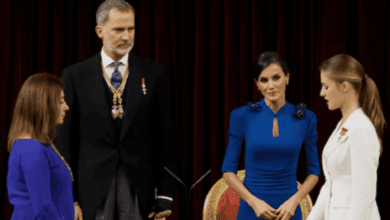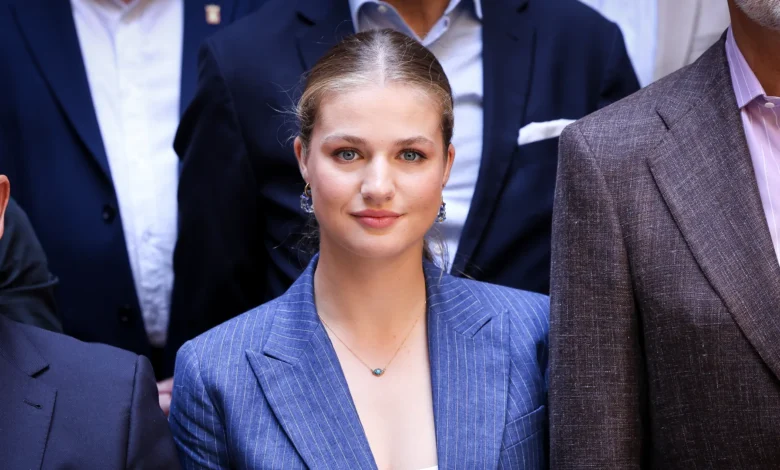
In recent years, Princess Leonor has become a central figure in the discussion about the future of the Spanish monarchy. Her appearances at official events consistently spark a wave of interest, and every step she takes is analyzed by both experts and admirers. Leonor is seen as a symbol of renewal and hope, capable of restoring trust in the crown after a series of scandals that damaged the monarchy’s reputation over the past decade. Her image is not just a beautiful picture, but the result of years of personal development and a carefully crafted family strategy.
Unlike many other heirs to European thrones, Leonor demonstrates not only flawless style but also thorough preparation. She speaks several languages fluently, carries herself confidently in public, and knows how to connect with people from different generations. The attention to detail in her behavior and fashion is no accident: every appearance is carefully planned to highlight her modernity and openness to the world. This makes her not only a style icon, but also a role model for young people looking for new guides.
View from Europe
European media frequently compare Leonor with other members of royal families. The French press, for instance, calls her the “pride of Spain” and notes that she is the one who can breathe new life into the monarchy. According to russpain, interest in her reaches far beyond Spain: analysts point out that Leonor has become one of the most talked-about young royals in Europe. Her path to the throne is seen as a model to follow, while her personal qualities are regarded as key to stability and the country’s development.
Particular attention is given to Leonor’s relationship with her family, especially her younger sister Sofía. Their public appearances together are seen as a show of unity and support—crucial for the royal family’s image. There is growing confidence in society that these very values will help the monarchy adapt to new realities and remain relevant for future generations.
New expectations
As Leonor’s twentieth birthday approaches, interest in her has only grown. Discussions center not only on her achievements, but also on the challenges she will face. Spaniards expect from her not just the continuation of tradition, but real change. In a country where views on the monarchy are mixed, it is Leonor who could become the unifying figure capable of overcoming divisions and restoring respect for the institution of the crown.
Public opinion experts note that Leonor’s success largely depends on her ability to remain close to the people and respond to current demands. Her discipline, sense of responsibility, and ability to listen set her apart from other heirs to European thrones. Notably, she is not afraid to take responsibility and speak openly on difficult issues, which is rare among members of royal families.
Personality and influence
Leonor has already become a role model for many young Spaniards, who see in her not just a representative of the dynasty, but a modern young woman with strong life principles. Her path is a combination of tradition and innovation, which is especially valuable in times of change. She does not simply follow protocol but is shaping a new leadership style based on respect, openness, and a willingness to engage in dialogue.
Leonor’s impact on society goes beyond official events. Her style, manner of communication, and approach to her duties are discussed across social networks, television, and the press. Young people see her as a role model, while the older generation sees hope for stability. Striking such a balance is rare, yet Leonor manages to do so, earning the respect even of skeptics.
Princess Leonor de Borbón is the eldest daughter of King Felipe VI and Queen Letizia, and the official heir to the Spanish throne. Born in 2005 in Madrid, she was educated at prestigious institutions in Spain and abroad. She is known for her discipline, sense of responsibility, and attention to detail. From an early age, she has participated in the country’s public life, actively engaged in charity work, and supported cultural initiatives. Her persona has become a symbol of a new era for the Spanish monarchy, and her personal qualities command respect both in Spain and beyond.