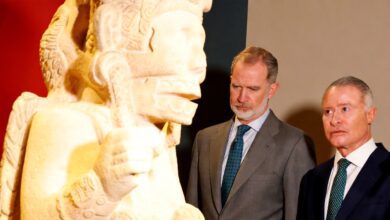
The second day of the royal couple’s tour in Navarra firmly established the impression of overwhelming success. In Olite and Tudela, the atmosphere was electrified by widespread enthusiasm. People lined up to take photos with the king, queen, and their daughter, showering them with compliments and applause. Some admirers, overcome with emotion, could not hold back tears. Notably, the source of such adoration was the astonishing simplicity the royals displayed. Their clothing and manners resembled those of an ordinary family rather than rulers of a nation. This intentional rejection of ostentatious luxury—so different from the grand displays of other European monarchies—resonated deeply with the public. Their appearance lacked gloss and strict protocol, but it was this authenticity that won over everyone who came to greet them. Princess Leonor, who attracted special attention, graciously left personalized autographs for her young admirers.
Although the heir to the throne did not don the ceremonial attire of the Princess of Viana, she found herself in a setting straight out of a fairy tale—the very castle that could have been her home centuries ago. The majestic Royal Palace of Olite, a Gothic masterpiece from the 15th-16th centuries, stands as a powerful symbol of the Navarrese monarchy. With its seven imposing towers, fortress walls, and enchanting hanging gardens, the palace is a legend in its own right. It was once said to have as many rooms as there are days in a year, not counting its own vineyards, gardens, and even a menagerie with lions. For the young princess, walking through these ancient halls became an opportunity to connect with her title and its deep history.
From the medieval splendor of Olite, the royal helicopter transported the delegation to Tudela. This city holds a special place in Queen Letizia’s heart, as she regularly attends the local Spanish film festival. Her long-standing connection with the city was met with mutual warmth. The local baker, who traditionally presents her with bread during her visits, outdid himself this time, gifting a nine-kilogram loaf inscribed with ‘Long live the Kings.’ Many other residents of Tudela also brought tokens of their respect: from books to an elegant handmade fan that particularly delighted the queen. The day was marred only by a minor incident: a woman in the crowd fainted at the entrance to City Hall. The King, Queen, and Princess did not hesitate to stop and personally inquire about her condition while medical staff provided assistance. This small act of care spoke volumes.
The official reception at Tudela City Hall continued the theme of local hospitality. Princess Leonor was presented with a traditional red Navarrese scarf—a symbolic gift which the heir immediately put on. She was also given a basket filled with fresh fruits and vegetables from Tudela’s renowned gardens. The municipality itself made considerable efforts in preparing for the visit, decorating the main hall with two enormous carpets, specially loaned for the occasion by local aristocrats, the Marquises de Cuba.
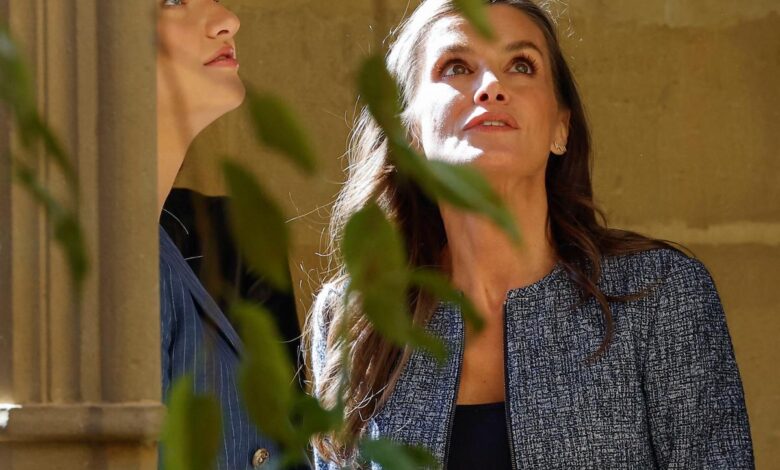
The triumphant tour of Navarre concluded with a meeting at the Palace of the Marquis de San Adrián, now home to a university campus. Here, Felipe, Letizia, and Leonor engaged in a meaningful dialogue with a group of more than twenty young people from across the region. Students, artists, researchers, and young professionals from various fields shared their perspectives on the challenges facing the modern world. After the conversation, many participants highlighted Queen Letizia’s openness and engagement. She led the discussion by asking insightful questions, leaving a lasting impression of a monarchy that not only is present but also actively listens to the next generation.