Archaeological excavations at the foot of Mount Hora in Malawi have uncovered the remains of a woman who had been buried there nearly ten thousand years ago. The bones show traces of fire and ash, as well as evidence of a complex burial ritual, making this find unique for its period in both Africa and worldwide.
Discovery and archaeological context
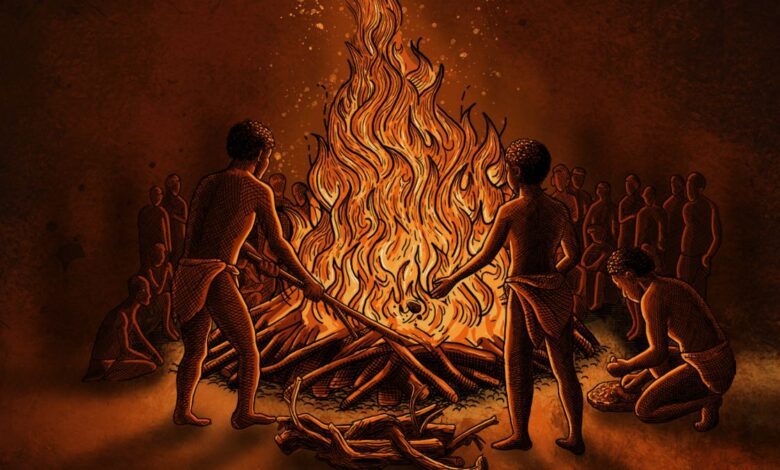
Fragments of an adult woman’s skeleton (estimated age between 18 and 60 years) were found in a layer of charred bones and ash. Analysis revealed that the body had been disarticulated and burned on a large pyre requiring a significant amount of fuel—about 30 kg of dry branches, leaves, and grass.
HOR-1 as a center of ritual activity
The excavation site, designated HOR-1, was used for burial ceremonies for around eight thousand years. Remains of at least eleven individuals have been found here, yet only the woman showed clear signs of cremation. Her bones exhibit cut marks and signs of being moved during burning. The skull and teeth are missing, suggesting they may have been used in other memory or ancestor veneration rituals.
Structure of the ritual
The ritual involved disassembling the skeleton prior to burning and repeated lighting of the pyre at the same spot. The complexity of the ceremony suggests collective action, planning, resource allocation, and early forms of ancestor veneration that helped strengthen community identity.
Comparison with other ancient cremations
The Mount Hora discovery stands out as unique in a global context:
In Australia, the earliest traces of human cremation date back around 40,000 years, but no pyre has been found.
In Alaska, a child was cremated about 11,500 years ago, but no evidence of adult cremation exists.
In the Levant, similar rituals appeared only several thousand years later.
Memory and continuity
HOR-1 served as a permanent site for ritual activity, to which people returned over multiple generations. Lighting pyres and conducting ceremonies in the same place suggests a preservation of collective memory and strengthens the connection between generations.
Current research
Archaeological work has been ongoing for decades, led by a team headed by Jessica Cerezo-Román from the University of Oklahoma. Their studies shed light on little-known aspects of ancient African culture, allowing the reconstruction of the social and ritual practices of hunter-gatherers.
Significance of the discovery
The find at the foot of Mount Hora demonstrates that ancient people had complex ritual practices long before the advent of agriculture and settled communities. The ancient cremation provides evidence of collective effort, honoring the dead, and forging a sense of community identity, offering new insights into early human culture.