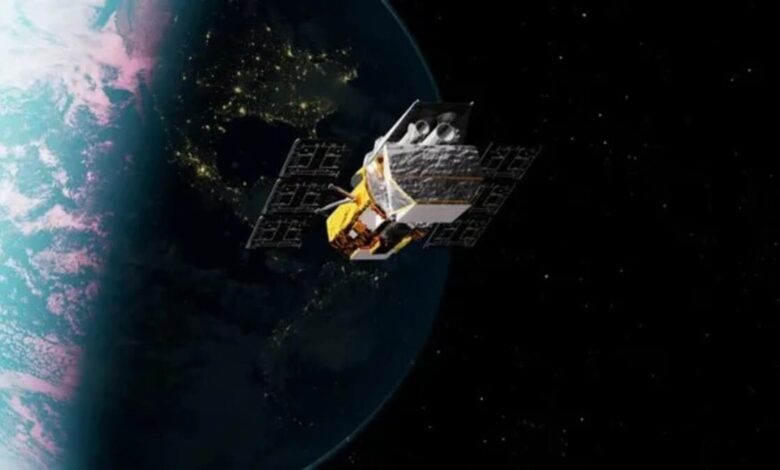
An unusual mission is set to launch into space in 2026: a private company will take on the task of extending the lifespan of one of NASA’s key scientific instruments. The operation focuses on the Swift space telescope, which has spent twenty years observing gamma-ray bursts from low Earth orbit. During this period, the telescope has descended from 600 kilometers to 400, and if no action is taken, it could completely burn up in the atmosphere by the end of 2026.
NASA has decided not to decommission this unique observatory, but to try returning it to its former orbit. To achieve this, the agency launched a competition among private companies, and the winner was Katalyst. The company proposed using a Pegasus XL rocket, which launches from an L-1011 Stargazer carrier aircraft at an altitude of around 12 kilometers. This approach enables a rapid and flexible boost of payloads into the required orbit.
Technical Details of the Mission and the Choice of Pegasus XL Rocket
The Pegasus XL rocket, designed by Northrop Grumman, can deliver up to 454 kilograms to low Earth orbit. Since 1990, it has completed 45 successful launches, the most recent in 2021. For the Swift rescue operation, this specific rocket was chosen because it combines reliability with the ability to launch on a tight schedule.
The total budget for the mission is estimated at $30 million, which includes launch costs and efforts to raise the telescope’s orbit. Contract details are undisclosed, but the timeline is extremely tight: the launch is set for June 2026, with no possibility of delay due to the satellite’s rapidly dropping orbit.
How the Swift Reboost Operation Will Be Carried Out
After reaching orbit, the Katalyst spacecraft will need to approach the Swift observatory and use its three robotic arms to capture it. It will then tow the telescope to an altitude of about 600 kilometers—this is where Swift will be able to continue scientific observations for several more years.
If the operation succeeds, it will mark the first time a private company has not only launched but also serviced a state-owned scientific satellite in orbit. This experience could open new opportunities for collaboration between government agencies and the commercial sector in the space industry.
The Mission’s Importance for Science and Future Projects
Swift remains one of the most vital tools for studying gamma-ray bursts—the most powerful explosions in the universe. Its data is used by scientists worldwide, and so far there is no replacement for this observatory. Successfully extending its operations will enable unique research to continue and strengthen the international scientific community.
The Katalyst mission could serve as a model for future projects involving satellite servicing and repairs in orbit, and it may also showcase the effectiveness of private initiatives in tackling complex technical challenges.