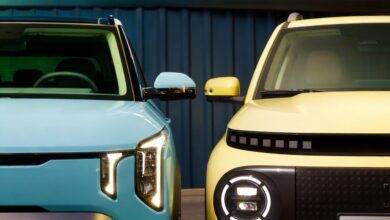
South Korean company Kia has started production of the EV4 electric vehicle at its plant in the Slovak city of Žilina. This marks Kia’s first experience manufacturing a fully electric car in Europe.
The EV4 model was unveiled in February 2025 and was designed with the preferences of European consumers in mind. The car features a five-door body and targets those seeking modern, efficient, and environmentally friendly transportation.
The EV4 is built on Hyundai Motor Group’s global modular electric platform (E-GMP). The car will be available with two battery options: a standard 58.3 kWh battery and an extended 81.4 kWh battery, offering different driving ranges.
Additionally, the EV4 features Vehicle-to-Load (V2L) and Vehicle-to-Grid (V2G) capabilities, allowing the car to serve as a power source for external devices and to return energy to the grid. Buyers will be offered eight body color options.
The Žilina plant, opened in 2004, already produces Kia XCeed and Sportage models in hybrid and plug-in hybrid versions. In 2024, these vehicles accounted for a quarter of the plant’s total output. With the launch of the EV4, the factory will expand its lineup to include electric vehicles, hybrids, and internal combustion cars.
The plant’s production capacity allows for simultaneous manufacturing of different model types, thanks to its division into five main sections: stamping, body, painting, engine assembly, and final assembly. A recent upgrade of the production lines cost €108 million and included the installation of a new conveyor system for electric vehicle batteries.
The plant in Žilina can produce up to 350,000 cars and 540,000 engines per year. It employs around 3,700 people and 600 modern robots. The factory’s products are exported to 83 countries, accounting for about 11% of Kia’s global production.
In addition, the plant has significantly reduced its environmental impact: energy consumption per car has dropped by 11%, water use by 28%, and CO2 emissions by 13%. All electricity used in production comes from renewable sources, and by the end of 2025, around 1.5% of its needs are expected to be covered by a new solar power plant.