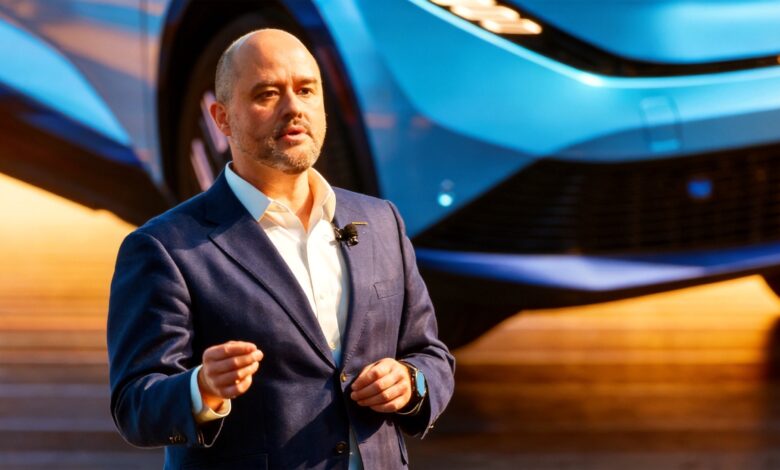
Japanese automaker Nissan has found itself at the center of sweeping changes that could reshape not only the company’s own future, but also the global marketplace. Significant losses, the closure of factories, and the layoff of tens of thousands of employees have already become a reality for a brand that, until recently, was considered one of the industry leaders. Now, even Nissan’s independence is in question: company head Ivan Espinosa has not ruled out a possible sale, something that once seemed unthinkable for such a giant.
The situation is worsened by Nissan’s forecast of a net loss of $4.2 billion for the 2026 fiscal year, while the previous year’s losses were even higher at $4.5 billion. Against this backdrop, management has been forced to take drastic measures: seven factories and two design centers are being closed, and the workforce will be reduced by 20,000 employees. According to Autobild, these steps are intended to help the company survive, but for now they only underscore the depth of the crisis.
Challenges and solutions
As competition in the car market intensifies and technological changes demand massive investment, Nissan finds itself in a vulnerable position. Espinosa openly states that the company must be prepared for any scenario, including the most unexpected ones. He notes that for manufacturers of this scale, it is increasingly difficult to remain major players without support or mergers with other companies. That’s why previous talks about a possible integration with Honda took place, but ended without results: the Japanese competitors failed to reach equal terms, and Nissan did not want to become part of someone else’s holding.
Meanwhile, Nissan’s strategic partner—the French group Renault—is gradually reducing its stake in the Japanese company. Renault currently owns 35.71% of Nissan’s shares, but only 17.05% directly, with the remaining shares held in a special French trust. Instead of strengthening its cooperation with Nissan, Renault has signed an agreement with Ford to jointly develop electric vehicles, which came as an unexpected turn for the market. By the way, more about new alliances and Ford’s changes in strategy can be found in the article about Ford’s new plans and its partnership with Renault.
Prospects and risks
Nissan is undergoing a major internal restructuring: the company is shortening the development times for new models to respond more quickly to market changes. Now, the creation of a completely new car takes 37 months, while updating an existing model requires just 30 months. This is expected to boost the brand’s competitiveness, but it remains unclear whether these measures will be enough to overcome the crisis. With Renault reducing its support and no new major partners in sight, Nissan is forced to rely solely on its own resources.
Рынок электромобилей и гибридов развивается стремительно, а японский бренд рискует отстать от конкурентов, если не ускорит внедрение новых технологий. В то же время, массовые сокращения и закрытие производств могут негативно сказаться на имидже компании и доверии покупателей. В условиях, когда даже глава Nissan не исключает возможность продажи, инвесторы и аналитики внимательно следят за каждым шагом руководства.
Partners and competitors
The situation is further complicated by the fact that strategic alliances are becoming increasingly important for survival in the market. While Nissan is losing Renault’s support, other automotive giants are joining forces to develop new technologies and cut costs. For example, Ford and Renault have already announced joint projects in the electric vehicle sector, which could shift the balance of power in Europe and beyond. For Nissan, this means it must urgently seek new avenues for development and partnerships—or risk being left on the sidelines of the industry.
In the coming months, it will become clear whether Nissan can stay afloat and retain its independence, or if the company will face a merger with one of its competitors. One thing is certain: the current crisis demands decisive and unconventional action from management, and the market does not forgive mistakes.
Iván Espinosa is a figure who has become a symbol of change for Nissan. After being appointed as the company’s head, he immediately launched a large-scale restructuring and was not afraid to take unpopular measures. His approach is marked by openness to new opportunities and a willingness to acknowledge the brand’s vulnerabilities. Thanks to this management style, Nissan still has a chance to regain its standing despite all the challenges and uncertainty about the future.