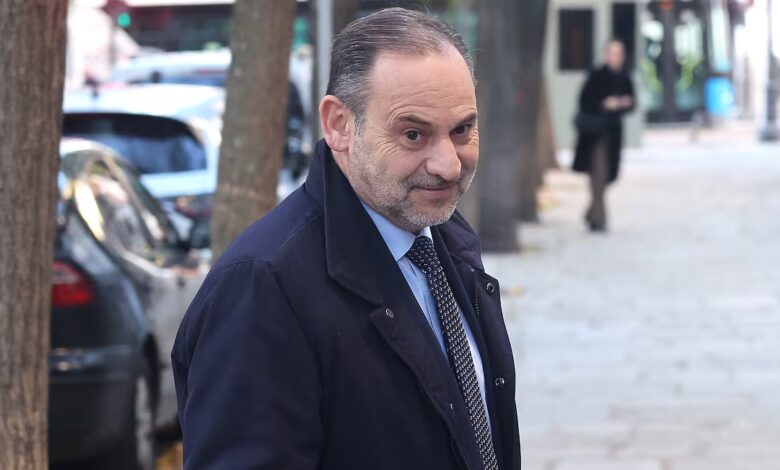
An investigation by the Central Operative Unit of the Civil Guard (Unidad Central Operativa, UCO) uncovered a large-scale scheme in which businessmen Víctor de Aldama and Claudio Rivas played a key role. According to investigators, they channeled around one million euros through a network of companies to bribe former transport minister José Luis Ábalos and other officials. The aim was to speed up the licensing process for oil product operations and secure favorable market conditions for themselves.
The case files describe numerous incidents where business representatives sought access to the highest levels of three ministries: transport, industry, and ecological transition. Investigators note that this involved not just attempts to influence decisions, but also actual contacts with top officials.
Million-euro payments
The UCO report details the financial flows going through Have Got Time S.L. and Villafuel S.L. According to investigators, these companies were used as instruments for transferring large sums of money in exchange for the support of public officials. From 2021 to 2022, Have Got Time S.L. operated a fraudulent scheme that moved more than 49 million euros—part of which was funneled into bribes.
Particular attention is paid to the episode when the daughter of entrepreneur Carmen Pano told her partner about a job offer in the office of Minister Ábalos’s advisors. She declined, but the very fact of the offer became one of the pieces of evidence of attempts to establish informal ties with power.
Influence on decisions
The investigation established that Claudio Rivas was actively seeking opportunities for mediation through Víctor de Aldama, so that he would use his connections to expedite the granting of a license for Villafuel S.L. In exchange for official assistance, substantial financial rewards were offered. Correspondence between the scheme’s participants discussed amounts, terms, and their willingness to ‘move things forward’ if the payment was adequate.
Among the contacts were the chiefs of staff for the Ministers of Industry and Ecological Transition — Juan Ignacio Díaz Bidart and Isaac Pons Pons. The Director for Energy Policy and Mining, Manuel García Hernández, is also mentioned. Investigators note that negotiations were conducted directly, indicating the scheme’s deep penetration into government structures.
Connections and intermediaries
In December 2020, Claudio Rivas, through Carmen Pano and her daughter, requested a meeting with Minister Ábalos, hoping he would use his influence to speed up the process. Víctor de Aldama, acting as an intermediary, made it clear he was willing to ‘move things along’ if the payment was sufficient. In correspondence, he joked that the task was simple, but everything depended on the fee.
The case materials emphasize that the scheme involved not only the Ministry of Transport but also other key agencies. This allowed those involved to count on securing lucrative contracts and licenses, even when formal requirements were not met.
The role of key figures
Víctor de Aldama had already been mentioned in previous investigations into suspicious mask procurement for the Ministry of Transport during Ábalos’s leadership. However, the new investigation shows that his interests extended far beyond a single ministry or scheme. Investigators note that this involves an entire network seeking to influence decisions in several state institutions at once.
UCO notes that the evidence collected points to the systemic nature of the scheme and the existence of strong ties between business and officials. The focus is on both financial flows and the personal connections that allowed participants to advance their interests at the highest levels.