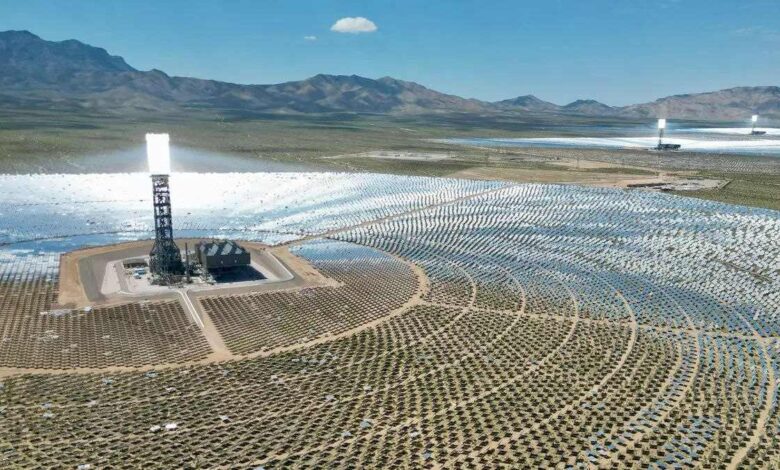
In 2025, it was announced that one of the largest solar thermal power plants in U.S. history—Ivanpah—was shutting down. Launched in California, this project was once seen as a breakthrough in renewable energy. Its debut was accompanied by bold claims of technological leadership and environmental responsibility. However, a decade after its launch, the plant found itself on the verge of oblivion, and the reasons for its failure sparked lively debate among experts and the public.
Ivanpah was built during a boom in “green” energy investment. BrightSource Energy, NRG Energy, and Google joined forces to carry out an ambitious project: three receiver towers, over 300,000 heliostat mirrors, and a claimed capacity of nearly 400 megawatts. At the design stage, the plant looked like a model of innovation poised to reshape America’s energy landscape.
But reality proved much more complicated. During the years of construction, the energy market changed beyond recognition. The cost of photovoltaic panels plummeted, while gas—thanks to the shale revolution—became more affordable than ever before. As a result, Ivanpah faced fierce competition and found itself at a disadvantage compared to newer solar and gas plants.
Economic challenges
The main problem for Ivanpah was the project’s economics. The cost of the electricity it generated turned out to be significantly higher than that of its competitors. Photovoltaic plants, which were rapidly spreading across the country, offered a cheaper and simpler solution. Gas-fired power plants, meanwhile, provided stable supply and low prices.
By the time Ivanpah launched in 2014, it could no longer compete on cost. Despite government subsidies and support, the project failed to meet its planned energy output targets. Maintaining the vast number of mirrors required significant expenses, and the complex infrastructure led to frequent technical issues.
The expiration of long-term electricity supply contracts dealt an additional blow. California energy companies were increasingly choosing new solar farms with battery storage, which offered greater flexibility and lower maintenance costs.
Technological Challenges
Ivanpah was built as a solar thermal power plant (CSP), where sunlight is concentrated by mirrors and used to heat water and produce steam. While this technology was considered promising, in practice it showed serious drawbacks.
The complexity of heliostat field management, the need for constant technical supervision, and high maintenance costs made the station extremely expensive to operate. In addition, gas turbines had to be used to keep the plant running at night and on cloudy days, which reduced the project’s environmental appeal.
Environmentalists also voiced concerns: concentrated solar rays were killing birds, and the construction of the plant threatened the desert tortoise population. These factors sparked public outcry and led to new inspections and restrictions.
Politics and Public Opinion
Ivanpah quickly became the subject of political debate. Some viewed the project as a symbol of progress and a step toward energy independence, while others saw it as an example of inefficient use of public funds. Amid rising competition and pressure from environmental groups, the plant increasingly came under criticism.
California authorities gradually shifted their focus to the development of photovoltaic plants and energy storage systems. This decision was driven not only by economic, but also by political factors: new technologies allowed for faster progress toward emissions reduction targets and helped ensure energy reliability.
As a result, Ivanpah ended up isolated, and its continued operation became economically unviable. The decision to shut down the plant was the logical outcome of years of debate and shifts in the market.
Engineering legacy
Despite its failure, the Ivanpah project left a significant mark on the history of energy. Engineers gained unique experience managing large-scale solar systems, and advancements in automation and monitoring are now used in modern developments.
Many experts note that it was thanks to Ivanpah that the weaknesses of solar thermal technology were identified, paving the way for further research. The knowledge gained is helping to create more efficient and reliable solutions for future energy projects.
Today, Ivanpah is seen as an important milestone in the development of renewable energy, despite financial and technological challenges. The project served as a lesson for the entire industry and a reminder that innovation requires not only bold ideas, but also flexibility in a rapidly changing market.
In case you didn’t know, BrightSource Energy specializes in the development and implementation of solar thermal technologies. In partnership with NRG Energy and Google, it launched the Ivanpah project, which became the largest solar thermal power plant in the United States. Despite the plant’s closure, BrightSource continues to work on new energy solutions, applying the experience gained from operating Ivanpah. The company actively participates in international projects and collaborates with leading research centers in the field of renewable energy.