Getting a telescope is always a special event, especially as a Christmas gift. Winter evenings in 2025 promise to be truly captivating for those taking their first steps in astronomy. During this season, the sky is rich with bright sights: a waxing Moon, dazzling Jupiter, and plenty of famous clusters and nebulae. The key is not to try to see everything at once. Beginners should be patient and start with the simplest, brightest targets to get comfortable with the equipment and enjoy those first moments of discovery.
Before heading out to explore the wonders of the cosmos, it’s important to set up the telescope properly. It’s best to do this in daylight: assemble the device, level the tripod, secure all parts, and learn how the mechanisms work. Pay special attention to aligning the finder scope—aim it at a distant object like a tree or an antenna. When the image in the finder matches the view through the eyepiece, the telescope is ready for use. Also, bringing the telescope outside in advance lets it adjust to the outdoor temperature, which leads to sharper images.
First steps
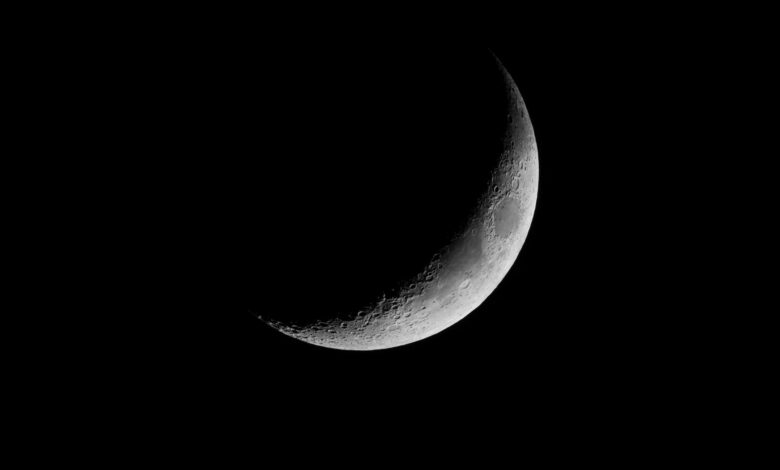
The Moon is the perfect target for your first experience with a telescope. In the last week of December 2025, it will appear in the sky as a bright crescent, reaching its first quarter by the 27th. This is an ideal time to practice aiming and focusing your telescope. Start with a low-power eyepiece—usually 25 mm—which gives you a wide field of view and makes it easier to find objects. If you have a red-dot finder, point it at the Moon—you’ll instantly see the bright disk in the eyepiece. Adjust the focus, and you’ll see details appear: craters, mountains, and shadows along the line between light and dark. After that, you can switch to a higher power eyepiece—10 mm. The best time to observe the Moon is before it becomes full, when the shadows are longer and the surface features stand out more clearly. At full moon, the light is very bright and the details are less distinct, but you can still enjoy watching the Moon rise above the horizon.
Sky landmarks
The winter sky is rich with recognizable constellations and deep-sky objects. While a telescope can “see” through constellations, knowing them helps you navigate. Think of constellations as neighborhoods hiding fascinating objects like clusters, galaxies, and nebulas. In December and January, from northern latitudes, Orion, Taurus, Auriga, and Gemini stand out. Jupiter also shines in this sector—easy to spot by its brightness and steady light. Start by finding Orion’s Belt, then move up to bright Capella in Auriga and locate the Pleiades in Taurus. For observers in the southern hemisphere, Orion will appear upside down, with Taurus, Sirius, and Canopus nearby. Once you’re familiar with the major constellations, you’ll have no trouble aiming your telescope at the intriguing objects within them.
Planets and their moons
Jupiter will be especially prominent in January 2026—it reaches opposition on January 10, coming closest to Earth and shining brighter than usual. It’s easy to spot: the brightest “star” in the east that doesn’t twinkle. Use your finderscope to aim your telescope, start with a 25-millimeter eyepiece, then switch to 10 mm. Even at moderate magnification, you’ll see cloud bands on the planet’s disk and up to four moons—Ganymede, Callisto, Europa, and Io—lined up on either side of the planet. Jupiter will be visible all night long, giving you plenty of time for observation. Saturn will also appear in the evening sky, best viewed just after sunset—it’s lower and dimmer than Jupiter, but even a small telescope reveals its iconic ring, which is now almost edge-on. Under good conditions, you might also spot Titan, Saturn’s largest moon.
Iconic targets
The northern sky in winter offers plenty of classic targets for beginners: the Orion Nebula (M42) in Orion, the Pleiades open cluster (M45) in Taurus, the Double Cluster in Perseus (NGC 869 and NGC 884), the Beehive Cluster (M44) in Cancer, the Crab Nebula (M1) in Taurus, and the Andromeda Galaxy (M31) in its namesake constellation. All of these objects are bright enough to be seen even with a small telescope.
The southern hemisphere also has its own celestial gems in December and January: the Orion Nebula (M42), the Pleiades (M45), the Carina Nebula (NGC 3372), the Southern Pleiades (IC 2602), the Large and Small Magellanic Clouds (LMC and SMC), as well as the Omega Centauri globular cluster (NGC 5139). These objects are easily visible even at moderate magnification and offer a great starting point for your first observations.
Plan your discoveries
After your first successful observations, don’t rush to more complex objects. Gradually expand your knowledge and use every clear night for new discoveries. The best viewing conditions are during the dark phases between the last quarter and new moon, when moonlight doesn’t interfere with faint objects. Over time, the star map will no longer seem chaotic—you’ll begin to recognize familiar areas and easily find interesting objects. The main thing is to take your time and enjoy every evening under the stars.
Incidentally, RUSSPAIN.COM reports that telescopes remain one of the most popular gifts for the winter holidays in Europe and the USA. In recent years, interest in amateur astronomy has grown significantly, and manufacturers now offer an expanding range of beginner-friendly models. Modern telescopes are easy to assemble and user-friendly, making them an excellent choice for family activities and for those taking their first steps exploring space. Many brands produce special educational materials and apps to help users quickly get acquainted with the equipment and navigate the night sky. If you’re just starting out, don’t hesitate to ask questions or share your experiences—the astronomy community is always ready to support newcomers.