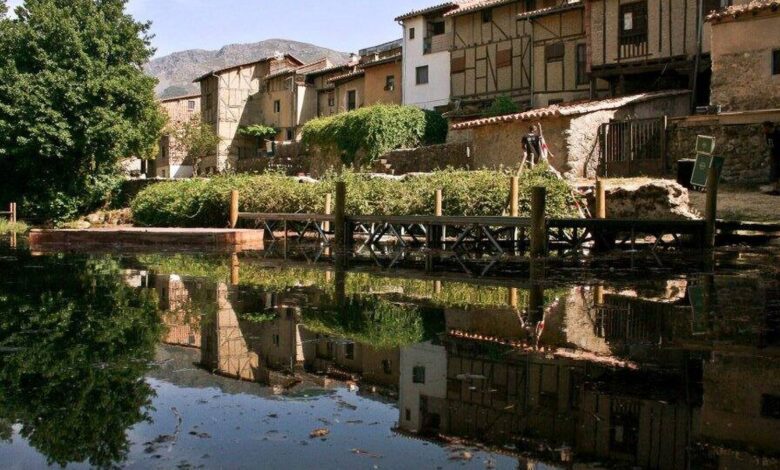
Far from the noisy tourist trails, nestled among the mountain landscapes of northern Extremadura, lies the town of Hervás. This place is renowned for its unique medieval quarter, which has preserved the living heritage of the Sephardim. Its urban landscape has remained virtually unchanged for centuries, making it a true gem. Cobblestone streets, houses with distinctive timber frames, and a special atmosphere that permeates every corner attract lovers of history, tradition, and authentic architecture.
This enclave, recognized as a site of great cultural value, preserves elements that draw thousands of visitors each year interested in the Jewish history of the Iberian Peninsula. In the Caceres town of Hervás, visitors discover one of the most picturesque Jewish quarters in all of Spain—an exceptional space, notable for its preservation and strong Sephardic identity. The district, designated a historic-artistic site back in 1969, stretches from the central square to the banks of the Ambroz River. Here, at the Fuente Chiquita spring, houses overhanging the water create one of the city’s most iconic views.
The rich heritage of this place is rooted in the presence of the Jewish community during the 14th and 15th centuries. They left behind a maze of narrow, steep streets edged with chestnut-wood balconies, which still maintain their medieval character. The ancient Jewish community of Hervás included about fifty families. Many were artisans, textile merchants, and even doctors—a typical range of professions for Jews of that era. Street names such as Rabilero, Sinagoga, or Cofradía serve as direct reminders of that period and highlight the significance of the aljama (Jewish quarter) in the town’s development. According to oral tradition, the synagogue was located at 19 Rabilero Street. Although the original building has not survived, the site remains symbolic for anyone exploring this historically important part of the city.
After the Alhambra Decree was issued in 1492, many of the Jews of Hervás chose to stay, converting to Christianity and becoming so-called conversos. In order to preserve some of their traditions, they founded the Brotherhood of Saints Gervasius and Protasius. Over time, despite periods of persecution and the introduction of the “purity of blood” statutes in the 16th century, the community gradually integrated into society. This has left a legacy still visible today in the carefully restored medieval quarter. Thanks to these restoration efforts, Hervás has become a key site in the Network of Jewish Quarters of Spain. The town’s past comes alive most vividly during the “Los Conversos” festival, when through art, history, and tradition the city is immersed in its Sephardic heritage once again.