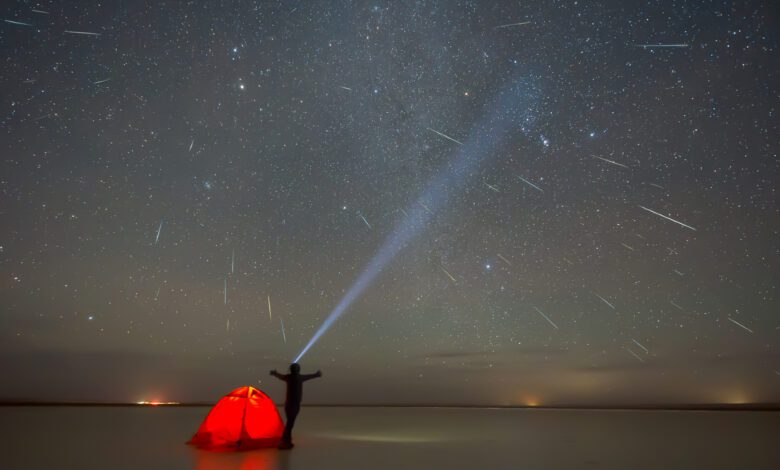
In December 2025, the Geminid meteor shower will once again delight astronomy enthusiasts across the United States. The peak activity is expected on the night of December 13-14, when dozens of bright meteors will illuminate the sky. Despite bitter cold temperatures, much of the country will have the chance to enjoy the spectacle thanks to a favorable weather forecast.
While the Geminids are traditionally less popular than the August Perseids, seasoned skywatchers consider them even more spectacular. On a clear night away from city lights, you can spot up to two meteors per minute. However, the short period of activity and December’s chilly conditions often deter casual observers.
Weather conditions
This year, meteorologists predict excellent viewing conditions for about 75% of the U.S. A high-pressure center over the Central Great Plains will deliver clear skies from Wisconsin to Arkansas and northern Mississippi, as well as out west to the Rocky Mountains. In these areas, the risk of cloud cover is minimal, creating ideal conditions for meteor watching.
At the same time, the eastern half of the country faces more challenging conditions. A cold front stretching from southern Texas to the Atlantic coast will bring clouds and precipitation. Especially unfavorable weather is expected around North Carolina, where rain and snow are possible. Dense cloud cover is also forecast for the Northeast and Mid-Atlantic states. In the Northwest, including Washington and western Oregon, another front will bring overcast and wet weather.
Temperature records
Even where skies remain clear, observers should brace for extreme cold. Arctic air will sweep across the Northern and Central Great Plains as well as the western Great Lakes. Temperatures in Indianapolis will drop to -18°C, in Chicago to -19°C, and record lows of -33°C are expected in Fargo, North Dakota. Even in Texas, New Mexico, and the southern parts of the country, the mercury won’t rise above freezing.
The most comfortable conditions will be in Southern California, Arizona, and Northern Florida. Here, under clear or partly cloudy skies, nighttime temperatures will hover around +10 to +15°C. This will allow you to watch meteors without risk of frostbite, though warm clothing is still recommended.
Tips for Observers
Astronomers recommend preparing in advance for a night of skywatching. Thick blankets, sleeping bags, mats, and even car pillows can help retain warmth. Some people use electric heating pads under their clothes. Don’t forget hot drinks—tea, coffee, or cocoa will not only keep you warm but also help you stay awake. Watching meteors in a group is best: it’s easier to stay alert and cover more of the sky together.
This year, the Moon will be in a waning crescent phase and won’t interfere with viewing. In the evening, the constellation Gemini—where the meteors appear from—will be low in the eastern sky, but by midnight it will rise nearly overhead. The brightest and slowest meteors are expected from midnight to 4 a.m.
How to Choose a Location
For successful viewing, it’s important to choose a spot far from city lights and other sources of illumination. The darker the sky, the more meteors you’ll be able to spot. Keep an eye on your local weather forecast—cloud cover can change throughout the night. The National Weather Service publishes cloud cover maps, so you can quickly assess your chances for clear skies in your area.
Cloud cover is divided into four categories: ‘excellent’—up to 20% clouds, ‘good’—up to 40%, ‘fair’—up to 70%, and ‘poor’—more than 70%. The lower the percentage, the higher your chances to catch the meteor shower at its peak.
When to Watch
The best time to observe is from midnight to dawn. During these hours, the constellation Gemini is ideally positioned, and the meteor shower reaches its peak intensity. Don’t forget to bring everything you need for comfort and safety, especially if you plan to spend several hours outdoors.
If the skies are clear, don’t miss the chance to witness one of the most spectacular astronomical events of the year. Even despite the cold, the Geminids promise unforgettable sights and remarkable opportunities for night photography enthusiasts.
In case you didn’t know, Joe Rao is a renowned American astronomer and science communicator, a teacher and guest lecturer at the Hayden Planetarium in New York. He regularly publishes astronomy articles in leading scientific journals and gives lectures to wide audiences. Both professionals and amateur stargazers value his advice and forecasts.