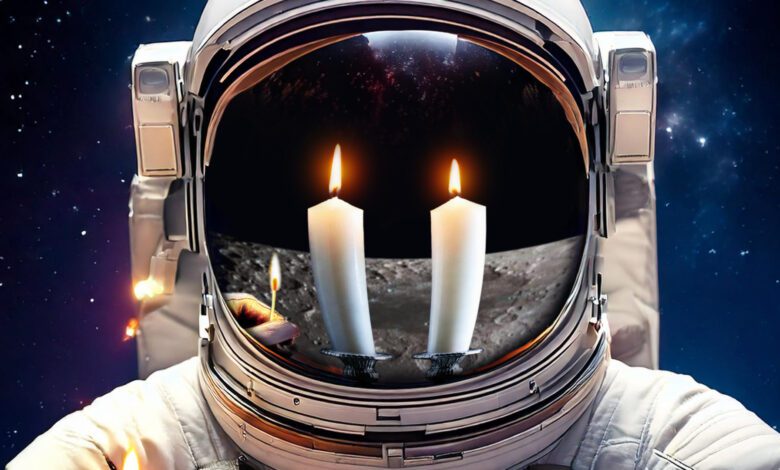
What will happen to religious traditions if humanity begins to live on other planets? This question is at the heart of the short film ‘Fiddler on the Moon: Judaism in Space,’ which has already sparked lively discussions at festivals around the world. Directors Seth Kramer, Daniel Miller, and Jeremy Newberger bring together astronauts, scientists, and rabbis to explore how Judaism might adapt to life beyond Earth. The film delves not only into technical details, but also deep philosophical dilemmas: how to observe Shabbat when the sun rises and sets 16 times a day in orbit, and how to keep a lunar calendar on Mars, where a single day is almost 40 minutes longer than on Earth.
The film features insights from astrophysicist Neil deGrasse Tyson, Israeli astronaut Ilan Ramon, and rabbis seeking compromise between ancient traditions and new realities. Their conclusion is simple: adaptation is the key to keeping faith alive in any circumstance. This idea runs throughout the history of the Jewish people, who for centuries had to change their ways to preserve their identity.
Challenges Beyond Earth
A special place in the film is given to the story of Ilan Ramon—the first Israeli astronaut, who died in the Columbia shuttle disaster in 2003. Before his flight, he consulted Rabbi Zvi Konikov, asking: how should one observe Shabbat in space? After all, on the ISS, a day passes in just 90 minutes, and sunsets and sunrises follow each other at dizzying speed. The rabbi suggested using the time at the Houston mission control center as a reference, setting a unique precedent for future generations of space travelers.
Similar questions had arisen before: during World War II, Jewish soldiers stationed beyond the Arctic Circle couldn’t determine when Shabbat began due to the midnight sun. Back then, rabbis advised them to follow the time of the nearest major city. These decisions show that religion is able to adapt flexibly to the challenges of time and space.
Tradition and science
The filmmakers emphasize that science and faith are not in conflict but, on the contrary, can go hand in hand. Daniel Miller notes that the discussion of religious questions in space began long before Ramon’s flight—in 1969, after the first moon landing. Since then, scientists and theologians have continued to seek answers to questions that once seemed straight out of science fiction: how to observe religious rituals on Mars, where the lunar calendar is meaningless and local moons are just tiny dots in the sky.
The film features the opinion of ‘science fiction’ rabbi Josh Breindel: even if traditions are broken, it is important to preserve community unity. Tyson adds that collective rituals are the foundation of any religion, and maintaining them is vital for keeping people connected, even when they’re on different planets.
A Space Community
Questions of religious practice in space are no longer confined to the distant future. In 2019, NASA astronaut Jessica Meir gained fame for a photo in Hanukkah-themed socks aboard the ISS. On the same mission, she and Christina Koch performed the first all-female spacewalk in history. In the coming years, NASA plans new missions to the Moon and aims to establish a permanent base, posing new challenges for religious communities.
Rabbi Ben-Tzion Spitz, who developed a Jewish calendar for Mars, believes that the experience of surviving in the harshest conditions will help Jews adapt to space. The history of the Jewish people is filled with examples of forced migrations and the creation of new communities—from exile across Europe to the founding of kibbutzim in Israel. These skills in self-organization and adaptation may serve as the foundation for future space settlements.
Rethinking Experience
In the film, Jessica Meir shares her family story: her father, born in Baghdad in 1925, was forced to leave his homeland due to rising antisemitism and move to Israel. According to the filmmakers, it is precisely the collective experience of overcoming adversity and creating new forms of life that may hold the key to successful integration into a space society. Kelly Weinsersmith, co-author of the book “A City on Mars,” believes that kibbutzim are the ideal model for the first settlements on other planets: communal labor, mutual support, and self-sufficiency will help people survive in extreme conditions.
The film does not offer clear-cut answers, but raises important questions: will the Jewish experience change in the space age, and can humanity overcome historical traumas to create new forms of unity? The premiere of “Fiddler on the Moon” took place at the International Jewish Film Festival in Boca Raton, and the film has already received several awards and nominations, including at the 2025 Critics Choice Documentary Awards. The U.S. tour will run through April 2026, and interest in the film remains high—it is being discussed not only at religious gatherings, but also at scientific and cultural forums.
In case you hadn’t heard, “Fiddler on the Moon: Judaism in Space” is a collaborative work by directors Seth Kramer, Daniel Miller, and Jeremy Newberger, known for their documentaries at the intersection of science, culture, and history. The film has already received awards at various festivals, and its creators are actively participating in discussions about the future of religion and society in the context of space exploration. Featured in the film are NASA astronauts, leading scientists, rabbis, and members of Jewish communities, who share personal stories and perspectives on the future. The project is currently on a nationwide tour in the US, drawing full houses at screenings in cities across the country.