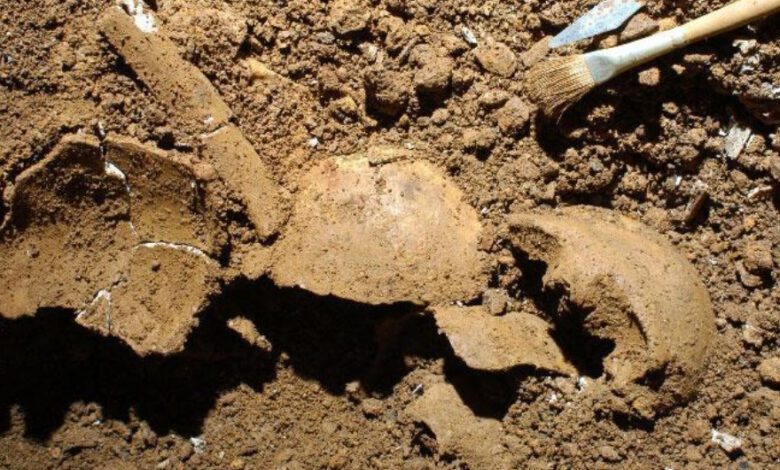
In southern Italy’s Calabria region, archaeologists and paleogeneticists have carried out an extensive study of Bronze Age human remains discovered in the Grotta della Monaca cave. The research focused on unusual genetic connections among those buried there, shedding new light on the little-known aspects of life in ancient populations of the Apennine Peninsula. DNA analysis revealed that among the deceased was a teenager whose parents were first-degree blood relatives—his father was an adult man from the same cave, and his mother was that man’s biological daughter. This marks the first such documented case among ancient humans and has sparked a wave of discussion within the scientific community.
For thousands of years, the Grotta della Monaca cave has served as both a refuge and burial place for various groups of people. Archaeological excavations spanning more than a decade have yielded a unique collection of remains dating from 1780 to 1380 BC. During this period, the site was inhabited by members of the so-called Apennine culture, who raised livestock and mined copper. Inside the cave, researchers found bones and teeth belonging to more than twenty individuals, many of whom were children and teenagers.
Genetic analysis
For genetic research, specialists selected bone and tooth fragments from 23 individuals. In several cases, the DNA was so poorly preserved that it was impossible to determine even the sex or mitochondrial haplogroup. However, in eight cases, enough information was obtained to analyze kinship ties. Most of those buried were children under 12, along with a few adult women and men. Particular attention was drawn to a grave containing the remains of at least ten people, including the only adult man and a group of women, teenagers, and children.
Geneticists found a high diversity of mitochondrial haplogroups, indicating a complex social structure in this ancient community. Only two individuals—an adult man and a boy—were from the same maternal line. Analysis of the Y chromosome showed slightly less diversity, but also pointed to the presence of several paternal lineages. Further research revealed two pairs of first-degree relatives and several cases of more distant kinship among other individuals.
Unusual kinship ties
Particular attention was drawn to an adolescent identified as GMO007. His genome contained a record number of long homozygous segments, indicating that he was born to parents who were closely related. Detailed analysis showed that his father was an adult male from the same burial site, and his mother was the man’s own daughter. Such cases are extremely rare, even among ancient populations, and until now no such clear example of parent–child incest has been found in the archaeological record.
In other cases, researchers found marriages between more distant relatives, which was typical for many ancient societies but was not the norm for this particular population. According to experts, the effective population size was about 4,700 people, indicating a fairly large and stable community for its time. Nevertheless, isolated instances of close kinship did occur, likely tied to the social or ritual practices of the Bronze Age society.
Population origins
Research into the origins of the people buried in Grotta della Monaca has shown that their gene pool was shaped by three main groups. About three-quarters of their ancestry came from early Neolithic European farmers, around 15% from Bronze Age steppe populations of the north Black Sea region, and another 9% from Western European hunter-gatherers. Their closest genetic relatives were Bronze Age inhabitants of Sicily, which confirms the close ties between Mediterranean regions during that era.
Paleogeneticists note that such discoveries offer new insights into the social structure and traditions of ancient societies. DNA analysis not only reveals family relationships but also helps us understand how populations formed and developed, what migration processes took place in southern Italy, and what cultural contacts existed between different regions of Europe.
Archaeological prospects
The Grotta della Monaca cave continues to attract the close attention of researchers. Each new bone or tooth fragment can add detail to the mosaic of ancient life, family relationships, and customs. Archaeologists are confident that many more surprising discoveries lie ahead, capable of changing our understanding of Europe’s past.
The discovery has sparked lively debates in the academic world about the acceptability and reasons for such marriages in ancient times. Some experts suggest that unions like these might have been related to specific rituals or social norms that seem unfathomable to us today. Others believe this case is more likely an exception, caused by unique circumstances within a particular group.
In case you didn’t know, Grotta della Monaca is one of the largest karst caves in Calabria, known to archaeologists since the mid-20th century. Traces of ancient human presence and artifacts related to copper mining and burials have been found here on multiple occasions. The cave is considered one of the most important Bronze Age sites in southern Italy and regularly attracts the attention of international research teams.