When it comes to the great Gothic cathedrals of Spain, monumental temples like those in Burgos or León usually come to mind. Yet the true leader is a different, no less impressive cathedral, one that is literally embedded in one of the country’s most famous defensive walls. This is not just a place of worship; from the outset, its design served a double purpose—both as a house of God and as an impregnable bastion for the townspeople, shaping its austere, almost militant appearance.
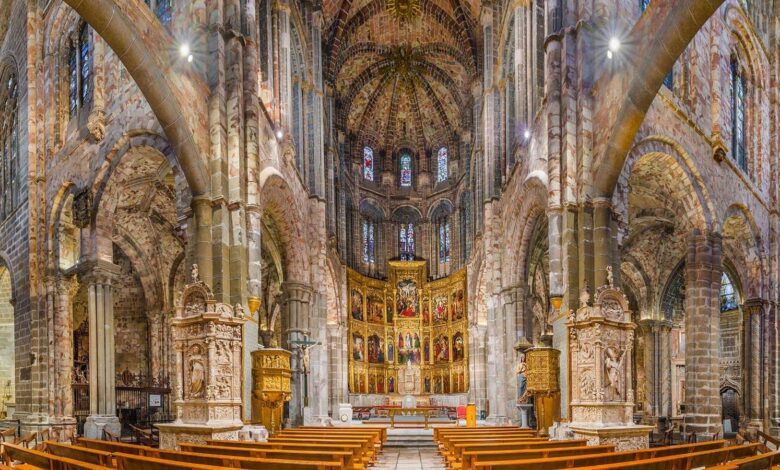
We are speaking about the Cathedral of Ávila, also known as the Cathedral of the Saviour. It is rightfully celebrated as a pioneer of the Gothic style in Spain. Construction of the present building began around 1170 under the direction of master Fruchel, who designed the chancel featuring a unique double ambulatory and nine chapels. But its most striking feature is the apse, the famous ‘Cimorro,’ which forms an integral part of the city wall. This distinctive trait earned the cathedral the status of a church-fortress and the nickname Fortior Abulensis. The building’s layout follows the shape of a Latin cross, and although its foundations were set in the Romanesque tradition, the entire ensemble gradually evolved toward elegant French Gothic, reaching completion only in the 15th century.
Inside the cathedral, visitors will discover a wealth of artistic treasures. The choir stands out as a Renaissance masterpiece carved from walnut wood, its creation begun in 1536 based on drawings by Cornelius de Holanda. Behind the choir is the wall (trascoro) adorned with reliefs depicting the Presentation at the Temple, the Adoration of the Magi, and the Massacre of the Innocents. The main chapel is dominated by a magnificent altarpiece, begun in 1499 by Pedro Berruguete and completed by other artists in 1512 after his death. One cannot miss the alabaster tomb of El Tostado located in the ambulatory, regarded as the pinnacle of sculptor Vasco de la Zarza’s oeuvre.
The cathedral tour continues in its cloister, constructed between the 14th and 16th centuries, with graceful vaults and access to various chapels. Here, in the chapel of Cardinal Quiroga and adjoining rooms, the Avila Cathedral Museum houses valuable paintings, sculptures, and liturgical vestments. The cloister also holds the remains of two significant figures in Spanish history: historian Claudio Sánchez-Albornoz and Spain’s first democratically elected prime minister, Adolfo Suárez. For those planning a visit, the cathedral is open daily: Monday to Saturday from 10:00 to 18:00, and Sunday from 12:30 to 18:00. Last entry is half an hour before closing. Standard admission is 10 euros, with discounts for retirees (9 euros), youths and students (7 euros), and free entry for children under 12.
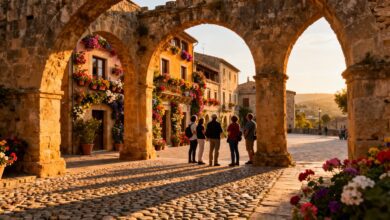
The city of Ávila, home to the cathedral, is a unique monument in itself. Its medieval walls, which have survived intact to this day, stretch for more than 2.5 kilometers and feature 87 towers and 9 gates. This impressive defensive complex, along with the old town and churches beyond its walls, was inscribed as a UNESCO World Heritage Site in 1985. Ávila is also renowned as the birthplace of Saint Teresa, one of the greatest mystics of the Catholic Church.