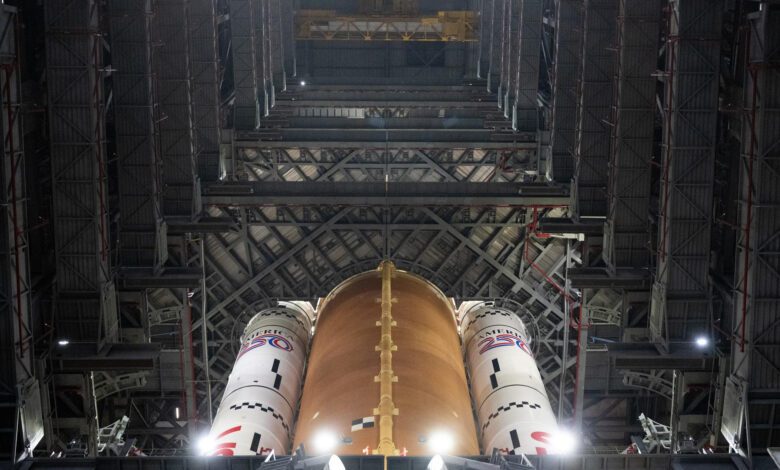
In early January 2026, tense preparations unfolded at the Florida spaceport for an event that could become a milestone in the history of space exploration. The Artemis 2 lunar rocket, assembled in the famed Vehicle Assembly Building, is ready for a slow yet significant journey to Launch Pad 39B. Covering just 4 miles, this trek will take the giant system between 8 and 10 hours—with every minute closely monitored by NASA engineers and specialists.
The rocket is moved atop the massive Mobile Launch Platform, pulled by the legendary Crawler Carrier—the very transporter that once carried Apollo program rockets to the launch pad. This time, more than a routine mission is at stake: it is the first human trip to the Moon in half a century. All site infrastructure is already prepped to receive the new spacecraft, as specialists complete final checks ahead of this crucial test.
Testing and Inspections
A so-called ‘wet dress rehearsal’ is set for February 2—refueling the rocket and simulating all stages of prelaunch preparations. This crucial test, known as a wet dress rehearsal, will determine the mission’s fate. Based on its results, NASA will decide whether Artemis 2 can head for the Moon as soon as February 6, when the first launch window opens.
If all procedures are completed successfully, the engineering team will move on to final checks of the SLS rocket and the Orion spacecraft. Special attention is being paid to the new life support systems, which will be used for the first time to sustain four astronauts for 8–10 days in space. For NASA, this is more than just another launch — it marks the return of humans to the Moon after decades away.
Crew and Mission
Artemis 2 will be the first crewed mission of the new lunar program. The crew includes four astronauts who will fly around the Moon and return to Earth. They have already undergone training and rehearsals for every phase of the flight, and in the coming weeks will face their final checks and practice how to act in emergency situations.
Unlike the previous Artemis 1 mission, when the Orion spacecraft circled the Moon without a crew, this time there will be people on board. This demands special attention to every detail, from the airtightness of compartments to the functioning of life support and communication systems. NASA admits that mistakes made during the Artemis 1 launch have served as lessons, and now the team is confident in the reliability of all systems.
Challenges and Risks
The Artemis 2 launch is not just a technological breakthrough, but also a major test for the entire NASA team. The launch window is limited to just a few days: February 6–10. If something goes wrong, the next attempt will only be possible in March or April. Last time, during the Artemis 1 launch, fuel leaks delayed liftoff twice, and this time engineers have introduced new solutions to prevent similar issues.
Every stage of the pre-launch process is handled with meticulous attention to detail. The smallest oversight can become critical, as both human lives and the reputation of the entire American space program are at stake. Still, experts are confident: all necessary adjustments have been made, and the team is prepared for any surprises.
The future of the Artemis program
Artemis 2 is only the beginning of an ambitious program to return humans to the Moon. If successful, NASA plans to land astronauts on the lunar surface and establish a permanent base there within the coming years. Each launch is a step toward a new era of space exploration, with the Moon becoming not just an object of study, but a springboard for future missions to Mars and beyond.
In the coming weeks, the eyes of the world will be on the launch pad in Florida. Whether Artemis 2 can live up to expectations and open a new chapter in the history of spaceflight remains to be seen. But one thing is clear: this launch will be one of the most talked-about events of the year.
RUSSPAIN reminds that the Artemis program is an ambitious NASA project aimed at returning humans to the Moon and creating conditions for extended stays on its surface. The mission involves the use of the heavy-lift SLS (Space Launch System) rocket and the Orion spacecraft, both specifically designed for long-distance crewed missions. Artemis 2 will be the first crewed lunar flyby since 1972, with NASA planning regular expeditions and the development of lunar infrastructure in the future.