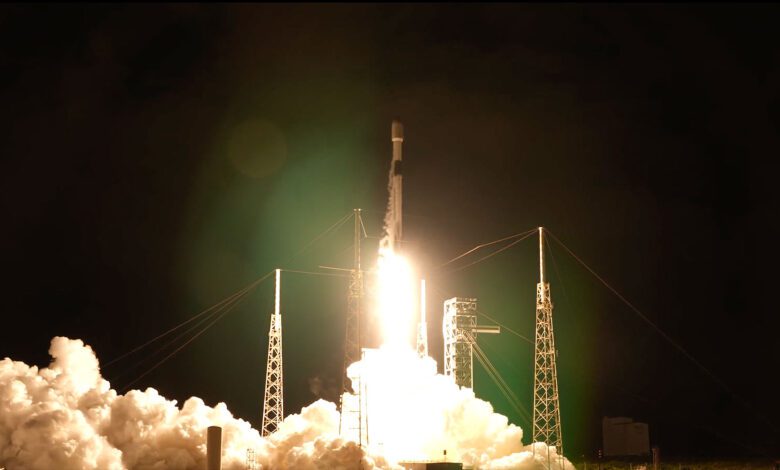
The evening of January 18, 2026 marked another achievement for SpaceX. From Cape Canaveral in Florida, a Falcon 9 rocket soared into the sky carrying 29 new Starlink satellites. The launch took place at 6:31 p.m. Eastern Time, and just nine minutes later, the rocket’s first stage successfully landed on an autonomous drone ship in the Atlantic. This event not only added another batch of satellites to orbit, but also stood out as a milestone for the entire private space launch industry.
With each new launch, SpaceX is not only cementing its lead in the market, but also changing the rules for global internet access. Now, with over 9,500 active Starlink satellites in orbit, Elon Musk’s company is steadily moving toward building the largest communications network in human history. This mission marks the 591st Falcon 9 launch since 2010—a number that not long ago seemed out of reach even for the boldest futurists.
Technology and ambitions
Once again, Falcon 9 proved its reliability: the first stage, designated B1080, completed its 24th flight. After separation, it gently touched down on the drone ship A Shortfall of Gravitas—a sight that has become routine, but still wows observers. This approach to reusing rocket stages not only helps SpaceX save resources, but also enables launches at a pace never seen before.
This time, the company didn’t just focus on the technical side. Every Starlink launch is a step toward making the internet accessible even in the most remote corners of the planet. The network now supports not only home connections but also provides communication onboard airplanes and even enables direct satellite calls from mobile phones for certain carriers.
Global coverage
The Starlink network continues to expand, reaching new regions around the globe. For many countries and remote territories, this offers a real opportunity to break out of digital isolation. Where traditional providers are powerless, satellite internet becomes the only window to the world. By 2026, Starlink is no longer just an experiment but a full-fledged infrastructure relied upon by millions of users.
However, such rapid growth also raises concerns. Experts are discussing possible consequences for astronomy, as thousands of new objects in orbit may interfere with stargazing. Nonetheless, SpaceX insists it is taking steps to minimize light pollution and other negative effects.
Records and challenges
The eighth Falcon 9 launch in 2026 is more than just another milestone—it’s a sign of how rapidly the space industry is evolving. SpaceX has developed a unique ecosystem where every new mission fits into a grand strategy for expanding near-Earth operations. The company is open about its ambitions: in the coming years, the number of Starlink satellites could surpass 12,000 and eventually reach 20,000.
The speed at which SpaceX carries out its projects astonishes even skeptics. In just 16 years, Falcon 9 has gone from an experimental rocket to the workhorse of the industry, setting a benchmark for competitors. Each successful mission is not only a technological triumph but also a global signal: the era of mass access to space has begun.
The future in orbit
While some debate the pros and cons of satellite megaconstellations, SpaceX keeps moving forward. The company is already testing new technologies that will boost network capacity and reduce signal delays. In the coming years, next-generation satellites are expected to launch, promising even faster and more reliable connectivity.
Still, it’s not all straightforward. The growing number of satellites demands new solutions for space traffic management and collision avoidance. International organizations are beginning to discuss new rules and standards for such projects. But for now, SpaceX remains firmly in the lead, showing no signs of slowing down.
RUSSPAIN reminds that SpaceX is a private American company founded by Elon Musk in 2002. The company specializes in the development and production of launch vehicles, spacecraft, and satellite systems. Its main projects include Falcon 9, Falcon Heavy, Starship, and the global Starlink network. SpaceX was the first company in the world to successfully land a reusable rocket and continues to introduce innovations in the space industry, making space more accessible to humanity.