Cantabria’s cheeses have long since moved beyond being a mere regional product — today, they are considered a true symbol of northern Spain. Despite the small size of the autonomous community, it has developed a unique cheese-making tradition, with each village closely guarding its own secrets. In Cantabria, you’ll find both renowned protected designation of origin (PDO) cheeses and rare, nearly forgotten varieties produced in tiny family-run workshops. Flavors range from delicate and creamy to bold and intense, with aromas that are sure to impress even the most discerning gourmets.
This article offers an overview of the most distinctive and fascinating cheeses from Cantabria. Some have long served as regional icons, while others are just beginning to win over the hearts of connoisseurs. But all of them deserve your attention — and a special tasting.
The Power of Blue Cheese
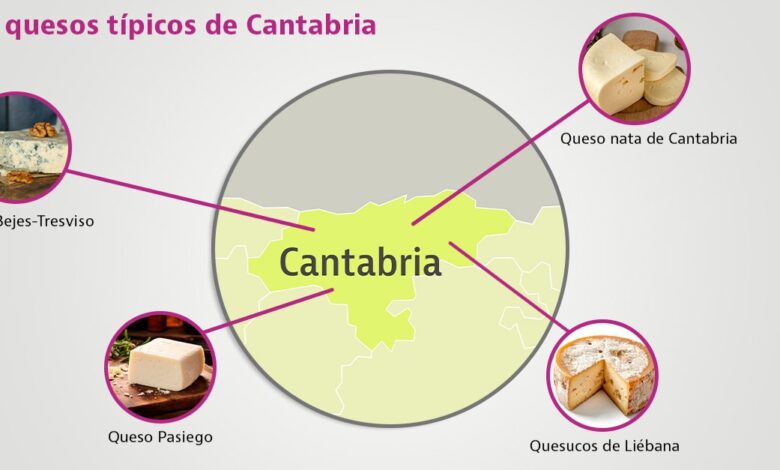
Perhaps the most recognizable cheese from Cantabria is Picón Bejes-Tresviso. Its home lies in the high-mountain villages of Bejes and Tresviso, where it ages in natural caves amid the rugged landscapes of Picos de Europa. Here, the damp air and steady coolness create ideal conditions for blue mold to flourish. The result is a cheese streaked with characteristic green-blue veins, an intense aroma, and a powerful flavor profile that reveals hints of forest nuts, damp earth, and even a subtle animal piquancy. This cheese is unmistakable — typically served with crusty bread, and sometimes with a glass of cider or white wine.
This cheese is not for the faint-hearted: its flavor might seem too intense to some, but that’s exactly why it’s so prized. In Cantabria, Picón Bejes-Tresviso often takes center stage at cheese festivals and tastings, and locals are convinced that you can’t truly grasp the spirit of the region without it.
Creamy classic
The second most popular variety is Queso nata de Cantabria. This cheese is the epitome of delicacy and tradition. It’s made exclusively from milk of local cows, and only certain breeds are used. The production method has remained unchanged for decades: the milk is cultured, pressed, and then matured to achieve just the right texture. The result is a cheese with a thin rind, an incredibly soft texture, and a delicate creamy taste that recalls fresh cream and homemade butter. It isn’t sharp or pungent, making it perfect for those who prefer mild, slightly sweet cheeses.
Queso nata de Cantabria is often used in cooking — it’s added to salads, pasta, served with fruit, or simply spread on bread. This cheese is a real favorite among families with children and those just starting to explore Spanish cheeses.
Small discoveries
Quesucos de Liébana is another gastronomic gem of Cantabria. These miniature cheeses are made in the mountain valleys of Liébana, where pastures are surrounded by cliffs and forests. Traditional cheesemaking methods are still preserved here, with recipes passed down through generations. Quesucos come in many varieties: from cow’s, sheep’s, goat’s milk, or a blend of all three. Both fresh and semi-cured versions are available, but the smoked types are especially popular—they have a delicate smoky aroma acquired from aging over the wood of local trees.
These cheeses are often sold in small wheels, making them perfect for picnics and as gourmet gifts. Their flavor is mild yet distinctive, with a tender, sometimes slightly crumbly texture. Quesucos de Liébana are a wonderful way to discover the diverse cheese tradition of Cantabria.
Traditions of the valleys
Queso Pasiego is a cheese you can’t imagine outside the lush valleys and pastoral landscapes of Valles Pasiegos. Here, among meadows and old stone huts, cows have been raised and cheese made by family recipes for centuries. Queso Pasiego is typically soft or semi-soft, with a rich milky flavor and creamy texture. After a short maturation, some versions develop deeper flavors with buttery and nutty notes.
This cheese often forms the basis for local desserts, and is also served for breakfast or a light supper. People love it for its versatility and purity—it contains nothing superfluous, just milk, starter culture, and a little salt.
Rare discoveries
In addition to well-known varieties, Cantabria is also home to true cheese rarities. For example, Queso Pido is a semi-hard cheese with a distinct flavor, produced in the surroundings of Liébana and Picos de Europa. Its slight sharpness develops as it matures. Queso de Guriezo is another interesting example, made in the eastern part of the region using exclusively local milk. Typically, it is a young or semi-hard cheese with a mild taste that even appeals to those who are usually reluctant to try new things.
Queso Campoo-Los Valles is a choice for those seeking something unique. It is crafted in the cold valleys of inland Cantabria, where the climate fosters slow maturation. The result is a cheese with a dense texture and rich flavor, perfectly paired with red wine or nuts.
Each of these cheeses tells its own story, reflecting the character and traditions of the region. In Cantabria, cheesemaking is treated with respect, and small family-run dairies often become hubs for culinary tourism.
If you didn’t know, Cantabria is not just scenic beaches and mountains—it’s also a region with a rich culinary culture. Local cheeses regularly win awards at national and international competitions, and cheese festivals attract thousands of visitors. In recent years, interest in Cantabrian cheeses has only grown, with more and more travelers including tastings on their itineraries. For those seeking new flavors and experiences, Cantabria is a true paradise.